China Reclaims Global Supercomputing Crown With LineShine Debut
China has reclaimed the top position in global supercomputing after its LineShine system in Shenzhen overtook US-based El Capitan in the latest Top500 rankings, marking the first Chinese lead since 2017. The CPU-based machine achieved 2.198 exaflops, according to scientists, while US systems now follow in second and subsequent positions across the list released Tuesday.

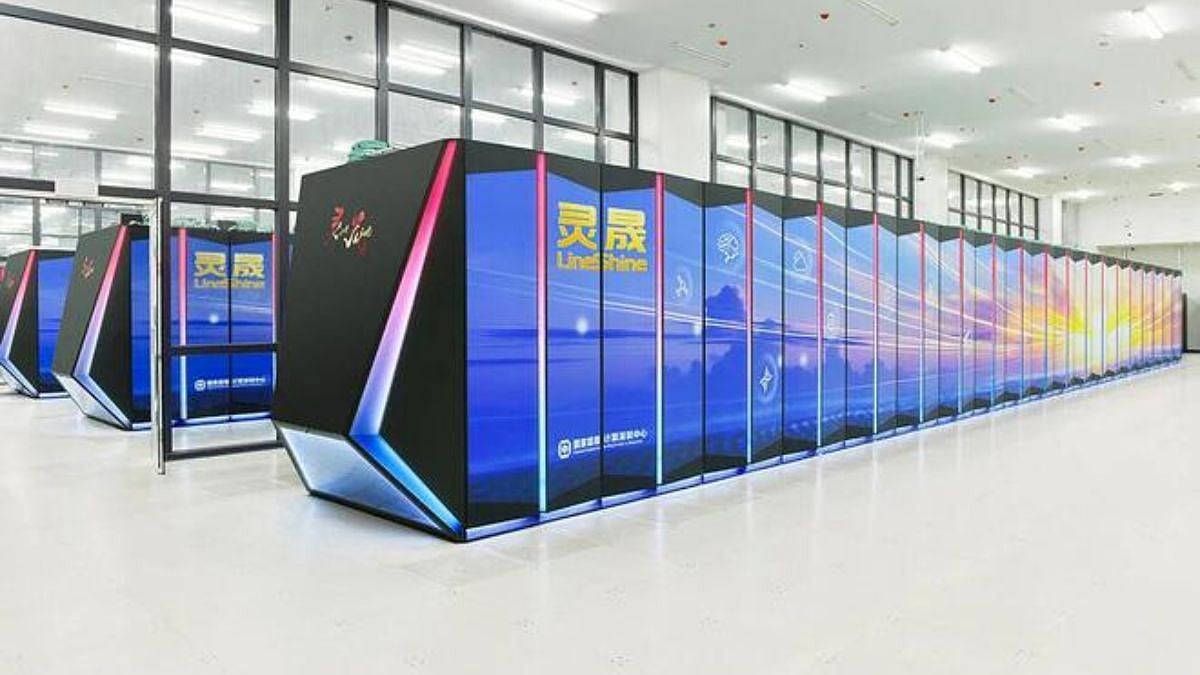
China Reclaims Global Supercomputing Crown With LineShine Debut | X @Lamwumkt
China returns to the top of global supercomputing
China has reclaimed the top spot in global supercomputing after its LineShine system in Shenzhen overtook the US-based El Capitan in the latest Top 500 rankings released on Tuesday. It marks the first time since 2017 that a Chinese supercomputer has led the list, which is often regarded as a benchmark of national technological capability.
Making its debut in the rankings, LineShine stands out because it operates entirely on conventional computer chips (CPUs) rather than the graphics processing units (GPUs) widely used in AI systems. According to the rankings, the machine consumes about 42.2 megawatts of electricity.
Supercomputers are more than 1,000 times faster than standard computers and are used for applications ranging from medical research and climate modelling to simulating nuclear explosions, predicting human behaviour and conducting virtual weapons tests.
Scientists associated with the Top500 project said LineShine, housed at China’s National Supercomputing Center, achieved 2.198 exaflops, enabling it to perform more than 2 quintillion calculations every second.
US, Europe and others trail in latest rankings
El Capitan, located at the US government’s Lawrence Livermore National Laboratory in California, dropped to second place. Two other US supercomputers at national laboratories in Tennessee and Illinois occupy the next positions. Germany’s Jupiter system fell to fifth. These five systems are currently the only publicly verified exascale computers worldwide.
Italy, Switzerland and Japan also have machines in the top 10 rankings.
The UK has 11 systems in the Top500 list. The University of Bristol’s Isambard-AI is the highest-ranked among them at 11th place, slipping two positions from the previous rankings. Equipped with 5,400 Nvidia “superchips”, the machine is housed inside a black metal cage topped with razor wire.
Australia has four systems on the list, with Western Australia’s Setonix ranked 86th and performing best among them.
EU bets on AI Gigafactories despite climate concerns
Last year, the European Union announced a €20bn (£17bn) initiative to establish facilities with powerful supercomputers aimed at developing the next generation of AI models, as Europe seeks to narrow the gap with the US and China.
The planned AI “gigafactories” are intended to support “moonshot” innovations in healthcare, biotechnology, industry, robotics and scientific discovery. While leading AI facilities currently operate supercomputers with up to 25,000 advanced AI processors, a gigafactory would contain more than 100,000 AI processors, according to the EU strategy document.
An EU official said these energy-intensive facilities, which may require substantial amounts of water for cooling, should run “as much as possible” on a green energy supply, with plans for “recycling” water if it was used.
However, campaigners have expressed concerns that power-hungry datacentres could undermine Europe’s climate goals.
RECENT STORIES
-
-
-
-
-