From Afghanistan To Libya: Why Travellers Are Visiting Conflict Zones? The Thin Line Between Curiosity, Adventure & ‘War Tourism’
The growing trend of travelling to conflict-affected destinations is sparking debate over tourism in conflict zones. While travellers cite curiosity, culture and adventure, dramatic social-media imagery can risk turning hardship into entertainment. Travel creators discuss the privilege of being able to leave, ethical storytelling and why local people should remain at the heart of such journeys

From Afghanistan To Libya: Why Travellers Are Visiting Conflict Zones? The Thin Line Between Curiosity, Adventure & ‘War Tourism’ |
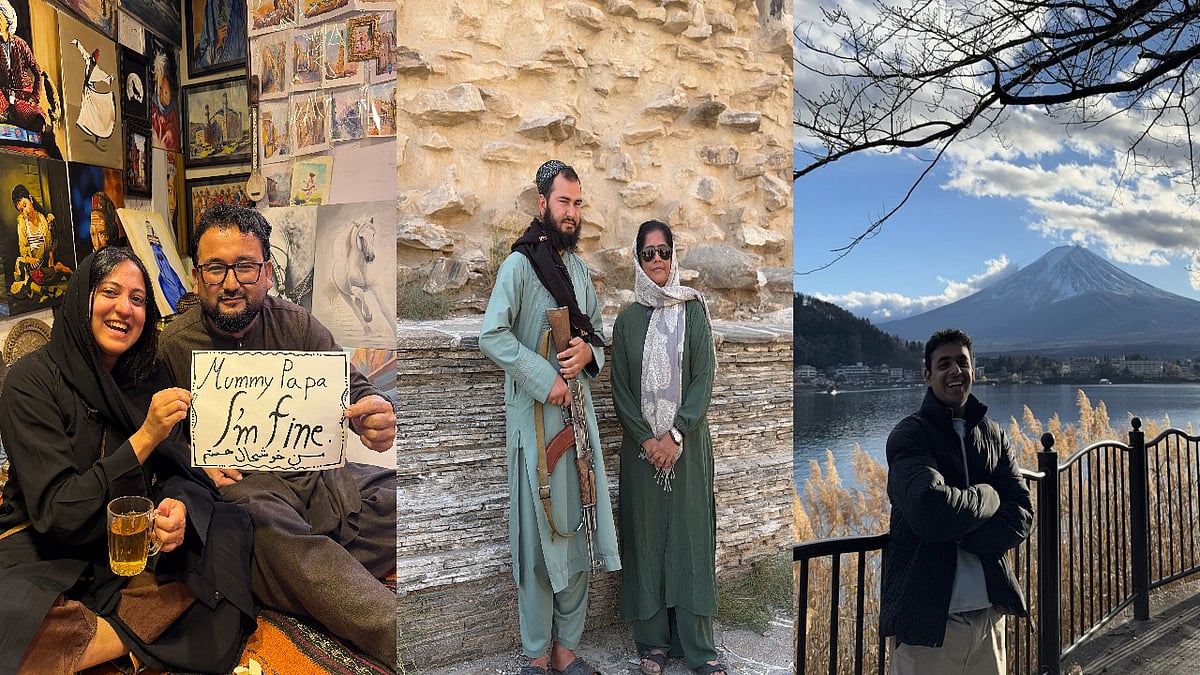
For most people, a holiday means getting away from the humdrum of regular life, relaxing at scenic travel locations and enjoying a luxury stay. On the contrary, for a growing breed of travellers on social media, a holiday means exploring the unexplored and making danger a part of the journey. A photograph posing with a gun, a video passing through heavily guarded checkpoints, a walk through streets marked by war or a journey into a country most tourists would hesitate to put on their travel list — such images can make for compelling travel content. But they also raise an uncomfortable question: when does curiosity about a difficult destination turn into an appetite for danger or thrill, and when does documenting another country's reality become turning someone else's suffering into an adventure?
Travellers are increasingly venturing into places that have long been associated with conflict, political instability or extreme poverty, including Afghanistan, Iraq, Libya, Syria and Somalia. Their reasons are not always as straightforward as the term “war tourism” might suggest. Some are drawn by history and culture, others want to understand countries that they believe are often reduced to negative headlines, while some openly admit that adventure and the thrill of visiting somewhere most people avoid are part of the appeal. Then there is social media, where an unusual destination can quickly become content, and the more extreme and unique the experience looks, the more attention it can attract.
When danger becomes part of the journey
For Ankita Kumar who has been a solo traveller for the last 10 years, has more than 600,000 Instagram followers who has visited numerous countries and continents, conflict was not what took her to Iraq and Afghanistan. She said she had wanted to visit both countries for years because of their history, culture, philosophy and hospitality. Her experience in Iraq, however, came with unavoidable reminders of the country's troubled past. Travelling between Mosul and Baghdad, she encountered around a dozen military checkpoints in an area that had been heavily affected by ISIS.
Yet the memories she speaks about most are not of armed personnel or security barriers, but of people. Kumar recalled being welcomed into homes during Ramadan, with people breaking their fast with her and making sure she was fed even when they had little themselves. She also remembered meeting a woman carpenter in Baghdad who was going through a difficult divorce and still opened her home to her.
“I am curious about places that have not been discovered by many creators yet,” Kumar said, adding that she is adamant about not sensationalising them for content. For her, the point of travelling to such destinations is to show people as people, rather than as characters in a story about danger.
That distinction is at the heart of the debate surrounding conflict-zone travel. A traveller may enter a country because they are interested in its history and people, but once a camera is turned on, the same journey can easily become a spectacle for an audience watching from thousands of kilometres away. The traveller sees a checkpoint as an extraordinary moment; for someone living there, it may simply be another part of the daily commute. A creator may photograph a neighbourhood marked by poverty and then fly home; the people photographed have to return to it.
Meenakshi Sai, a travel enthusiast with more than 18,000 followers, has travelled to several destinations considered challenging for tourists, including the Democratic Republic of Congo, Timbuktu in Mali, Somalia, Somaliland, Djibouti and Eritrea. She recently travelled to Libya, drawn by its Roman ruins and a longstanding curiosity about the country. She expected to be cautious because of Libya's history of conflict and instability, but found the reality more nuanced than the image of a “conflict zone” often presented from the outside.
Unlike travellers who might completely reject the idea that danger plays a role in their choices, Sai is candid about it. Curiosity is her biggest motivation, she said, but adventure and thrill are also part of the equation.
“Content is probably the smallest part of the equation. I travel because I'm curious, because I love adventure, and, if I'm being completely honest, because I enjoy the thrill of going somewhere that most people wouldn't think of going,” she said.
That honesty makes the debate more complicated. There is nothing unusual about seeking adventure while travelling. People trek through remote mountains, cross deserts and seek experiences outside their comfort zones precisely because they want to feel something unfamiliar. But a conflict zone is different. The danger is not an abstract challenge created for visitors. It is a reality that people living there have to navigate long after the traveller has gone home.
The privilege of being able to leave
Sai said travelling to Afghanistan forced her to confront that difference. She began questioning where the line lies between documenting a place and using someone else's reality to tell her own story.
“I could come into Afghanistan, experience it for a few days, photograph it, make a film about it, and then leave. The people I met don't have that luxury,” she said.
It is perhaps the most uncomfortable truth about this form of travel. A traveller can experience a checkpoint as a remarkable sight. A local may encounter the same checkpoint every day. A visitor can describe a war-scarred city as an unforgettable experience, while for its residents, those scars may represent memories of homes, families and lives lost.
Kumar experienced a similar discomfort during a trip to Mauritania, where she travelled to experience the Iron Ore Train. At the time, she saw the journey partly as an adventure. Looking back, she said she would have documented it differently.
“For us, it was the thrill of being on the train, but for the locals, it's what they have to do. They don't have a choice,” she said.
The experience left her grappling with the privilege of being able to visit a difficult environment voluntarily and then simply fly home. She described feeling guilt, relief and gratitude at the same time — guilt because she could leave while others remained, and gratitude because circumstances meant she did not have to live that reality herself.
That imbalance is particularly important when conflict-zone travel is consumed through social media. A traveller's audience may see a gun, a military vehicle, an armed checkpoint or a dangerous-looking road and read it as evidence of an extreme adventure. But the same image can mean something entirely different to the people who live with the consequences of conflict.
When the conflict becomes the content
Jayant, a travel enthusiast who has visited several countries, does not see conflict zones as an inherently exciting category of travel.
“I don't think conflict zones should be turned into a backdrop for content or something people flaunt just because it looks extreme or adventurous,” he said.
He draws a distinction between travelling to a country with a complicated history and deliberately entering an active conflict zone because the danger itself makes compelling content. For him, the problem begins when conflict becomes the attraction. Posing with guns, highlighting danger or presenting a war-affected destination as an adventure playground can strip away the context of what happened there — and what people continue to live with.
Yet there is another side to the argument. Avoiding difficult destinations altogether can also create a distorted picture. Afghanistan is not only about checkpoints and guns. Iraq is not only its history of war. Libya is not only political instability. These countries have families, food, markets, traditions, architecture, businesses and ordinary routines that can disappear when every story is framed around conflict.
Sai believes those stories deserve to be seen. Her experience in Afghanistan made her particularly conscious of how people were being represented through her camera. She questioned whether those she photographed had consented, whether vulnerable people were being shown with dignity and whether an image was telling their story or simply adding drama to hers.
Her conclusion was not that such places should never be documented, but that how they are documented matters. A shopkeeper opening his store may reveal more about life in Libya than an image designed only to communicate danger. Ordinary moments can sometimes provide more context than the most dramatic ones.
There is a difference between travelling somewhere difficult and making the difficulty itself the attraction. There is a difference between documenting a country's complicated reality and turning its most traumatic aspects into props for a travel reel.
Sai perhaps puts that distinction most clearly: “There is an important distinction between travelling to a difficult place because I'm drawn to adventure, and treating the difficulties faced by its people as my adventure.”
That may be the line modern travel creators increasingly have to navigate. Adventure has always been part of travel, but conflict is different because the danger is not a challenge created for tourists. It has consequences for people who live there.
The question, ultimately, may not be whether travellers should visit difficult destinations at all. It is what they choose to make the centre of the story once they arrive. Is it the people, history, culture and everyday life — or is it the gun, the danger, the checkpoint and the shock value?
RECENT STORIES
-
-
-
-
-