CM Yogi Adityanath Plans Performance-Based Promotions For UP Govt Employees, Pushes AI-Driven Governance
Uttar Pradesh Chief Minister Yogi Adityanath proposed linking government employees' performance and achievements with their ACRs and promotions. Addressing a Mission Karmayogi workshop in Lucknow, he announced plans for an AI Centre of Excellence and stronger local body training, stressing accountability, citizen satisfaction and timely grievance resolution across departments.

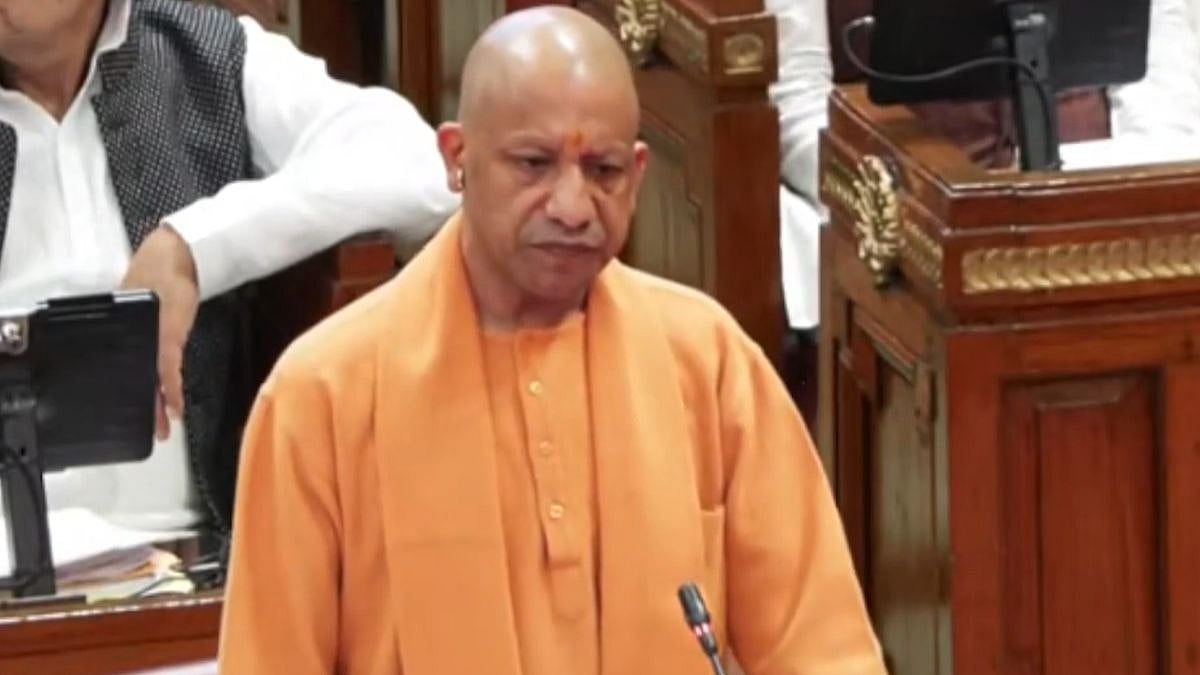
CM Yogi Adityanath Plans Performance-Based Promotions For UP Govt Employees, Pushes AI-Driven Governance | X - @myogiadityanath
Lucknow, October 23: Chief Minister Yogi Adityanath stated that when a common man has to move from one office to another to get a task done, it raises serious questions about the entire system. If an elderly person, youth, woman, farmer, or someone in need has to return disappointed without a time-bound resolution, the purpose of public service remains unfulfilled. Citizen satisfaction is the report card of any public servant. To make the administrative system in Uttar Pradesh more capable, sensitive, and accountable, the government will develop a mechanism to ensure the right person is posted in the right position. Efforts will link the work efficiency, achievements, and success stories of officers and employees to their Annual Confidential Reports (ACRs) and promotions.
CM Yogi was addressing the Northern Regional Workshop of ‘Sadhana Shrankhla’ under Mission Karmayogi at Lok Bhavan on Friday. Announcing three key initiatives, he stressed developing the Dr. Ram Manohar Lohia Uttar Pradesh Administration and Management Academy (RUPAAM) as an AI Center of Excellence, building the capacity of personnel in panchayats and urban local bodies, and effectively implementing the concept of ‘Right Person for the Right Role’. He said the objective of training was not merely to obtain certificates, but to ensure time-bound resolution of citizens' problems, simpler procedures, and better public services. The workshop, jointly organized by UPAM and the Capacity Building Commission of the Government of India, is being attended by officers and representatives from eight states and four Union Territories.
CM Yogi stated, "Even today, elderly people have to make repeated visits to government offices to receive their pensions. The minor problems faced by ordinary citizens often remain unresolved on time."
Referring to the daily soap ‘Office-Office’, he observed that when a common man has to run from one office to another to complete an ordinary task, it raises questions about the entire system. Deliberately keeping problems pending and failing to resolve them due to a lack of information are both serious administrative concerns. It is dangerous to place an incompetent person in a position of responsibility and equally dangerous to allow a negligent person to continue in that position. In many cases, employees remain vigilant about their rights and promotions but fail to demonstrate the expected seriousness towards their duties. Therefore, personnel must undergo continuous capacity development, their responsibilities must be clearly defined and their work must also be evaluated. Rather than letting the administration focus on individuals who repeatedly lodge complaints, it must keep resolving ordinary citizens' genuine problems as a priority. If an elderly person, youth, woman, farmer, or someone in need returns disappointed and does not receive a time-bound resolution, the purpose of public service remains unfulfilled.
CM urged the Capacity Building Commission to extend its cooperation in developing RUPAAM into an AI Center of Excellence for capacity development in Uttar Pradesh. He said artificial intelligence, data analytics, and digital technology are rapidly transforming governance. Equipping public servants to adapt to these changes is essential. Technology can accelerate governance, simplify procedures, and improve decision-making, but the spirit of service will make administration sensitive.
CM Yogi said special attention should also be given to capacity development among personnel working in gram panchayats, nagar panchayats, municipal councils, and municipal corporations. To achieve the goals of Viksit Bharat and self-reliance, local bodies must be stronger, more accountable, and more citizen-centric. Panchayats and urban local bodies are the fundamental units of governance. Only when their functional capabilities are strengthened will scheme benefits reach the last person effectively.
CM stated that the concept of ‘Right Person for the Right Role’ must be implemented effectively. He urged the Capacity Building Commission to work with UPAM towards linking the achievements, work performance and success stories of officers and employees with their ACRs and promotions. This would help assign responsibilities based on personnel abilities and ensure the right person is posted in the right position.
CM Yogi said that, under the guidance of PM Narendra Modi, Mission Karmayogi is a national initiative to transform the public service work culture. More than 19.26 lakh government personnel in UP are registered on the iGOT Karmayogi portal and have completed approximately four crore training courses so far. More than 334 training institutions in the state are connected to the Unnati Portal. However, actual success of training must be assessed beyond these figures. It should be evaluated by how much decision-making has improved after training, how much simpler procedures have become, and how much better the services ordinary citizens receive have become.
Citing an example of road construction in Gorakhpur, CM said he had directed officials to widen a road from two lanes to four. Still, the engineers raised it by nearly three meters above ground level. This obstructed the movement of people living in the densely populated surrounding areas. After receiving complaints, he personally visited the site and directed that the road be constructed in accordance with its original purpose. This was not merely a matter of road construction, but a question of practical understanding of the work and ability to understand citizens' needs. A degree and an appointment letter alone do not make a person a qualified engineer or a capable officer. It is essential to adopt new technologies, make decisions based on circumstances, and develop the ability to understand one's responsibilities. This approach highlighted the need for capacity development. After establishing the Capacity Building Commission and appointing S. Radha Chauhan as its chairperson, he discussed this subject with her. This approach includes efforts to develop UPAM as a center for modern technology and capacity development.
CM Yogi stated that Uttar Pradesh had moved beyond policy stagnation and formulated 36 sectoral policies across various fields. Capacity development and Mission Karmayogi had also played an important role in this transformation. Platforms such as the Unnati Portal give training institutions opportunities to share their experiences, expertise, and best practices. This allows one institution's success to inspire others and helps build a culture of mutual learning. Mission Karmayogi is not merely a training program, but a national initiative to transform the work culture of public service. Viksit Bharat will not be built merely by formulating better policies. It also requires a capable, sensitive and result-oriented administration that can implement those policies effectively. The purpose of public service will be fulfilled only when citizens' difficulties are reduced, they receive timely resolutions, and satisfaction shows on their faces.
Targeting the system that existed before 2017, CM stated that UP, besides being India's most populous state, has extremely fertile land, abundant water resources, and the country's largest young workforce. Despite these advantages, state remained mired in deprivation and disorder for a long time and struggled to establish its identity. Potential was not lacking, but the capacity development and political will needed to turn that potential into achievement were missing. As a result, a state as vibrant as Uttar Pradesh came to be seen as plagued by unrest. Governance had shifted to focus on those in power rather than on citizens. Ordinary people were beginning to lose faith in the system. Whenever the government issued a job advertisement, young people feared that recommendations and financial transactions might influence the selection process. They had no confidence that they would be appointed through a transparent process.
CM Yogi said that over the past nine and a half years, the state has tripled its economy, budget, and per capita income. In 2017, the state had about one and a half expressways, whereas today Uttar Pradesh has nearly 60% of the country's expressway network. The state ranks first in road, rail, and air connectivity. The country's first rapid rail is operational here, and metro services are running in seven cities. Over the past nine and a half years, the state has provided housing to 65 lakh poor families, constructed toilets in the homes of more than three crore families, and benefited more than 15 crore people through the Pradhan Mantri Garib Kalyan Anna Yojana. During this period, no one in the state died of hunger, and scheme benefits reached those in need with integrity. CM also cited Har Ghar Nal Yojana in Bundelkhand and Vindhya region, electricity availability in all 75 districts, an increase in the agricultural growth rate from 8% to 18% and regular payments to sugarcane farmers as examples of the changes brought about in the state.
CM said the governance system fails when departments shift responsibilities to other departments. Referring to deaths of children due to encephalitis in eastern Uttar Pradesh and some districts of western Uttar Pradesh, he observed that for a long time, the disease was treated solely as a health department issue. By describing deaths in districts as cases of an unknown disease, other departments would distance themselves from their responsibilities. As a Member of Parliament from 1998 to 2017, he raised this issue from the streets to Parliament. Even when he raised the matter in Parliament and moved adjournment motions, he was told it was a state matter.
After becoming CM, he decided that encephalitis would not be treated merely as a health issue. Along with the Health Department, Urban Development, Panchayati Raj, Rural Development, Basic and Secondary Education, Divyangjan Kalyan and Women and Child Development departments were also brought into the campaign. ASHA and Anganwadi workers, paramedical staff, pediatricians, Primary and Community Health Centers, district hospitals, medical colleges, and the 108 ambulance service were assigned specific roles and trained. Approximately 50,000 children had died from encephalitis over four decades. Still, departmental coordination and capacity development made effective control of the disease possible and the number of deaths from it in the state is now zero. This example proves that a single department cannot solve a problem alone. Clear responsibilities, trained personnel and continuous monitoring can deliver significant results.
Union Minister Dr. Jitendra Singh, Capacity Building Commission Chairperson S. Radha Chauhan, Uttar Pradesh Chief Secretary Shashi Prakash Goyal, CBC Member Dr. Alka Mittal, CBC Secretary Jagdeep Gupta, RUPAAM Director General M. Devraj and senior officers from various states were present.
RECENT STORIES
-
-
-
-
-