'Court Cannot Compel Any Woman To Complete Pregnancy': SC Allows 30-Week Termination for Maharashtra Minor
Citing the fundamental right to reproductive autonomy, the Supreme Court said that the law cannot force any individual, particularly a minor, to endure the physical and mental burden of an unwanted pregnancy

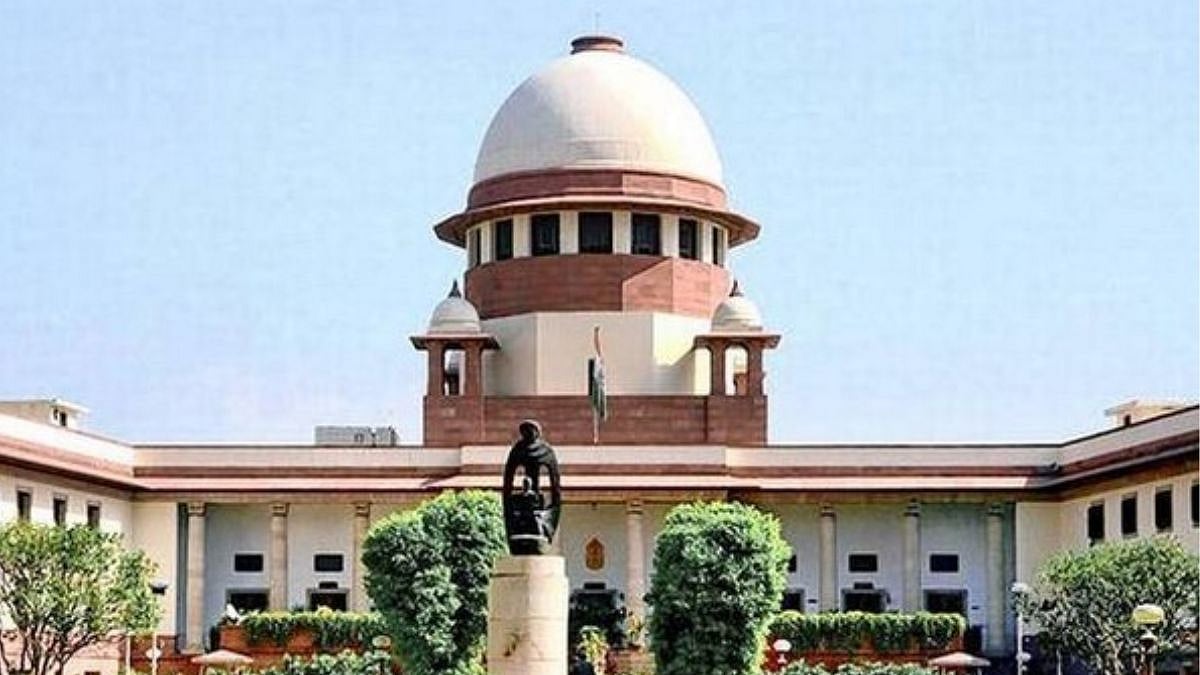
Supreme Court of India | X
In a significant ruling, the Supreme Court of India on Friday, February 6, 2026, authorised the medical termination of a 30-week pregnancy for a minor, asserting that the state cannot legally compel any individual to continue an unwanted pregnancy. Presiding over the case of A (Mother of X) vs State of Maharashtra, Justices BV Nagarathna and Ujjal Bhuyan emphasised that the reproductive autonomy of the young girl must be the primary consideration, particularly since she had expressed a clear and consistent desire to end the pregnancy.
Priority of reproductive autonomy over compulsion
The Bench observed that the pregnancy was inherently "illegitimate" given that the girl herself was still a minor and was facing an "unfortunate situation" arising from a relationship. In a notable clarification of the law, the court stated that the right to terminate did not depend on whether the pregnancy resulted from sexual assault or a consensual relationship. Instead, the ruling focused on the fundamental right of the minor to make decisions regarding her own body and future.
"What has to be considered in the instant case is the right of the minor child to continue a pregnancy which is ex facie illegitimate in as much as she is a minor and has to face this unfortunate situation of having the pregnancy owing to a relationship that she had. The issue is not whether the relationship was consensual or whether it was the case of sexual assault. Ultimately the fact is that the child to be is not legitimate and secondly, the mother to be of the child does not want to bear the child. If the interest of the mother is to be taken note of, then her reproductive autonomy must be given sufficient emphasis. The court cannot compel any woman much less a minor child to complete her pregnancy if she is otherwise not intending to do so," the judgment said allowing the plea.
Commenting on the vulnerability of minors in such cases, Mumbai-based Advocate Mosam Chacha Zaveri said, "With reference to the broader issue of minor pregnancies, it is observed that such cases most often arise due to sexual assault or during adolescence, when minors are undergoing puberty and experiencing significant physical and emotional changes. Due to a lack of awareness about sexual health or as a result of unfortunate circumstances, minor girls who become pregnant are placed in an extremely vulnerable position, facing serious mental, physical, and emotional challenges."
"In this context, it is encouraging to note that the judiciary has adopted a progressive approach by permitting the termination of pregnancies of minor girls even up to 30 weeks in certain cases. Girls who conceive at such a young age are children themselves and are neither physically nor psychologically prepared to carry a pregnancy to term, let alone bear the lifelong responsibility of raising a child. In many instances, the child would serve as a constant reminder of the trauma the minor has endured—trauma that could have been mitigated had the law allowed termination at an appropriate stage," she added.
Moral and legal complexities
Throughout the proceedings, Justice Nagarathna acknowledged the profound moral and legal complexities at play, noting that while every birth represents a new life, the court's decision was ultimately guided by the minor's unwavering refusal to carry the pregnancy to term.
"It is also difficult for us but what to do. Whether we should compel her to give birth to a child? Because the child which will be born is also ultimately going to be a life. Then there is another question if she can terminate at 24 weeks why not at 30 weeks? Ultimately she doesn't want to continue the pregnancy. Bottom line is she doesn't want to give birth, that is the difficulty," Justice Nagarathna said.
Anjali Jain, Partner at the Areness Law in New Delhi, highlighted the progressive nature of the judgment in relation to statutory limits.
"This judgment is progressive in nature as advanced gestation termination pleas are generally disposed off contrarily and even the exceptional circumstances like minors, rape survivors, mental traumatic disorders etc have not significantly outweighed the fetal rights. This judgment extending the reproductive autonomy of a female minor recognises the individual dignity and exceptional circumstances allowing for later abortions and hence aligning with global jurisdictions like Netherlands, UK, parts of US etc," the Partner at Areness Law in New Delhi said.
"The allowance of a 30-week pregnancy termination in this specific case is laudable, which is beyond the permissible statutory limit of 20/24 weeks as the said statutory limits are not mechanically applied here and constitutional right or will of the pregnant mother, moral and legal complexity of the case is acknowledged and prioritised," Jain said.
Judicial mandate for medical safety
The Supreme Court instructed JJ Hospital in Mumbai to proceed with the medical termination, mandating that the procedure be carried out with the highest standards of medical safety and care. By prioritising her clear and consistent choice, the Bench affirmed that her personal will outweighed the potential of the pregnancy.
Reflecting on the broader impact of the ruling, Advocate Zaveri said, "It is commendable that minor girls are now being granted greater autonomy in deciding whether or not to undergo medical termination of pregnancy. Empowering them to make such decisions acknowledges their lived realities and prioritises their well-being. Furthermore, the impact of these developments on the Medical Termination of Pregnancy Act, 1971, must be viewed positively and interpreted in a progressive manner. With evolving societal norms and growing awareness, it is reassuring that the judiciary and legal fraternity are adapting to contemporary needs and placing the mental and emotional health of minors at the forefront. Such an approach not only reflects legal advancement but also demonstrates compassion and sensitivity toward some of the most vulnerable members of society."
Published on: Friday, February 06, 2026, 03:21 PM ISTRECENT STORIES
-
-
-
-
-