5 Landmark Reforms: How Nirmala Sitharaman Reshaped India’s Economy
From the historic corporate tax "bazooka" to the ₹12 lakh middle-class tax break, a look at the FM’s boldest moves to drive an investment-led Viksit Bharat

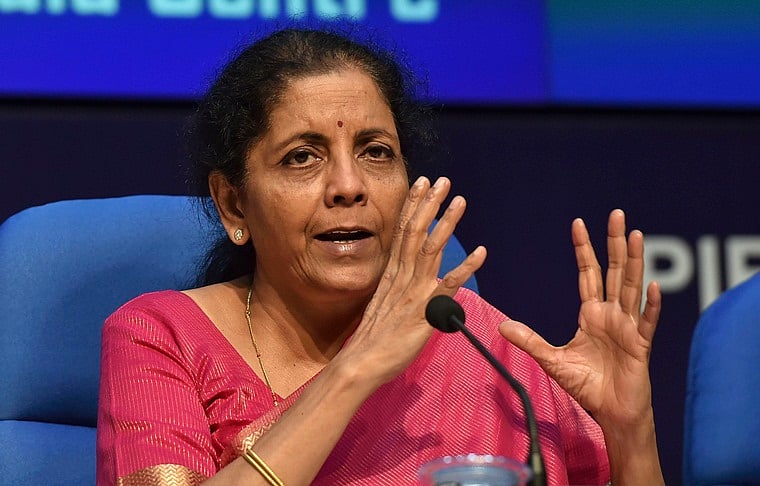
Union Finance Minister Nirmala Sitharaman | (PTI Photo/Manvender Vashist)
Since taking office in 2019, Finance Minister Nirmala Sitharaman has steered the Indian economy through a period of structural transformation and global volatility.
Her budgets have been characterised by a decisive pivot away from traditional populist subsidies toward a high-growth, investment-led model.
By prioritising massive infrastructure spending (Capex), simplifying the tax code and championing digital public infrastructure, she has focussed on formalising the economy and making India a competitive global manufacturing hub.
Here are five of her most significant reforms, from the most recent major shifts to her landmark early moves:
1. The Middle-Class Tax Overhaul
In her most recent full budget, Sitharaman significantly expanded the New Tax Regime to provide substantial relief to salaried individuals. The Reform: She raised the tax-exempt threshold so that individuals earning up to ₹12 lakh per year now pay zero income tax under the new regime. This move aims to simplify the tax filing process and put more disposable income back into the hands of millions, shifting the focus from complex exemptions to a cleaner, lower-rate system.
2. The Capex Revolution (2022–24)
Post-pandemic, Sitharaman executed a massive strategic shift by aggressively increasing capital expenditure (Capex) to drive growth. The government hiked the Capex outlay for three years straight, reaching a historic ₹11.11 lakh crore (approximately 3.4 per cent of GDP). This funded the PM Gati Shakti plan, leading to the rapid construction of highways, the modernisation of railways (Vande Bharat), and new airports, creating a long-term multiplier effect for jobs and trade.
3. Privatisation & New PSE Policy (2021)
Coming out of the 2020 economic shock, she introduced a bold "exit strategy" for the government from non-essential businesses. A new policy for Public Sector Enterprises (PSEs) was launched, limiting the government to a "minimal presence" in just four strategic sectors and committing to privatise the rest. This led to the landmark sale of Air India and the mega-IPO of LIC, signalling a clear break from decades of state-controlled commercial operations.
4. Introduction of the "New Tax Regime" (2020)
This was a fundamental shift in how India approaches personal income tax designed to end the era of forced savings through tax-saving instruments. She introduced an optional, parallel tax system with lower rates but zero deductions (like 80C or HRA). It simplified tax compliance for the digital generation and eventually became the default tax regime in 2023, marking a permanent change in India’s fiscal culture.
5. The Corporate Tax "Bazooka" (2019)
Just months into her first term, Sitharaman announced one of the most significant supply-side reforms in Indian history. She slashed the base corporate tax rate from 30% to 22% for existing companies and to just 15% for new manufacturing units. This made India’s tax structure globally competitive, directly triggering the launch of Production Linked Incentive (PLI) schemes that attracted giants like Apple and Samsung to manufacture in India.
RECENT STORIES
-
-
-
-
-