Rahul Gandhi Defamation Case: Savarkar's Grandnephew Says 1923 Congress Resolution & Public Pressure Led To His Release, Not Mercy Petitions
During Rahul Gandhi's criminal defamation case, V D Savarkar's grandnephew Satyaki Savarkar told a Pune court that the freedom fighter was released due to mounting public pressure and the 1923 Kakinada Congress resolution, not because of mercy petitions. He also claimed that a similar Congress resolution before the executions of Bhagat Singh, Rajguru and Sukhdev could have prevented their hanging.

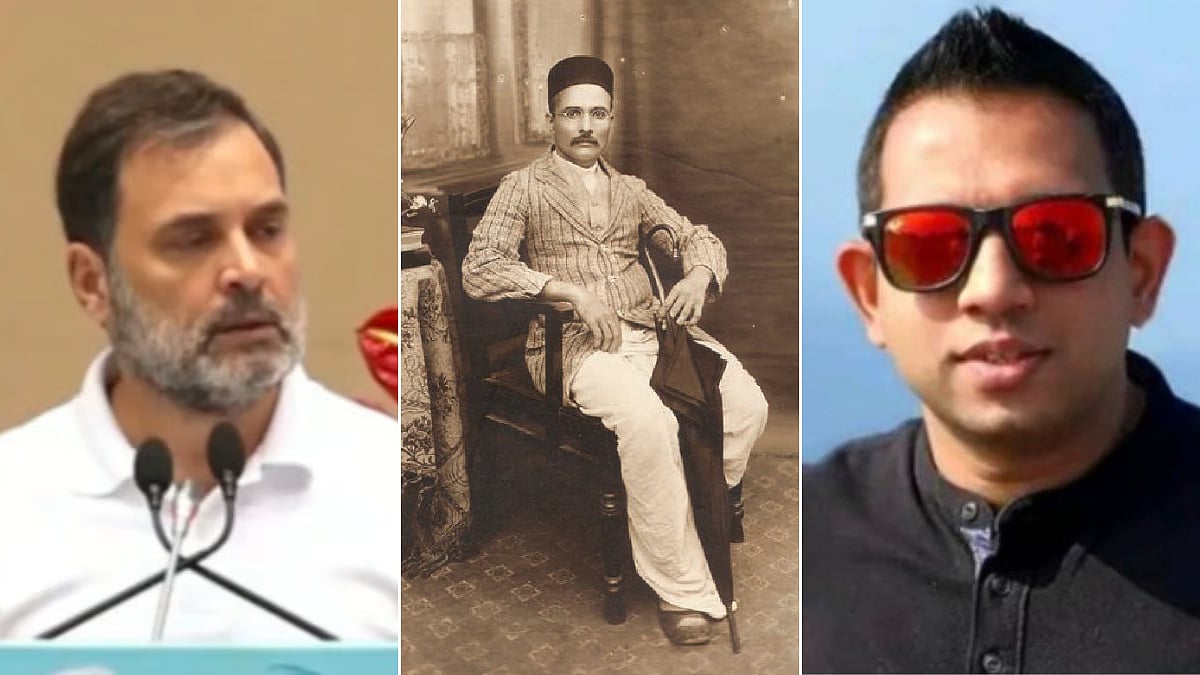
Rahul Gandhi Defamation Case: Savarkar's Grandnephew Says 1923 Congress Resolution & Public Pressure Led To His Release, Not Mercy Petitions | X
Pune: Hindutva ideologue V D Savarkar was released by the British not because of the mercy petitions he had filed but due to mounting public pressure, including a resolution passed by the Kakinada session of the Congress in 1923 demanding his release, his grandnephew Satyaki Savarkar told a Pune court on Wednesday.
ALSO READ
He further remarked that "had the Congress adopted a similar resolution before the execution of Bhagat Singh, Rajguru and Sukhdev, their execution would have been avoided".
Satyaki was cross-examined by advocate Milind Pawar, appearing for Congress leader Rahul Gandhi, in the criminal defamation case filed against the Leader of Opposition over his remarks on V D Savarkar.
During the cross-examination before Judge Amol Shinde of the MP/MLA special court, portions of the mercy petitions purportedly filed by Savarkar before the British government were put to the complainant.
"I don't know that the contents of the above petition are written by Savarkar. I cannot say that Savarkar requested to be released on any condition in his mercy petition. I cannot say that Savarkar had requested the British government to release him on the condition that he would not participate in any political and revolutionary movement," Satyaki said.
He, however, voluntarily added that Savarkar's release was not the result of the mercy petitions.
"Witness voluntarily states that Savarkar was not released because of the petitions he sent. In 1923, the Kakinada Congress, under the presidentship of Mohammad Ali Johar, passed a resolution for the release of Savarkar. Because the popularity of Savarkar was increasing day by day and public pressure for his release was increasing," Satyaki told the court.
He further remarked that "had the Congress adopted a similar resolution before the execution of Bhagat Singh, Rajguru and Sukhdev, their execution would have been avoided".
The case stems from a complaint filed by Satyaki in 2023, alleging that Rahul Gandhi made defamatory remarks about V D Savarkar during a speech in London in March that year by falsely claiming that the Hindutva ideologue had written in a book about assaulting a Muslim man and deriving pleasure from it.
The complainant has contended that Savarkar never made such a statement in any of his writings.
(Except for the headline, this article has not been edited by FPJ's editorial team and is auto-generated from an agency feed.)
RECENT STORIES
-
-
-
-
-