Maha CM Devendra Fadnavis Calls For Long-Term Water Security Plans For Mumbai, Pune; 8 TMC Water From Mulshi Dam Under Consideration
Maharashtra CM Devendra Fadnavis ordered long-term water security plans for Pune and Mumbai on November 20. Pune's demand is projected to reach 100 TMC by 2047 as its population rises to 4.12 crore, while Mumbai may need 16,139 MLD by 2051. Proposals include river-linking, recycled sewage, smart meters and new water projects, alongside measures to reduce leakage and industrial freshwater use.

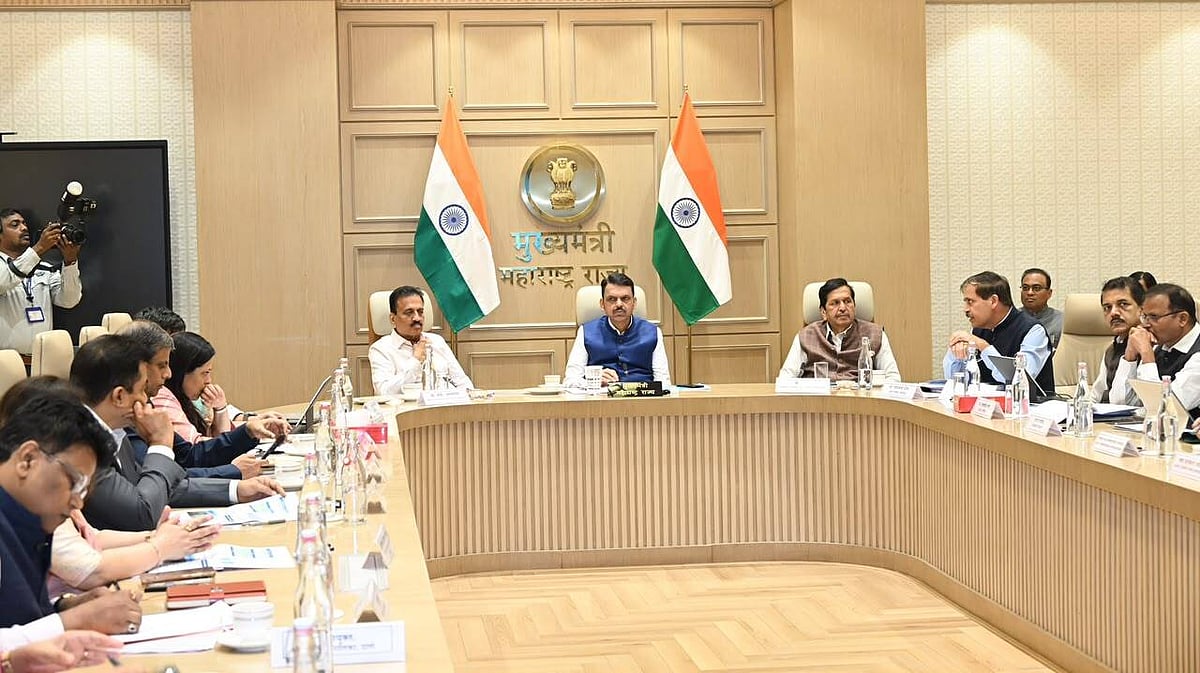
Maha CM Devendra Fadnavis Calls For Long-Term Water Security Plans For Mumbai, Pune; 8 TMC Water From Mulshi Dam Under Consideration | File Pic
Pune, Nov,20: With Pune Metropolitan Region’s population projected to more than double to 4.12 crore by 2047, and Mumbai’s expanding industrial activity expected to significantly increase water demand in both the cities, Chief Minister Devendra Fadnavis on Friday directed authorities to prepare comprehensive, time-bound and financially viable water security plans for both metropolitan regions. While Mumbai’s water requirements will be assessed up to 2051, Pune’s long-term water planning will focus on meeting demand until 2047, with emphasis on developing additional sources, recycling treated sewage, controlling water leakage and improving the utilisation of existing resources.
Fadnavis issued the directions during a review meeting on water planning and management in the Mumbai and Pune Metropolitan Region Development Authority (MMRDA and PMRDA) areas, held at his official residence, Varsha, in Mumbai. Water Resources Minister Girish Mahajan, Mumbai city co-guardian minister Mangal Prabhat Lodha and senior officials were present.
The Chief Minister stressed that future water planning must account for increasing domestic consumption, industrial expansion and the growing requirements of data centres. He directed authorities to expedite ongoing water projects, pursue necessary forest and environmental clearances, and undertake land acquisition and rehabilitation processes simultaneously to avoid delays.
Fadnavis said, “An integrated, time-bound and financially viable long-term water plan should be prepared, keeping in mind the projected population, urbanisation and growing industrial requirements of the Mumbai Metropolitan Region up to 2051 and the Pune Metropolitan Region up to 2047. Along with new projects, emphasis must be placed on the reuse of treated sewage, controlling water leakage, rainwater harvesting and exploring alternative water sources.”
He also instructed municipal corporations and councils to conduct water audits and maintain accurate records of water entering the distribution system, actual supply and billing. The use of smart meters for commercial and industrial consumers should be increased to progressively reduce non-revenue water.
Pune demand for a water project to reach 100 TMC by 2047
The Pune Metropolitan Region’s current population of approximately 1.80 crore is expected to increase to 4.12 crore by 2047, according to a presentation made by PMRDA Metropolitan Commissioner, Abhijit Chaudhary. The region currently has a water allocation of 36.90 TMC against an estimated demand of 41.65 TMC.
By 2047, the total water requirement is projected to reach approximately 100 TMC, equivalent to 7,816 million litres per day (MLD), highlighting the widening gap between available resources and future demand.
To address this, Fadnavis directed officials to examine the technical and financial feasibility of bringing approximately 8 TMC of water from Mulshi dam to the Khadakwasla area through a dedicated pipeline. He also called for exploring river-basin linking, additional water sources and groundwater recharge as part of Pune’s long-term water security strategy.
Another major proposal discussed was the possibility of diverting water from the Savitri river basin in the central Konkan region towards the Kukadi, Bhima, Indrayani, Mula-Mutha and Nira river basins to meet Pune’s growing requirements.
Fadnavis directed and said, “The Konkan-to-Bhima river-linking project could be a viable option for meeting the future water requirements of the Pune Metropolitan Region. A preliminary project report should be prepared to examine its feasibility.”
The Chief Minister also emphasised the need to reduce dependence on freshwater sources by treating sewage through tertiary treatment and supplying it to industries, power plants and data centres. Water treated through secondary processes should be utilised for irrigation, reducing the demand for potable water.
ALSO READ
He further directed authorities to reduce leakage and unmetered water supply through 24 hour water supply schemes, smart meters and repairs to ageing pipelines.
Chief Minister said, “These measures can help save approximately 350 million litres of water per day.”
Separate company for industrial water supply
Fadnavis also directed the Maharashtra Industrial Development Corporation (MIDC) to prepare a proposal for establishing a wholly owned subsidiary to manage water supply for industries and data centres.
The proposed company would procure water from conventional sources as well as treated wastewater from municipal sewage treatment plants and distribute it to industrial consumers. It would also integrate the operation and maintenance of existing treatment facilities with industrial water supply.
Also Watch:
Mumbai’s water demand to reach 16,139 MLD by 2051
The Mumbai Metropolitan Region, which currently has a population of approximately 2.75 crore, is expected to require 16,139 MLD of water by 2051, according to a presentation made by MMRDA Metropolitan Commissioner Dr Sanjay Mukherjee.
Existing sources, including Bhatsa, Pinjal, Tansa and Vaitarna, will continue to play a crucial role in meeting the region’s requirements. However, Fadnavis said that additional infrastructure and alternative sources would be necessary to bridge the projected gap between water availability and demand.
He directed officials to expedite proposed water projects, including Kalu, Deharji, Balaganga, Kondhane, Khopalsapada and Shilar, by prioritising forest clearances, environmental permissions, land acquisition and rehabilitation.
The Chief Minister instructed departments to secure the necessary permissions before commencing project work and ensure that implementation is not delayed due to administrative hurdles.
The Mumbai region’s long-term water strategy will also incorporate sewage recycling through secondary and tertiary treatment, dedicated distribution networks for treated wastewater and rainwater harvesting.
RECENT STORIES
-
-
-
-
-