Western Railway Records 100 Per Cent Pass Rate In 18,610 Drinking Water Quality Tests Across Its Network
Western Railway reported a 100% pass rate in 18,610 drinking water quality tests conducted between September 1 and October 20, 2026. The Medical Department carried out 15,936 residual chlorine tests and 2,674 bacteriological tests across railway stations and colonies. The administration said regular monitoring and corrective measures would continue to maintain water quality.

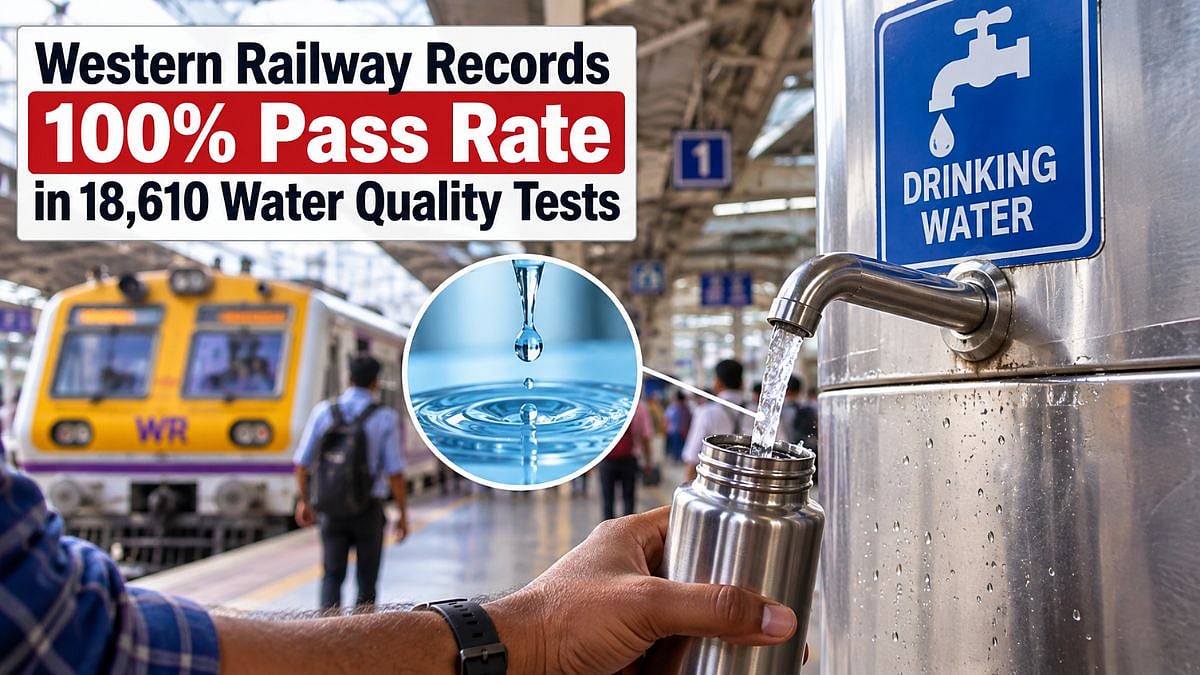
Western Railway says all 18,610 drinking water samples tested between September 1 and October 20 met the prescribed checks | AI Generated Representational Image
Mumbai, October 21, 2026: Western Railway has reported a 100% pass rate in all 18,610 drinking water quality tests conducted across its network between September 1 and October 20, 2026.
The tests included checks for residual chlorine and bacteriological contamination, with the railway administration saying the results indicate that the samples met the prescribed checks during the period.
18,610 Water Quality Tests Conducted
According to Western Railway, its Medical Department conducted 15,936 residual chlorine tests to check the effectiveness of water disinfection. All the samples passed.
Another 2,674 bacteriological tests were carried out to assess microbiological safety, and these too recorded a 100% pass rate. The monitoring covered drinking water facilities at railway stations and in railway colonies.
The two types of tests serve different purposes. Residual chlorine testing checks whether sufficient chlorine remains in the water to support disinfection, while bacteriological analysis helps detect harmful microorganisms that may pose a risk to public health. Regular testing is intended to identify possible contamination and ensure that drinking water remains safe for consumption.
Monitoring Across Railway Stations And Colonies
Western Railway said the monitoring programme involved regular sampling, laboratory analysis, supervision and coordination between departments.
The administration added that its responsibility extended beyond passenger services to include the health and well-being of railway employees and their families living in railway colonies.
The Medical Department will continue to conduct water quality checks and maintain hygiene standards across the network, the railway said. It also said corrective measures would be taken whenever required.
Also Watch:
The reported results provide a snapshot of water quality during the monitoring period. However, regular surveillance remains important because water quality can change over time due to contamination in storage tanks, pipelines or distribution systems. Continued testing is therefore necessary to ensure that safe drinking water remains available to passengers and railway residents.
To get details on exclusive and budget-friendly property deals in Mumbai & surrounding regions, do visit: https://budgetproperties.in/
RECENT STORIES
-
-
-
-
-