Thane Sessions Court Acquits Woman Constable In WhatsApp Disaffection Case, Sets Aside 2026 Conviction
The Thane Sessions Court acquitted police constable Kavita Patange and set aside her 2026 conviction for allegedly inciting disaffection among police personnel. The court cited lack of valid sanction, inadmissible electronic evidence, failure to prove authorship of a WhatsApp message, and other investigative shortcomings that created reasonable doubt.

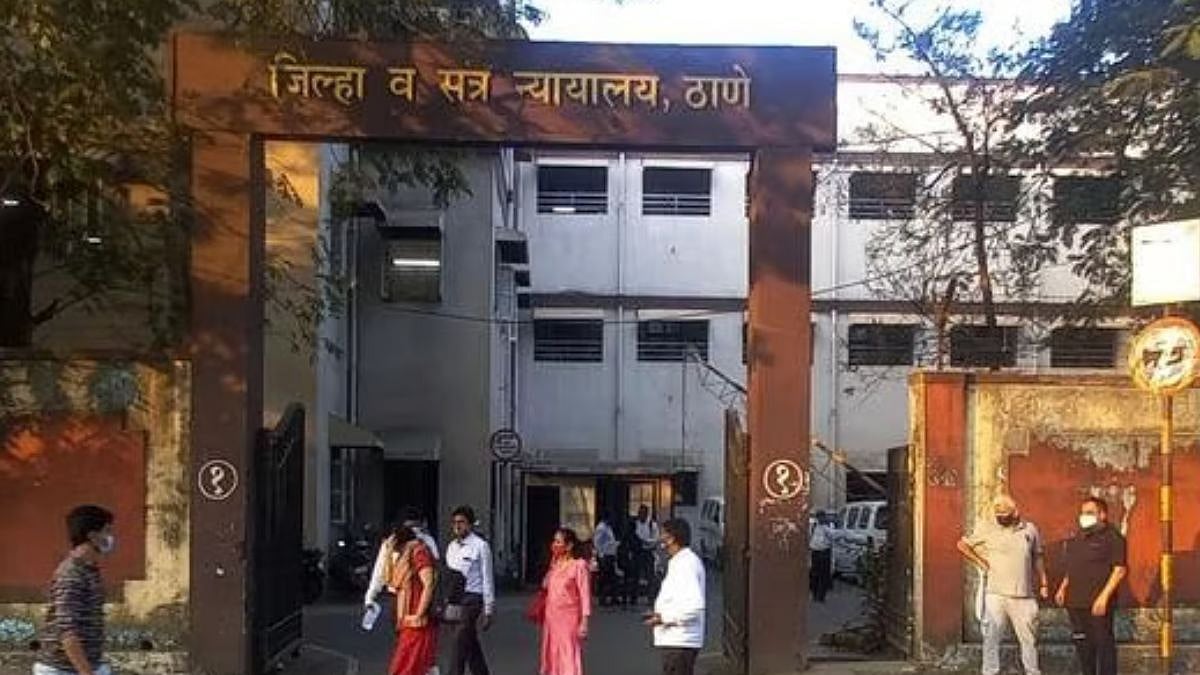
Thane Sessions Court overturned the conviction of a police constable after finding serious legal and evidentiary flaws in the prosecution's case | File Photo
Thane, June 24: The Thane Sessions Court has set aside the conviction of police constable Kavita Narayan Patange (41), who was sentenced by a magistrate’s court for allegedly inciting disaffection among police personnel through a WhatsApp message and other acts of indiscipline in 2017.
“The benefit of this doubt must, in law, enure to the appellant,” the court observed, holding that the prosecution had failed to establish the charges beyond reasonable doubt.
The court accepted Kavita’s appeal and acquitted her of charges under the Police Forces (Restrictions of Rights) Act, 1966 and the Police (Incitement of Disaffection) Act, 1922.
Holding that the conviction passed by the lower court definitely warranted interference, the appellate court has set aside the judgment and sentence passed by the Chief Judicial Magistrate, Thane, in March 2026.
Conviction Challenged In Appeal
Kavita, attached to the Thane City Police Headquarters, had been accused of posting a message in a WhatsApp group of women police constables alleging that personnel were being exempted from duty in exchange for payments ranging from Rs 8,000 to Rs 10,000.
The prosecution also alleged that she remained absent from assigned duties, threatened to approach the media and encouraged fellow constables not to fear their superiors.
The trial court had convicted Patange on March 27, 2026, sentencing her to six months’ simple imprisonment and a fine of Rs 2,000 on each count, with both sentences directed to run concurrently.
Kavita had filed an appeal against the conviction before the Thane Sessions Court. The Sessions Court, on re-examining the evidence, found several serious deficiencies in the prosecution’s case.
The court noted that the disputed WhatsApp message had been produced only through screenshots and photocopies and was unsupported by the mandatory certificate under Section 65-B of the Indian Evidence Act. No mobile phone was seized and no forensic examination was conducted to establish the authorship of the message.
Court Finds Evidentiary Deficiencies
The court further observed that key prosecution witnesses admitted that duty allocations were communicated only orally or through WhatsApp and that Patange was on parallel deputation to the Samadhan Helpline during the relevant period.
It also found that the prosecution relied entirely on departmental witnesses, with no independent evidence to substantiate the allegations, thus creating a doubt about the unbiased investigation.
Significantly, the Sessions Court held that the prosecution under the Police (Incitement of Disaffection) Act suffered from a fundamental legal defect because the mandatory sanction for prosecution was granted by a Deputy Commissioner of Police rather than the Commissioner of Police, who alone was empowered under the statute to accord such sanction.
The court observed that the prosecution was vitiated by a series of defects, including the absence of valid sanction under Section 5 of the 1922 Act, the inadmissibility of the electronic evidence due to the lack of a Section 65-B certificate, the failure to establish authorship of the alleged WhatsApp message, and the withholding of crucial evidence such as mobile phones, call detail records, SIM details and IP address data.
Prosecution Case Questioned
The court further questioned the prosecution as to whether an internal departmental WhatsApp group could even constitute “publication” or “communication with the press” under the Police Forces (Restrictions of Rights) Act.
It also found fault with the investigation for failing to produce any duty registers, rosters or written duty allotment records to establish the charges against the appellant.
Additionally, the court pointed out that there was no independent or neutral witness to the alleged incidents at the parade ground and in the DCP’s chamber.
Meanwhile, the court maintained that one of the prosecution’s own witnesses had corroborated Patange’s explanation that she was on parallel deputation, while another witness directly contradicted the prosecution’s version regarding her alleged misconduct.
Also Watch:
ALSO READ
The Sessions Court, while passing its verdict, maintained that an appellate court is duty-bound to interfere where a trial court proceeds without valid sanction or relies on inadmissible evidence and arrives at conclusions unsupported by the evidence on record. It concluded that the trial court had adopted a flawed appreciation of both the law and the evidence.
To get details on exclusive and budget-friendly property deals in Mumbai & surrounding regions, do visit: https://budgetproperties.in/
RECENT STORIES
-
-
-
-
-