Navi Mumbai: Flamingos May Arrive Early In November As Environmentalists Warn Of Deteriorating Wetlands
Flamingos could arrive in Mumbai and Navi Mumbai as early as mid-to-late November 2026, with numbers expected to peak by February 2027. Environmentalists warn that pollution, algal growth, drainage problems and encroachments threaten wetlands, urging urgent restoration, protection of tidal flows and action against pollution before the migratory birds arrive.

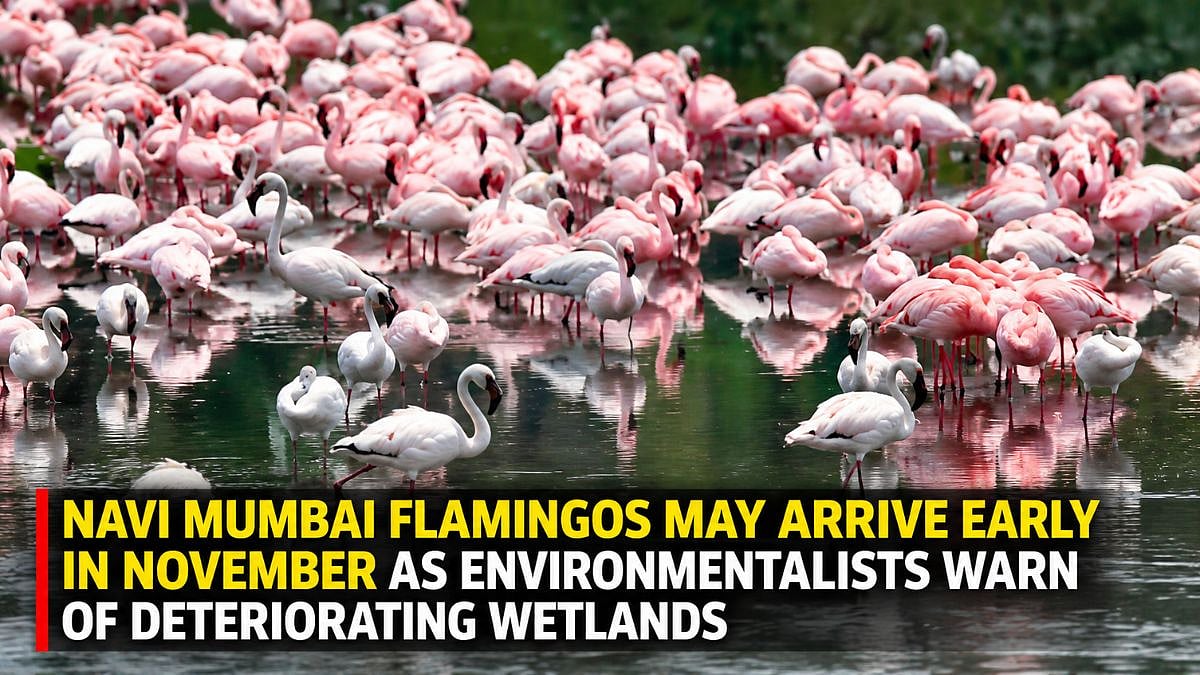
Flamingos may return to Navi Mumbai’s wetlands as early as November, prompting calls for urgent restoration of their threatened feeding habitats | AI Generated Image
Navi Mumbai, October 20, 2026: Flamingos are expected to arrive in Mumbai and Navi Mumbai as early as mid or late November this year, nearly two months earlier than last season, but environmentalists have warned that deteriorating wetland conditions could threaten their feeding grounds.
Last year, the migratory birds began arriving in the region only in January, which was attributed to good rainfall along the country's western coast.
This year, however, environmental conditions could prompt an earlier arrival, with the flamingo population expected to build gradually and reach its peak by February 2027. The birds are likely to remain in the region until June or July.
Deficient Monsoon Could Prompt Early Arrival
Principal scientist Mrugank Prabhu of Srushti Conservation Foundation expects the birds to arrive early, possibly in larger numbers. He said the deficient monsoon in Kutch could influence water levels and food availability, potentially prompting flamingos to seek alternative feeding grounds earlier than usual.
Prabhu has been studying bird movements along the Central Asian Flyway, an important migratory route used by flamingos and other birds.
Environmentalists Flag Wetland Conditions
NatConnect director B N Kumar said the three wetlands were not adequately prepared to receive the migratory birds, which draw birdwatchers and nature enthusiasts to Navi Mumbai and the Thane Creek Flamingo Sanctuary (TCFS), a Ramsar site.
The concerns follow private laboratory tests commissioned by NatConnect earlier this year, which reportedly found elevated pollution indicators in water samples collected from all three locations.
Kumar said that during the previous migratory season, flamingos had moved north to Sambhar Lake in Rajasthan, while their arrival in the Mumbai region began in smaller batches.
He warned that deteriorating wetland conditions could undermine the region's ability to provide suitable feeding grounds, particularly if the birds arrived early in search of alternative habitats.
Algal Growth And Drainage Problems Raise Concerns
NRI Wetland in Nerul has been affected by extensive algal growth, while the adjoining TS Chanakya Wetland faces waterlogging and drainage problems. Environmentalists have attributed these issues to encroachments and interference with natural water flows.
Jyoti Nadkarni, director of Swarnshrushti Habitat Restoration Foundation, said mangrove and wetland conservation had taken a back seat despite Bombay High Court orders and the appointment of committees to protect biodiversity.
Wetlands Offer Nature-Based Tourism Potential
Beyond their ecological significance, the wetlands offer considerable potential for nature-based tourism. Flamingos, mangroves, mudflats and tidal creeks could support guided birdwatching tours, nature education programmes and local enterprises, generating livelihood opportunities for guides and businesses in the transport and hospitality sectors.
Call For Immediate Wetland Restoration
Sandeep Sareen of the Navi Mumbai Environment Preservation Society stressed the need for immediate cleaning and restoration work before the arrival of the migratory birds.
“The health of these wetlands is important not just for flamingos. They support fishing communities and act as urban sponges, absorbing excess water from high tides and floods,” he said.
Environmentalists have called for the identification of pollution sources, restoration of natural tidal flows, action against encroachments and effective legal protection for the wetlands.
Also Watch:
ALSO READ
They said preserving Navi Mumbai's reputation as ‘Flamingo City’ would require sustained efforts to restore its wetlands, protect biodiversity and ensure that nature-based tourism develops without compromising the fragile ecosystem.
To get details on exclusive and budget-friendly property deals in Mumbai & surrounding regions, do visit: https://budgetproperties.in/
RECENT STORIES
-
-
-
-
-