Navi Mumbai: Activists Urge NMMC To Assess Morbe Dam Silt As Water Security Concerns Grow
Environmental activists have urged NMMC to assess sediment accumulation and current storage capacity at Morbe Dam amid recurring water supply disruptions in Navi Mumbai. An RTI response cited by NatConnect indicates the reservoir has not been desilted in nearly 25 years. Activists also seek rainwater harvesting, groundwater recharge and treated wastewater reuse.

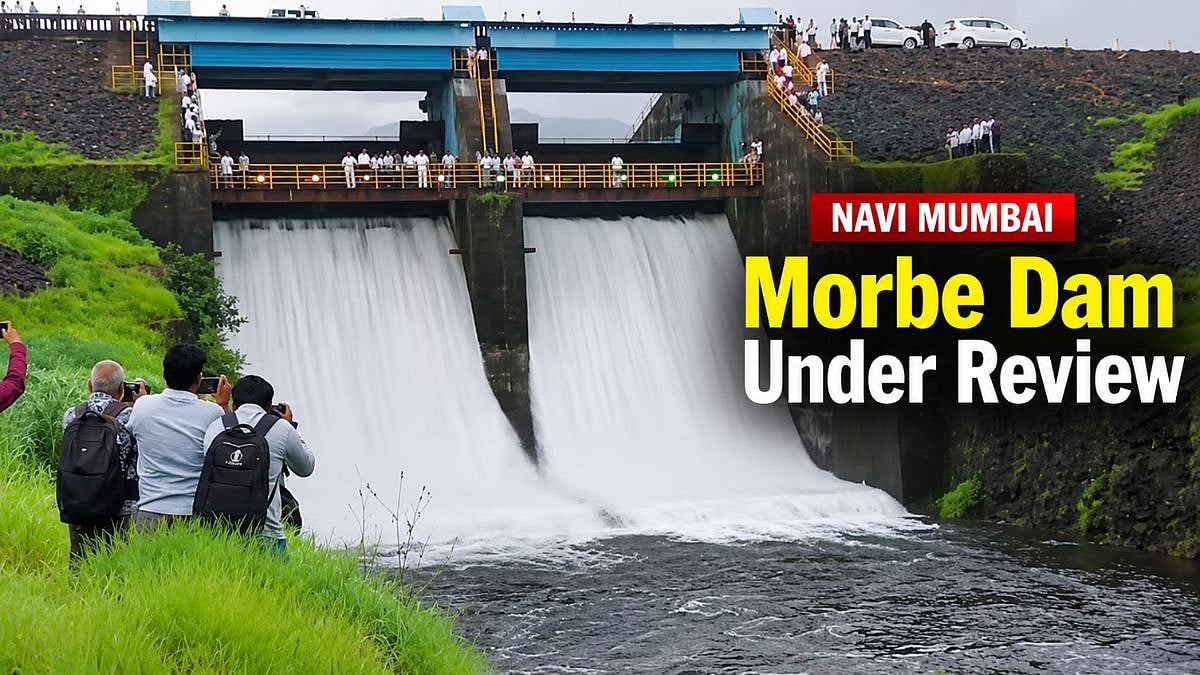
Environmental activists have called for a scientific assessment of sediment accumulation at Morbe Dam amid concerns over Navi Mumbai’s water supply and reservoir management | AI Generated Image
Navi Mumbai, October 9, 2026: With recurring water supply disruptions raising concerns over Navi Mumbai’s long-term water security, environmental activists have urged the Navi Mumbai Municipal Corporation (NMMC) to conduct a scientific assessment of sediment accumulation at Morbe Dam and explore the feasibility of desilting the reservoir.
In a representation to NMMC Commissioner Dr Kailas Shinde, NatConnect Foundation Director B N Kumar said the civic body must establish the dam’s current storage capacity, sediment load and the feasibility of removing accumulated silt to protect the city’s water reserves.
An RTI response from NMMC, cited by NatConnect, indicates that Morbe Dam has not been desilted since it came under the corporation’s control nearly 25 years ago.
The disclosure has raised questions about long-term reservoir management at a time when residents are reporting inadequate water pressure and prolonged supply disruptions following pipeline repairs and leakages.
Concerns Over Declining Water Storage
The demand for a scientific assessment comes amid concerns raised by BJP MLA Manda Mhatre over declining water levels, alleged unauthorised water withdrawals by developers and irregularities in distribution. The civic administration has called an urgent meeting to review the city’s water supply situation.
Data from NMMC for May 2025, cited in NatConnect’s representation, showed that against the dam’s designed storage capacity of 190.890 million cubic metres (MCM), the actual storage stood at 82.557 MCM, or 43.24%.
After accounting for a month’s emergency reserve, the usable storage was 51.957 MCM, or 27.22%. NatConnect has sought updated figures to establish the current storage position.
“Desilting becomes difficult when a reservoir is full. NMMC should assess whether exposed portions of Morbe’s reservoir bed can be cleared of accumulated silt. A scientific survey must first establish the sediment load, actual live storage and feasibility of removal,” Kumar said.
Call For Scientific Sediment Assessment
The Union government’s National Framework for Sediment Management recognises that sediment accumulation can reduce reservoir storage capacity and recommends scientific monitoring, including bathymetric surveys, to assess sedimentation. NatConnect has urged the civic body to undertake such an assessment before deciding on any desilting measures.
Shrikant Patki, convenor of Navi Mumbai Nagrik Manch, criticised what he described as a reactive approach to water management.
“It is like digging a well only after your beard catches fire. Our administrators and politicians seem to act only when a crisis hits. The NMMC RTI response that Morbe Dam has never been desilted raises serious questions about long-term planning. Water security requires advance action, not last-minute firefighting,” Patki said.
Activists Seek Long-Term Water Planning
Subhajit Mukherjee, founder of Har Ghar Jal Sanchay Abhiyan, said civic authorities often prioritise short-term engineering interventions over long-term environmental conservation.
“They treat water as a depleting commodity rather than a cultivable asset. True security lies in ‘Pani Ki Kheti’ — protecting natural sponges right at the source,” he said, calling for stronger political commitment to restoring natural catchments.
Apart from reviewing Morbe Dam’s storage capacity, NatConnect has urged NMMC to expand rainwater harvesting and groundwater recharge initiatives. It has also called for greater use of adequately treated sewage water for non-potable purposes such as toilet flushing, vehicle washing and gardening, thereby reducing the demand for potable water.
Kumar said parallel pipelines supplying treated wastewater and tanker supplies for housing societies with adequate storage could be considered as interim measures during shortages.
Also Watch:
ALSO READ
“The city must protect its reservoirs, harvest rainfall and stop using potable water where properly treated recycled water will suffice,” he said.
The activists have stressed that safeguarding Navi Mumbai’s water security requires a combination of reservoir management, conservation of natural catchments, wastewater reuse and better demand management, rather than relying solely on measures taken after shortages emerge.
To get details on exclusive and budget-friendly property deals in Mumbai & surrounding regions, do visit: https://budgetproperties.in/
RECENT STORIES
-
-
-
-
-