Mumbai Obesity Patient’s Hidden H Pylori Infection Detected Before GLP-1 Weight-Loss Therapy
Based on the patient's symptoms, doctors suspected H. pylori infection, a common bacterial infection associated with chronic gastritis, bloating, acidity and reflux. Instead of opting for an invasive upper gastrointestinal endoscopy, the clinical team used a non-invasive Urea Breath Test, which confirmed active H. pylori infection.

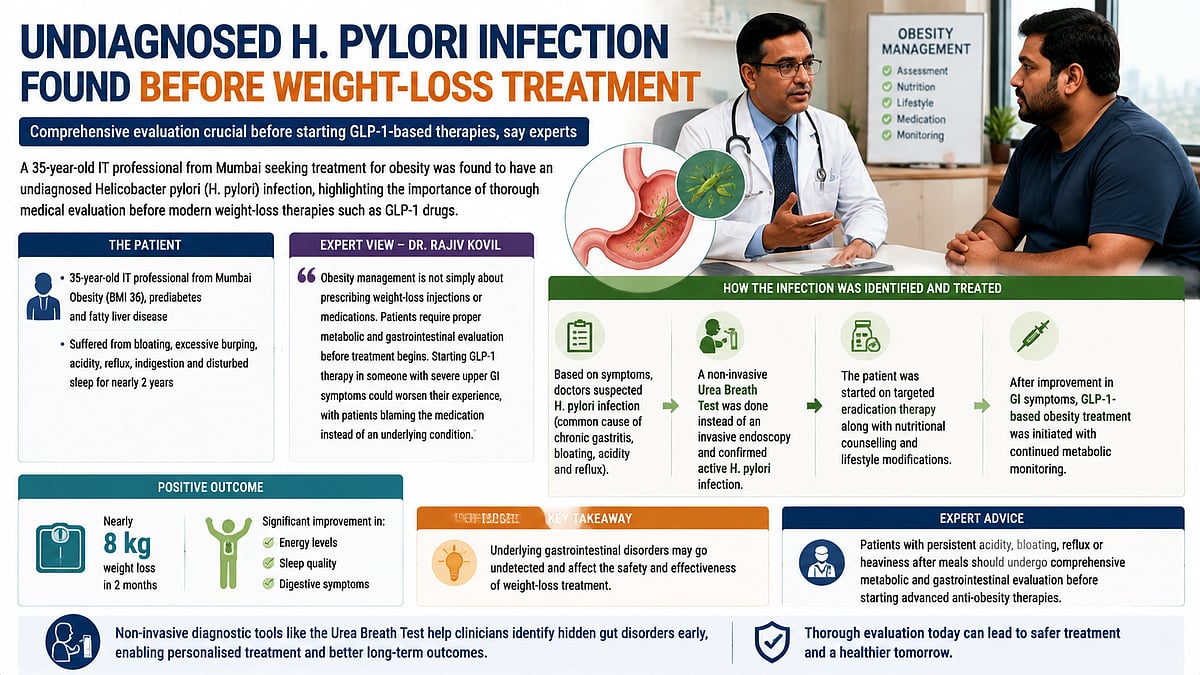
Mumbai Obesity Patient’s Hidden H Pylori Infection Detected Before GLP-1 Weight-Loss Therapy | AI
Mumbai: A 35-year-old Mumbai-based IT professional seeking treatment for obesity was found to have an undiagnosed Helicobacter pylori (H. pylori) infection, underscoring the importance of comprehensive medical evaluation before starting modern weight-loss therapies such as GLP-1 drugs.
Patient Had Obesity, Prediabetes and Long-Standing Digestive Issues
The patient, identified as Yagya Mehta (name changed), approached a metabolic health and longevity centre with obesity (BMI 36), prediabetes and fatty liver disease. While his condition initially appeared to be a routine obesity case, specialists discovered he had been suffering from persistent gastrointestinal symptoms—including bloating, excessive burping, acidity, reflux, indigestion and disturbed sleep—for nearly two years.
According to Dr. Rajiv Kovil, the patient's symptoms warranted detailed gastrointestinal assessment before initiating GLP-1-based obesity treatment.
Non-Invasive Test Confirms Hidden H. Pylori Infection
"Obesity management is not simply about prescribing weight-loss injections or medications. Patients require proper metabolic and gastrointestinal evaluation before treatment begins. Starting GLP-1 therapy in someone already experiencing severe upper gastrointestinal symptoms could worsen their treatment experience, with patients mistakenly attributing the discomfort to the medication instead of an underlying condition," he said.
Based on the patient's symptoms, doctors suspected H. pylori infection, a common bacterial infection associated with chronic gastritis, bloating, acidity and reflux. Instead of opting for an invasive upper gastrointestinal endoscopy, the clinical team used a non-invasive Urea Breath Test, which confirmed active H. pylori infection.
Patient Loses 8 Kg After Personalised Obesity Management Plan
The patient was started on targeted eradication therapy along with nutritional counselling and lifestyle modifications. Following improvement in his gastrointestinal symptoms, doctors initiated GLP-1-based obesity treatment with continued metabolic monitoring.
ALSO READ
Within two months, the patient lost nearly 8 kg and reported significant improvement in energy levels, sleep quality and digestive symptoms.
Dr. Kovil said the case highlights a broader concern in obesity management, where underlying gastrointestinal disorders may go undetected and affect the safety and effectiveness of weight-loss treatment.
He advised that patients with persistent acidity, bloating, reflux or heaviness after meals should undergo comprehensive metabolic and gastrointestinal evaluation before starting advanced anti-obesity therapies. He added that non-invasive diagnostic tools such as the Urea Breath Test are helping clinicians identify hidden gut disorders early, allowing for more personalised treatment and better long-term outcomes.
To get details on exclusive and budget-friendly property deals in Mumbai & surrounding regions, do visit: https://budgetproperties.in
RECENT STORIES
-
-
-
-
-