Mumbai Medical Breakthrough: Wadia Hospital Doctors Successfully Treat Newborn With Rare Cantrell’s Pentalogy Syndrome
Doctors at Mumbai’s Wadia Hospital successfully treated a newborn girl diagnosed with Cantrell’s Pentalogy, a rare congenital condition affecting the heart, chest and abdominal wall. The multidisciplinary team performed complex reconstructive surgery to reposition exposed organs and repair affected structures. The baby recovered steadily and was discharged on the 20th postoperative day.

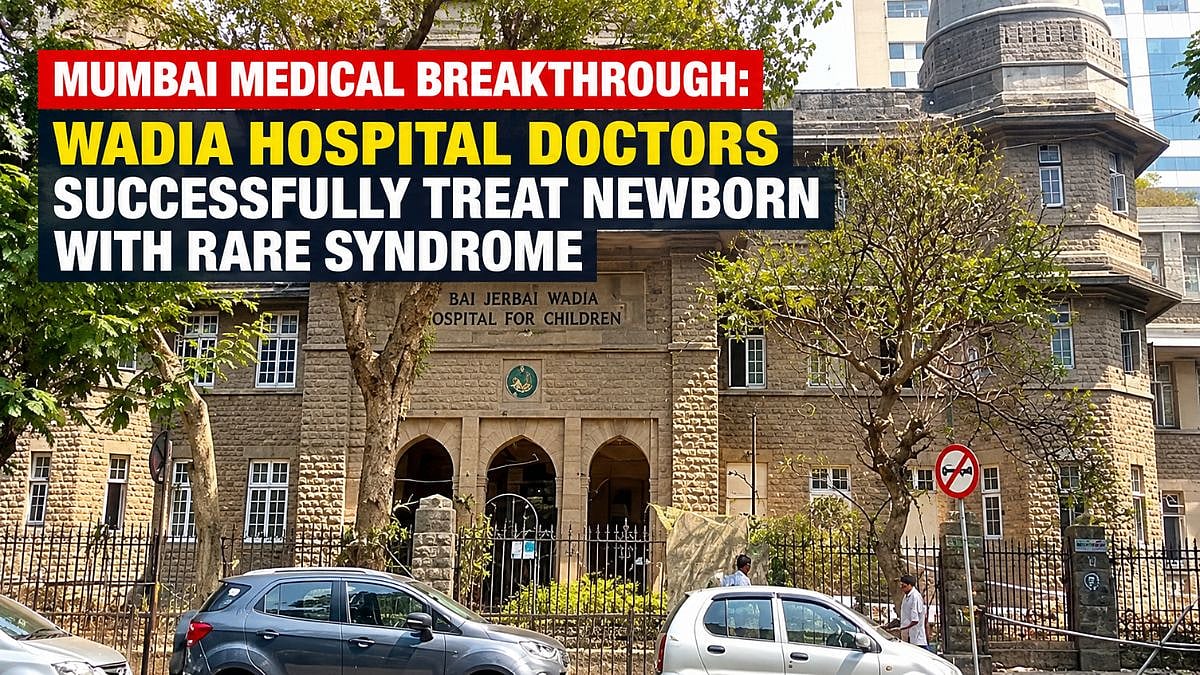
Doctors at Wadia Hospital performed complex reconstructive surgery on a newborn girl with a rare congenital condition affecting the heart and abdominal wall | AI Generated File Image
Mumbai, October 19, 2026: Doctors at Bai Jerbai Wadia Hospital for Children in Parel have successfully treated a newborn girl diagnosed with Cantrell's Pentalogy, an extremely rare congenital condition affecting the heart, chest and abdominal wall.
The baby underwent complex reconstructive surgery after being diagnosed during pregnancy and was discharged on the 20th postoperative day following a steady recovery.
Rare Congenital Condition Affects Multiple Organs
Cantrell's Pentalogy is a rare congenital condition involving five developmental defects affecting the abdominal wall, breastbone, diaphragm, protective covering of the heart and the heart itself. Severe cases may cause the heart and abdominal organs to develop outside their normal positions. The condition is estimated to occur in one in 65,000 to 200,000 live births.
The baby was delivered by a planned Caesarean section on June 17, 2026, after specialists identified the condition during pregnancy. She was immediately placed on ventilatory support for stabilisation and detailed evaluation.
Advanced imaging revealed a large defect in the lower chest and upper abdominal wall, through which the left ventricle of the heart, a substantial portion of the liver and bowel loops had developed outside the body.
She also had defects involving the sternum, diaphragm and pericardium, along with a ventricular septal defect (VSD) and a large patent ductus arteriosus (PDA).
Multidisciplinary Team Performs Complex Surgery
A multidisciplinary team planned the surgery after reviewing the imaging and rehearsing the operative strategy. During the procedure, surgeons carefully separated the exposed heart, liver and bowel loops from the surrounding sac.
They reconstructed the heart's protective covering using the baby's own pericardial tissue, supplemented with synthetic mesh where required. The organs were then repositioned, and the diaphragm and abdominal wall were reconstructed.
The surgery was performed by paediatric surgeons Dr Pradnya Bendre, Dr Gayatri Munghate and Dr Abhishek Mathur, along with cardiothoracic surgeon Dr Biswa Panda. Dr Suma led the neonatal care team, while radiologist Dr Saroj Chavan assisted with the surgery.
Also Watch:
Hospital Highlights Teamwork In Recovery
Dr Minnie Bodhanwala, chief executive officer of Bai Jerbai Wadia Hospital for Children, said the baby's recovery reflected coordinated teamwork, meticulous planning and the commitment of the multidisciplinary team.
She said the hospital remained committed to providing advanced paediatric care to critically ill children, irrespective of the rarity or complexity of their conditions.
To get details on exclusive and budget-friendly property deals in Mumbai & surrounding regions, do visit: https://budgetproperties.in/
RECENT STORIES
-
-
-
-
-