Maharashtra: Blood Centres Given 7 Days To Meet SBTC Norms, Face NOC Cancellation And Licence Action
The Maharashtra State Blood Transfusion Council has given blood centres seven days to comply with mandatory NOC conditions or face cancellation and possible licence action. The directive requires free blood for patients with specified disorders, minimum annual collection targets, daily stock updates, transparent charges and strict safety standards for blood collection, storage and transportation.

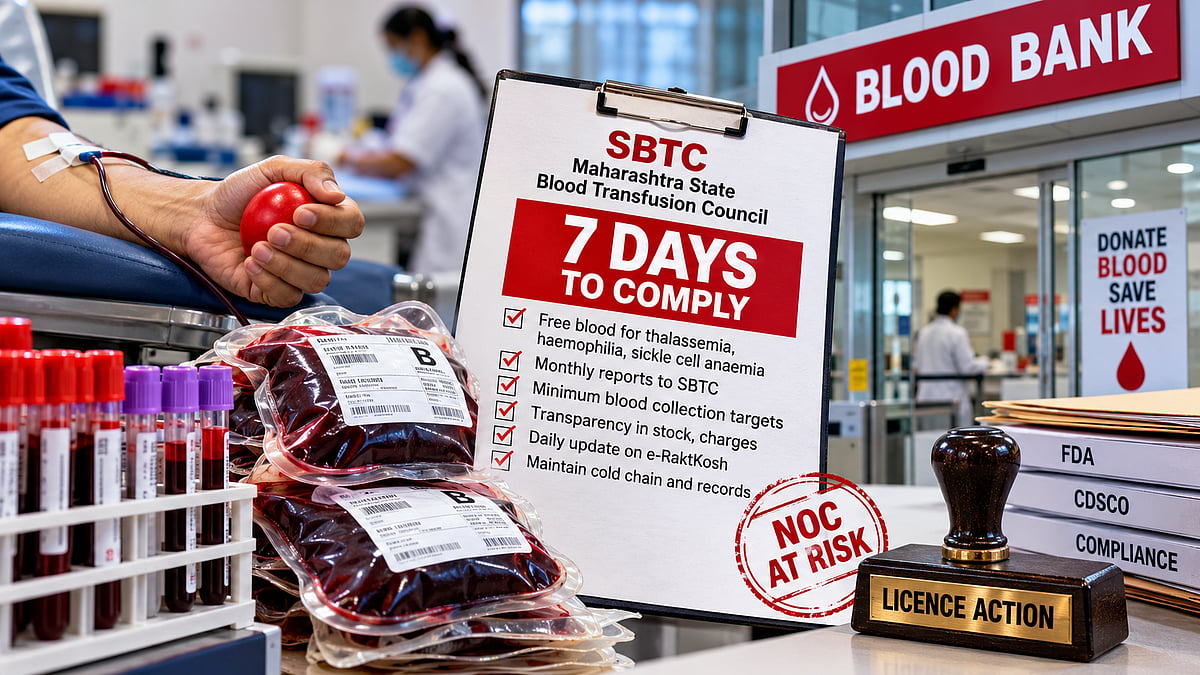
Maharashtra: Blood Centres Given 7 Days To Meet SBTC Norms, Face NOC Cancellation And Licence Action | AI
Mumbai: The Maharashtra State Blood Transfusion Council (SBTC) has given blood centres seven days to comply with mandatory conditions stipulated in their No Objection Certificates (NOCs), warning that violations could lead to cancellation of their NOCs and subsequent action against their licences.
Officials Directed To Serve Notices
In a circular, the council has directed district and regional blood transfusion officers to serve notices to the concerned centres. The directive follows reports of continued non-compliance despite reminders from the Food and Drug Administration (FDA), the Central Drugs Standard Control Organisation (CDSCO) and blood transfusion officials.
Under the revised compliance requirements, blood centres must provide blood and its components free of cost to patients suffering from thalassemia, haemophilia, sickle cell anaemia and other blood disorders requiring repeated transfusions. Centres must submit monthly reports on the facility to the SBTC by the fifth of the following month and prominently display information about free blood availability.
Annual Blood Collection Targets Fixed
The council has also prescribed minimum annual blood collection targets of more than 2,000 units for centres in urban, rural and tribal areas and more than 3,000 units for centres in metropolitan areas. All blood collection must be from healthy, voluntary and non-remunerated donors. New centres must establish blood component separation facilities from the beginning.
To improve transparency, centres must prominently display information about available blood stock, processing charges and additional testing fees. They must also maintain records of equipment calibration, staff details and biomedical waste management.
ALSO READ
Blood centres have been directed to update information daily on the e-RaktKosh or other designated portal. Registration of blood donation camps, maintenance of donor records and issuance of certificates must also follow the prescribed online procedures. Updating daily and monthly information on the SBTC website and responding to requests under the Right to Information (RTI) Act are mandatory.
The council will conduct annual reviews of blood centres. In cases of irregularities, it may cancel their NOCs immediately and inform the FDA and CDSCO to initiate action for cancellation of their licences. In the last couple of months, FDA has taken a number of action against blood banks for violations including giving branded watches to blood donors and diverting blood to another blood banks.
The directive further requires centres to maintain the prescribed temperature, cold chain and documentation while transporting blood and its components. A single centre can collect a maximum of 500 units of blood per day at a donation camp, in accordance with the applicable FDA order.
To get details on exclusive and budget-friendly property deals in Mumbai & surrounding regions, do visit: https://budgetproperties.in/
RECENT STORIES
-
-
-
-
-