Maharashtra Approves ₹6,500 Crore Plan To Procure 5,000 BEST-Owned AC Electric Buses
Maharashtra has approved a Rs 6,500-crore plan to procure 5,000 AC electric buses for BEST's owned fleet, ending nearly a decade of dependence on wet-lease buses. A separate plan to induct 1,500 leased electric feeder buses will improve last-mile connectivity across Mumbai.

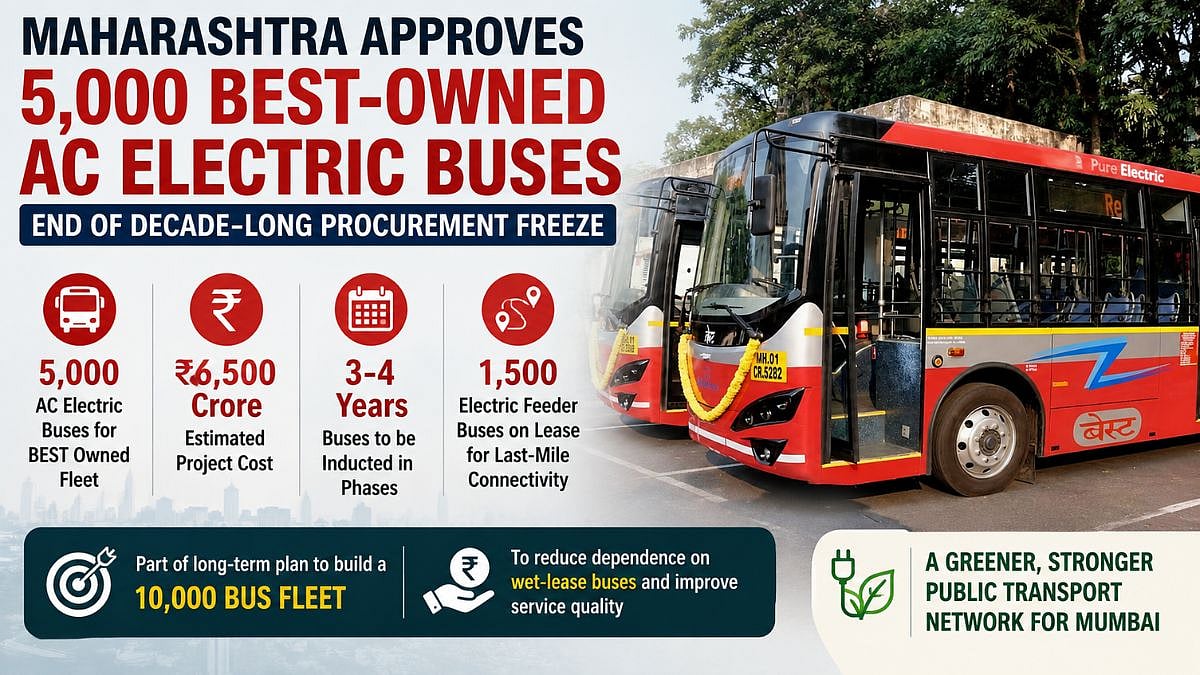
Maharashtra has approved the procurement of 5,000 owned AC electric buses to strengthen BEST's fleet and reduce reliance on wet-lease operators | AI Generated Image
Mumbai, July 21, 2026: In a major policy shift, the Maharashtra government has approved the procurement of 5,000 air-conditioned electric buses for the BEST Undertaking's owned fleet, ending a gap of nearly a decade during which the civic transport body relied largely on privately operated wet-lease buses.
The project, estimated to cost around ₹6,500 crore, was cleared on Tuesday after Deputy Chief Minister Eknath Shinde approved the proposal. BEST officials said the buses will be inducted over the next three to four years and will help the undertaking regain operational control while reducing dependence on private operators.
The approval is part of a long-term plan to build a fleet of 10,000 buses and comes amid growing concerns over accidents involving wet-lease buses.
Senior BEST officials said they received the minutes of the Deputy Chief Minister's approval during the ongoing BEST Committee meeting on Tuesday. Confirming the development, BEST General Manager Sonia Sethi said the undertaking has received permission to procure 5,000 AC electric buses for its owned fleet.
"We have received the minutes of the meeting from the DCM office for procuring 5,000 AC e-buses for our owned fleet. We will opt for self-owned buses with drivers, similar to the system followed in the past. The procurement is expected to cost approximately ₹6,500 crore," she said.
Shift Towards Owned Fleet
The decision marks a significant departure from BEST's recent dependence on the wet-lease model, under which private contractors own, maintain and operate buses while BEST manages routes and fares.
At present, BEST has a fleet of around 2,800 buses, of which only 249 are owned by the undertaking, while 2,551 are operated under wet-lease agreements.
Officials said the new procurement is intended to gradually restore a stronger owned fleet, giving BEST greater control over operations, maintenance and service quality.
Officials said the financial model for the procurement is being worked out and is expected to be placed before the BEST Committee within the next few meetings. The buses are likely to be inducted in phases over three to four years.
At the same time, the undertaking has also sought a feasibility study on absorbing wet-lease employees, particularly drivers, into BEST service. The proposal has been referred to the Law and Judiciary Department and the Finance Department for examination.
Depot Redevelopment Proposal
To support the expansion, BEST is also looking at redeveloping its land assets. Officials said 23 bus depots spread across nearly 132 acres have been identified for redevelopment, which could generate significant revenue for the financially stressed undertaking. However, the proposal has drawn opposition from employee unions.
"We are happy that our long-standing demand for increasing self-owned buses has finally been accepted. The BMC is already funding the procurement of these buses. Therefore, we oppose the plan to lease bus depot land," said Shashank Sharad Rao, leader of the BEST Workers' Union.
The approval comes against the backdrop of repeated concerns over the wet-lease system, particularly after a series of accidents involving privately operated buses.
BEST and employee unions had agreed in 2019 that the undertaking should maintain an owned fleet of 3,337 buses, but that target was never achieved as the fleet steadily shifted towards leased buses.
Feeder Bus Plan Continues
The decision to buy 5,000 owned buses is separate from BEST's ongoing plan to induct 1,500 AC electric feeder buses under a wet-lease model, approved by the BEST Committee in June.
Those 9-metre buses will operate primarily as feeder services linking residential neighbourhoods with Metro stations, railway stations and other transit hubs. They will be procured under the Centre's PM E-Drive Scheme at a lease rate of ₹60.25 per kilometre, with the Centre providing a subsidy of ₹25 lakh per bus, amounting to nearly ₹375 crore.
The feeder bus project was approved after an earlier order for 2,400 electric buses from Olectra Greentech remained stalled, with only around 50 buses delivered so far.
Under the wet-lease arrangement, private operators will supply, maintain and charge the buses, while BEST will continue to decide routes, schedules and fares.
Also Watch:
ALSO READ
The expansion plan comes even as BEST faces severe financial challenges. As of March 31, 2026, the undertaking's cumulative liabilities stood at ₹23,296 crore. While its electricity division posted a surplus of ₹115 crore in 2025-26, the transport division recorded a deficit of ₹1,805 crore.
Officials believe rebuilding the owned fleet, along with improving last-mile connectivity through feeder buses, will strengthen Mumbai's public transport network and help improve service reliability in the years ahead.
To get details on exclusive and budget-friendly property deals in Mumbai & surrounding regions, do visit: https://budgetproperties.in/
RECENT STORIES
-
-
-
-
-