'India Has Reached The Moon, But Manual Scavenging Persists': Bombay HC Criticises Maharashtra Policy
The Bombay High Court condemned the continued practice of manual scavenging, calling it a “hard reality” that persists 75 years after Independence despite India’s technological progress and legal safeguards. It ordered Maharashtra to identify deaths linked to hazardous cleaning and pay ₹30 lakh to each affected family, stressing that private employers cannot be used to deny immediate relief.

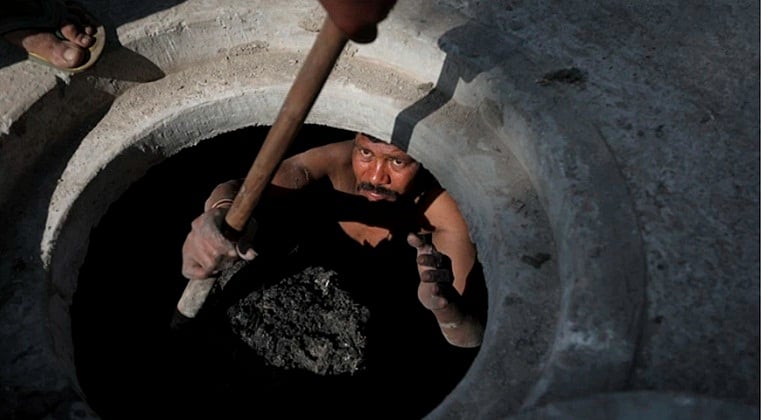
'India Has Reached The Moon, But Manual Scavenging Persists': Bombay HC Criticises Maharashtra Policy | Representational Image
Mumbai: The Bombay High Court has condemned the continued practice of manual scavenging, observing that India’s technological progress stands in stark contrast to caste-based practices that force citizens to perform work incompatible with human dignity.
A division bench of Justices Bharati Dangre and Manjusha Deshpande said it was a “hard reality” that, 75 years after Independence and the adoption of the Constitution, the country had failed to eradicate the practice.
“In the 21st Century, we boast about reaching the other side of the Moon, yet the hard reality that stares us in the face is that the social evil of the caste system is still followed in our country,” the bench observed.
ALSO READ
The court was hearing petitions challenging provisions in Maharashtra government resolutions issued in 2019 and 2025. The provisions made private housing societies and contractors responsible for paying compensation when sanitation workers died or suffered accidents during hazardous cleaning.
Senior Advocate Gayatri Singh, appearing for Shramik Janata Sangh and two others, argued that the policy had deprived families of timely relief. In several cases, she said, local authorities had refused assistance, claiming that the concerned society or contractor was responsible.
Singh also referred to the Central Government’s Standard Operating Procedure for sewer and septic-tank cleaning. It permits such work only through registered agencies, contractors or employers meeting prescribed requirements, and lays down safeguards concerning mechanical and manual cleaning, protective equipment, safety devices and emergency response.
The petitioners alleged that Maharashtra authorities had failed to enforce these safeguards and other laws governing manual scavenging and hazardous cleaning.
ALSO READ
The State informed the court that, pursuant to directions of the High Court and Supreme Court, 81 deaths linked to manual scavenging had been identified. The families received Rs 10 lakh each, involving total expenditure of Rs 8.10 crore.
The bench noted that Parliament had enacted the Employment of Manual Scavengers and Construction of Dry Latrines (Prohibition) Act, 1993, followed by the Prohibition of Employment as Manual Scavengers and their Rehabilitation Act, 2013. The latter prohibits manual scavenging, regulates hazardous cleaning and mandates rehabilitation of affected workers and their dependants.
Despite this framework, the court said, continued deaths showed that the law, rules and judicial directions were not being effectively implemented.
The bench also criticised provisions excluding workers engaged at private premises from compensation payable by the State or local authorities. It said private societies often engaged untrained workers through contractors without protective equipment, but this could not absolve municipal bodies of their obligation to provide immediate relief.
ALSO READ
The court held that the policy impermissibly discriminated between workers performing the same hazardous work based solely on their employer, violating Article 14 of the Constitution. The 2013 Act, it said, makes no such distinction.
The State and local authorities were directed to immediately compensate dependants of workers who die during hazardous cleaning and recover the amount later from the responsible society, contractor or employer.
The Maharashtra government must also identify, within six months, all persons who died while engaged in hazardous cleaning under the 2013 Act and pay Rs 30 lakh to each family. Rehabilitation must be provided without distinguishing between sanitation workers and manual scavengers.
The petitions were disposed of with these directions.
To get details on exclusive and budget-friendly property deals in Mumbai & surrounding regions, do visit: https://budgetproperties.in/
RECENT STORIES
-
-
-
-
-