Chandra Grahan 2025: When & Where To Watch The 'Blood Moon' In Mumbai
The eclipse will be the longest visible one for India this year, lasting more than four and a half hours, with the Blood Moon phase creating a dramatic red glow across the night sky.

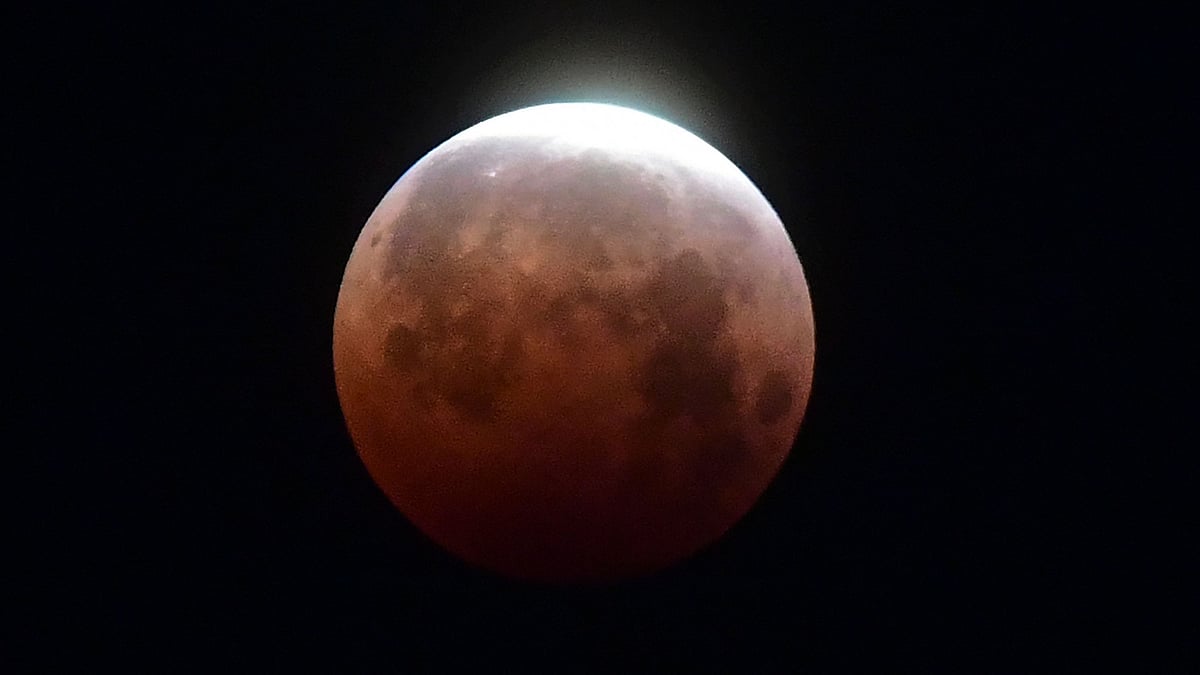
Representational Image | AFP Photo
Mumbaikars are in for a celestial spectacle this weekend as the skies will host a rare total lunar eclipse, also known as Chandra Grahan or the Blood Moon, on the night of September 7-8, 2025. The eclipse will be the longest visible one for India this year, lasting more than four and a half hours, with the Blood Moon phase creating a dramatic red glow across the night sky.
When to Watch in Mumbai
According to Nehru Planetarium Director Arvind Paranjpye, the eclipse will begin at 8:58 PM IST on Sunday, September 7. The totality phase, when the Moon turns deep red—will start at 11:00 PM and continue until 12:22 AM on Monday, September 8. The event will conclude at 1:30 AM.
“The eclipse will be fully visible across India, and in Mumbai, it will be one of the best opportunities to observe a total lunar eclipse in recent years,” said Paranjpye.
Why It’s Called a Blood Moon
A lunar eclipse occurs when the Earth moves between the Sun and the Moon, casting its shadow on the lunar surface. The reddish-orange glow, popularly called the Blood Moon effect, happens because Earth’s atmosphere scatters shorter blue wavelengths while bending longer red wavelengths onto the Moon. The result is a dramatic celestial show visible without any special equipment.
ALSO READ
Best Spots in Mumbai
In Mumbai, the Moon will be high in the sky, making it visible from almost anywhere, provided the skies remain clear. The best viewing spots will be rooftops, terraces, open grounds, Marine Drive, Girgaon Chowpatty, and parks away from city lights. To experience the full effect, it is recommended to avoid areas with heavy light pollution.
How to Capture the Blood Moon
The eclipse is completely safe to view with the naked eye, unlike a solar eclipse. Binoculars or a telescope will enhance details like craters and the red shading. Amateur photographers can use a DSLR or smartphone on a tripod, setting long exposures of 1–2 seconds with ISO 400–800 for striking results.
RECENT STORIES
-
-
-
-
-