CBSE Makes Three Languages Compulsory For Classes 9 And 10 From July 2026, At Least Two Must Be Native Indian Languages
The CBSE has announced that students of Classes 9 and 10 must study three languages from the 2026-27 academic session under revised rules aligned with NEP 2020. According to the board, at least two of the selected languages must be Indian languages, while foreign languages may only be chosen if the remaining two options are native Indian languages.

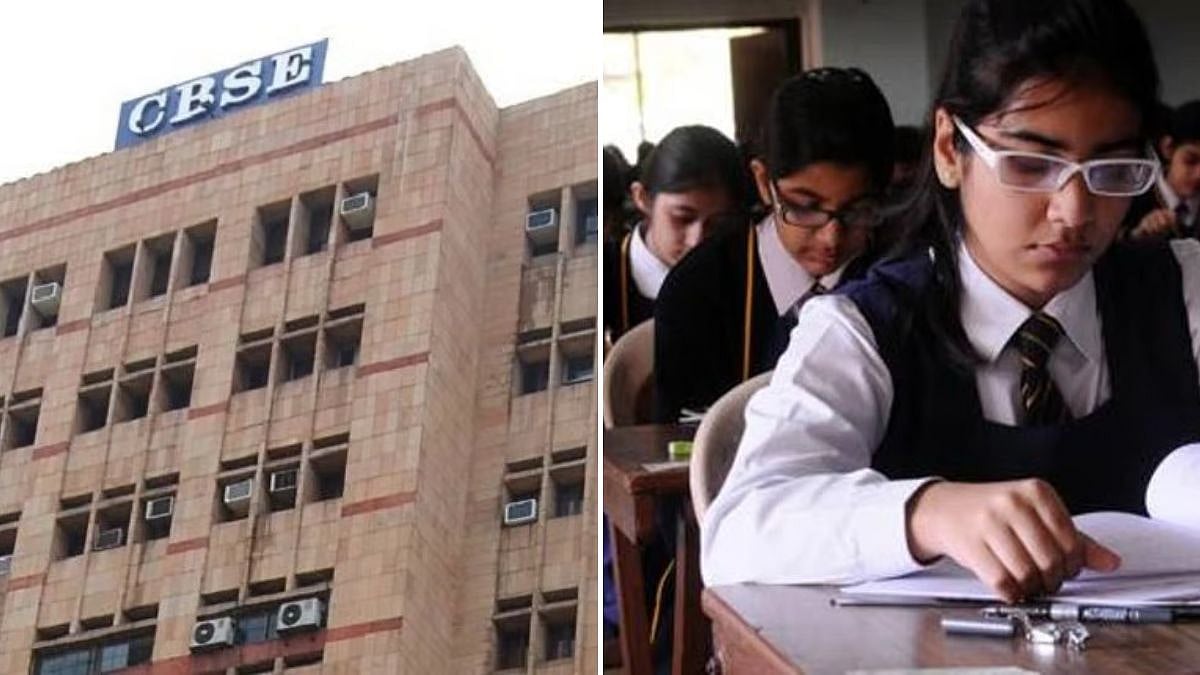
CBSE Makes Three Languages Compulsory For Classes 9 And 10 From July 2026, At Least Two Must Be Native Indian Languages | File Pic
The Central Board of Secondary Education has announced a revised language policy for students of Classes 9 and 10, making the study of three languages compulsory from July 1, 2026. The move has been introduced in line with the recommendations of the National Education Policy 2020 and the National Curriculum Framework for School Education (NCF-SE) 2023.
Three Languages with Two Indian Languages Mandatory
In a circular issued on May 15, 2026, CBSE stated that students in secondary classes will be required to study three languages — R1, R2, and R3 — with at least two of them being native Indian languages. The revised framework will be applicable from the 2026-27 academic session onward.
Under the updated scheme, students may opt for a foreign language only if the remaining two languages selected are Indian languages. Foreign languages may also be offered as an optional fourth language.
Transitional Approach for Current Academic Session
The board said the decision was taken after reviewing the newly released syllabus prepared by National Council of Educational Research and Training for Classes 9 and 10. Since the current academic session began in April 2026, CBSE said schools would follow a transitional approach while implementing the revised policy.
The circular also highlighted that there is a significant overlap — nearly 75 to 80 per cent — in core language skills such as reading comprehension, grammar, oral communication, and writing abilities between middle and secondary school levels.
Class 6 Textbooks for Class 9 Students
Until dedicated R3 textbooks for secondary classes are introduced, students of Class 9 will use Class 6 R3 textbooks of their chosen language for the academic year 2026-27. Schools have additionally been instructed to supplement classroom learning with regional literary material, including poems, short stories, and non-fiction texts.
ALSO READ
CBSE said detailed guidelines on the use of supplementary material will be released by June 15, 2026.
Temporary Measures for Teacher Shortages
Acknowledging possible shortages of qualified language teachers, the board has allowed schools to adopt temporary measures during the transition period. These include inter-school teacher sharing through Sahodaya clusters, virtual or hybrid teaching methods, engagement of retired teachers, and appointment of qualified postgraduate candidates with proficiency in native Indian languages.
The board further informed schools that Class 6 R3 textbooks in 19 scheduled Indian languages will be made available before July 1, 2026.
To get details on exclusive and budget-friendly property deals in Mumbai & surrounding regions, do visit: https://budgetproperties.in/
RECENT STORIES
-
-
-
-
-