Byculla Cha Raja Completes 75 Years With Same Iconic Idol Design, Real Jewellery And Deep Market Legacy
Byculla Cha Raja is celebrating its 75th anniversary this Ganeshotsav, preserving its decades-old seated Ganesha design and real jewellery tradition. The idol, associated with fruit and vegetable traders, continues to remain a familiar symbol despite changes in the market and city. The mandal’s celebrations have evolved with time while maintaining its historic connection with Byculla.

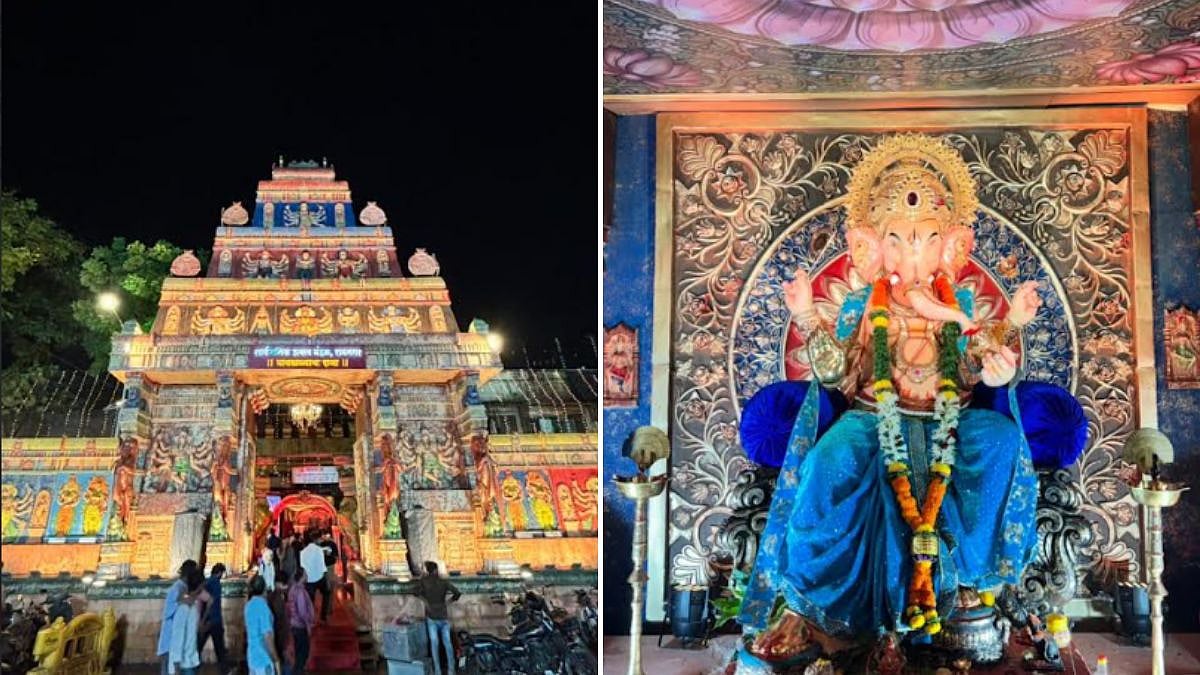
Byculla Cha Raja Completes 75 Years With Same Iconic Idol Design, Real Jewellery And Deep Market Legacy |
Mumbai: The market around it has changed, generations of traders have moved on and the city has grown around it, but the Ganesha at Byculla Cha Raja has remained much the same for decades.
This year, the beloved idol of the fruit and vegetable traders of Byculla is celebrating its 75th anniversary — with the same seated posture and a tradition of real jewellery that has become part of its identity.
Iconic Seated Ganesha Remains Unchanged For Generations
The idol is installed against a grand replica of a South Indian-style temple, creating an imposing setting for the seated Ganesha. The design of the deity has remained unchanged for decades, giving generations of devotees a familiar figure to return to every Ganeshotsav.
The jewellery worn by the deity is real, with the present crown fashioned in gold and silver from the earlier one. The finery has been designed by Nana Vedak, who also makes the jewellery worn by the deity at the Siddhivinayak Temple in Prabhadevi.
Ganpati Mandal’s History Linked To Byculla Market
The silver Mooshak — Lord Ganesha's divine mouse, regarded as his eternal companion and vahana — is also a replica of the one at Siddhivinayak.
The mandal's history is closely intertwined with that of the Byculla market. Surendra Shinde, media spokesperson for the Sarvajanik Utsav Mandal, Ramnagar, Byculla East, said that when the pandal was established, 80 to 90% of its members were traders or workers at the market.
ALSO READ
Much of the wholesale fruit and vegetable trade has since shifted to Navi Mumbai, taking many of the original members and their families with it. Yet the mandal has continued to preserve its association with the old Byculla market and its community.
Its celebrations have also reflected changing tastes and technology. For its silver jubilee, the mandal became the first Ganpati pandal in Mumbai to introduce musical lights — then a novelty that drew considerable attention.
For its 50th anniversary, the mandal went grander with a pandal featuring architectural elements inspired by the Golden Temple in Amritsar and the Mysore Palace of the Wadiyar dynasty.
To get details on exclusive and budget-friendly property deals in Mumbai & surrounding regions, do visit: https://budgetproperties.in/
RECENT STORIES
-
-
-
-
-