Bombay High Court Rules Only Recognised Union Can Prosecute Collective Disputes In BEST Case
Court allowed two writ petitions filed by the BEST Workers Union and the Municipal Corporation of Greater Mumbai, quashing the Industrial Court’s order dated January 27, 2015. The court restored the Labour Court’s earlier decision deleting the name of the BEST Jagrut Kamgar Sanghatana, an unrecognised union, from Complaint (ULP) No.291 of 2015.

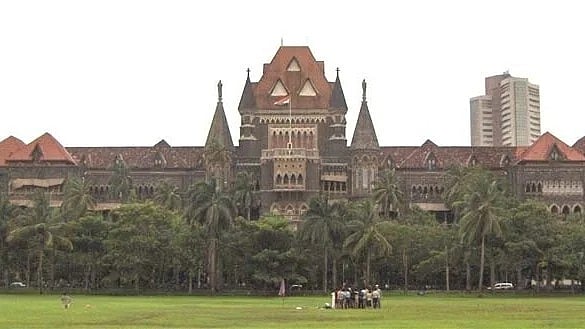
Bombay High Court | File Photo
The Bombay High Court has held that only a recognised representative union is entitled to prosecute collective industrial disputes under the Maharashtra Industrial Relations (MIR) Act, setting aside an Industrial Court order that had allowed an unrecognised union to continue as a complainant in a case involving the Brihanmumbai Electric Supply and Transport (BEST) Undertaking.
Court allowed two writ petitions filed by the BEST Workers Union and the Municipal Corporation of Greater Mumbai, quashing the Industrial Court’s order dated January 27, 2015. The court restored the Labour Court’s earlier decision deleting the name of the BEST Jagrut Kamgar Sanghatana, an unrecognised union, from Complaint (ULP) No.291 of 2015.
The dispute arose from a complaint filed in 2015 challenging a BEST circular dated December 17, 2014, which related to the absorption of unskilled employees and the apprehended termination of temporary and daily-rated workers. While the unrecognised union claimed locus on the ground that the issue involved termination of services, the recognised BEST Workers Union contended that the dispute was collective in nature and could be prosecuted only by it as the representative union under the MIR Act.
In its judgment, the High Court drew a clear distinction between individual service disputes and collective industrial disputes. It held that while the law permits individual employees to seek redress, including through a union of their choice, in matters relating to dismissal or termination, disputes arising from a common cause and affecting a large group of employees must be espoused exclusively by the recognised representative union.
The court noted that the controversy before it involved nearly 200 employees and stemmed from common decisions on absorption and termination, making it a collective dispute. Allowing an unrecognised union to prosecute such a matter would undermine the statutory framework of collective bargaining under the MIR Act, the court said.
ALSO READ
High Court also clarified that Supreme Court and High Court precedents relied upon by the unrecognised union dealt with individual grievances and could not be extended to collective disputes. The exception permitting individual representation in termination cases, the court observed, is narrow and personal to the affected employee, and does not create a general right for unrecognised unions to take over collective causes.
With this ruling, the High Court reaffirmed the central role of recognised unions in collective industrial matters and emphasised that parallel representation by unrecognised unions is not permissible under the statutory scheme.
To get details on exclusive and budget-friendly property deals in Mumbai & surrounding regions, do visit: https://budgetproperties.in/
RECENT STORIES
-
-
-
-
-