Bombay HC Flags Economic Cost Of Air Pollution, Seeks Data-Driven Action From Authorities
The Bombay High Court criticised civic and pollution control authorities for failing to curb Mumbai’s air pollution despite repeated orders, warning that pollution has severe economic and health costs and hinting at stricter monitoring and accountability measures.

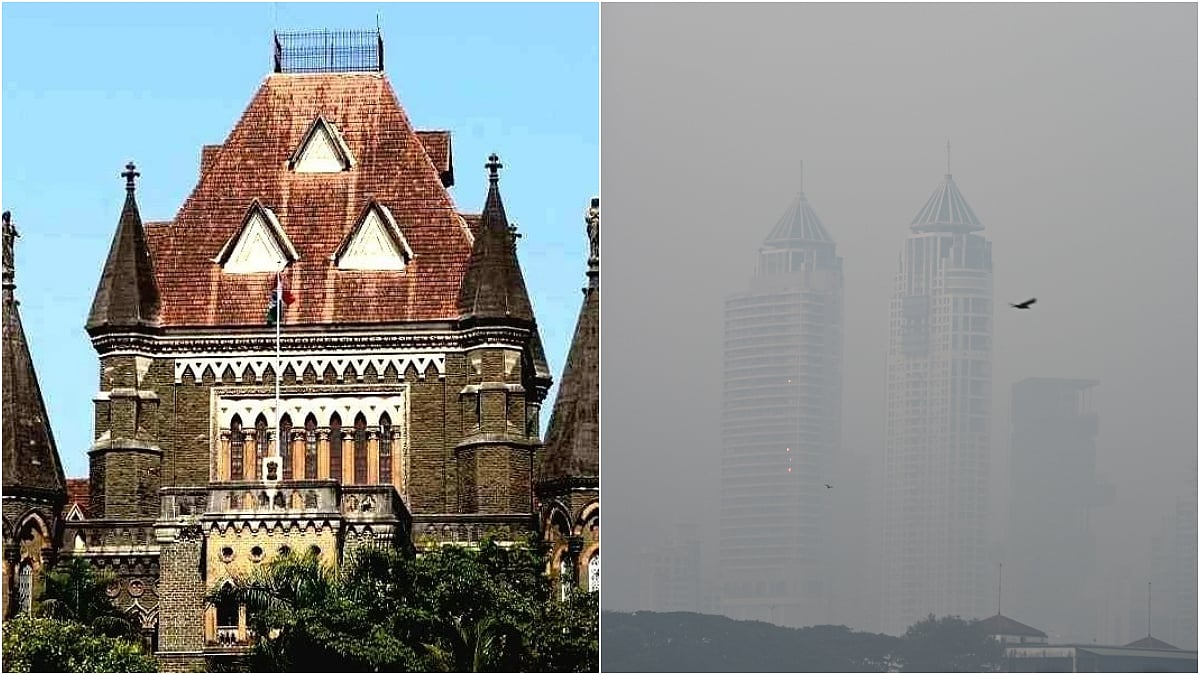
Bombay High Court flags worsening air quality in Mumbai and warns authorities over lack of on-ground action despite repeated judicial orders | Photo Credits: Vijay Gohil
Mumbai, Jan 27: Observing that air pollution has grave economic consequences apart from its impact on public health, the Bombay High Court on Monday lamented that repeated court orders have failed to bring about meaningful change on the ground.
Bench flags lack of tangible action
A bench of Chief Justice Shree Chandrashekhar and Justice Gautam Ankhad expressed deep concern over the lack of tangible progress by civic and pollution control authorities in tackling Mumbai’s deteriorating air quality.
Flagging systemic failures in implementation despite repeated court orders, the bench asked, “How many times should we deal with these matters? We have four lakh other cases (pending hearing).” It questioned whether any actual work had begun following earlier directions.
Court took suo motu cognisance in 2023
In 2023, the court had taken suo motu (on its own) cognisance of increasing air pollution in the city and passed a slew of directions to civic bodies and other authorities to take steps to mitigate air pollution.
Amicus highlights economic cost of pollution
Senior advocate Darius Khambata, appearing as amicus curiae (friend of the court), placed before the bench a series of “alarming details” showing that authorities were largely “unmoved” when it came to enforcement. Stressing the economic fallout, he pointed out that ambient air pollution was responsible for nearly 17% of deaths, accounting for almost one-fifth of all deaths in India in 2019.
Referring to a Lancet report, Khambata said pollution caused estimated economic losses of $8 billion in India. “Perhaps this (economic) is the language the authorities may understand. Maybe lives are cheap, but the economy they understand,” he said.
Pollution impacts economy more than tariffs
Referring to a recent statement by IMF Deputy Managing Director Geeta Gopinath at Davos, Khambata submitted that pollution impacts the economy more severely than tariffs. “People are dying. One or two days of good air cannot alleviate the crisis. Daily, we and our children are breathing a mini Bhopal,” he said.
He added that political will was essential and “it cannot be shown only in affidavits”.
Mumbai lacks GRAP, ‘unhealthy’ AQI days flagged
The amicus also highlighted that Mumbai does not have a Graded Response Action Plan (GRAP) and cited Central Pollution Control Board data showing 18 days of ‘unhealthy’ AQI in January.
As per BMC’s own data, he said 738 out of 1,948 construction sites failed to relay pollution data, recommending that installation of air-quality monitors be made a condition in the Intimation of Disapproval (IOD). “If less than 25% monitors are installed, construction should not be allowed,” he argued.
Court considers independent monitoring committee
Taking a dim view of the situation, the court said, “In the last three years, we don’t see any progress. These are not (concrete) steps.” It suggested forming an independent committee to monitor compliance, which would submit weekly or fortnightly reports, observing that courts could not decide individual complaints.
The bench reiterated, “In the last three years, we don’t see any progress. These are not steps.”
Call for transparency and real-time data
The bench directed authorities to ensure transparency. “Every data you receive should be put up. People should know what they are breathing,” it said, suggesting a dedicated website with real-time data.
While the court declined to involve senior state officials, it made clear that it was “not leaving this issue” and would pass appropriate orders to ensure accountability, noting that “orders passed by this court have no real impact on the ground”.
Earlier warning on stopping commissioners’ salaries
During the previous hearing, the court had warned of stopping the salaries of the commissioners of the Brihanmumbai Municipal Corporation and Navi Mumbai Municipal Corporation. Both corporations submitted reports detailing the actions implemented.
On a court query, senior advocate Ashutosh Kumbhakoni, appearing for the MPCB, said 2,178 red-category industries had been audited by a 40-member team. The court expressed concern over year-long audit cycles and inconsistencies in earlier affidavits.
Also Watch:
ALSO READ
Stating that passing orders alone was ineffective, the bench again considered setting up an independent monitoring committee, stressing, “We are concerned about children. This cannot be shown only in affidavits.”
Next hearing on January 29
The court has kept the matter for further hearing on January 29, when it will pass a detailed order.
To get details on exclusive and budget-friendly property deals in Mumbai & surrounding regions, do visit: https://budgetproperties.in/
RECENT STORIES
-
-
-
-
-