World’s Highest Krishna Temple Opens For Devotees; Everything To Know About Himachal Pradesh's Yulla Kanda
The Yulla Kanda trek, home to the world's highest Krishna temple, officially opens in May 2026. Built over several years, the temple stands as a symbol of devotion, engineering excellence, and cultural pride. Its elevated position not only offers a serene spiritual atmosphere but also provides breathtaking panoramic views of the surrounding mountains and landscapes.

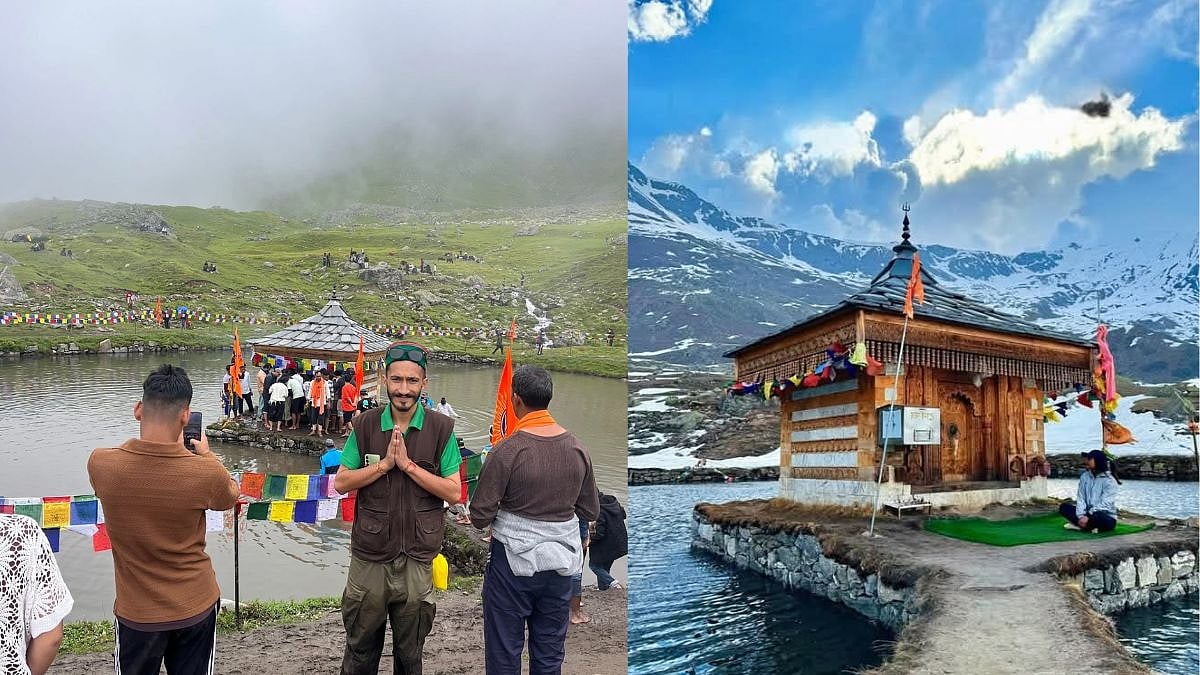
Yulla Kanda Opens | @themodernhp/ @Munsyari_
The world's highest Krishna Temple, Yulla Kanda in Kinnaur, Himachal Pradesh, has been reopened to pilgrims as the snow melts. The sacred Lord Krishna Temple is situated at 3,895 m, surrounded by the stunning glacial Yulla Kanda Lake. The treacherous route remains closed during the winter due to heavy snowfall. The temple is officially opened and the route is accessible to trekkers, though local forest authorities have relocated upper base camp accommodations to a spot about two kilometres away from the temple.
Yulla Kanda reopens
The Yulla Kanda trek, home to the world's highest Krishna temple, officially opens in May 2026. Built over several years, the temple stands as a symbol of devotion, engineering excellence, and cultural pride. Its elevated position not only offers a serene spiritual atmosphere but also provides breathtaking panoramic views of the surrounding mountains and landscapes.
About Yulla Kanda
Yulla Kanda is a high-altitude sacred site which is surrounded by snow-capped peaks, alpine meadows, and a pristine lake known as Yulla Kanda Lake. According to local beliefs, the temple is linked to the Pandavas from the Mahabharata. It is a popular trekking destination, attracting both devotees and adventure seekers during the summer months. The Yulla Kanda Temple is considered sacred not only for Hindus but also for Buddhists. Lamas often visit here to perform special rituals.
Yulla Kanda linked to epic Mahabharata
According to legends, during the banishment of the Pandavas in the Himalayas, the Pandava brothers wandered into the remote Kinnaur region. It is believed that Yulla Kanda is the place where the Pandavas stayed and built a sacred lake during their 14-year exile. Beside the sacred waterbody, the Pandavas also built a shrine dedicated to Lord Krishna.
The floating cap ritual in Yulla Kanda
During the visit to the temple, a traditional ritual is performed using Kinnauri caps. During the ritual, devotees place their Kinnauri caps made of wool, upside down on the lake's surface and let them float. It is believed that if the cap floats smoothly across to the other side without sinking, it signifies that the person's wishes will be fulfilled. However, if the cap fills with water and sinks, it is believed to forewarn of upcoming challenges.
RECENT STORIES
-
-
-
-
-