Who Is Green Tara, Also Known As The 'Enlightened Female Buddha? Here's Where You Can Get Her Tibetan Thangka Painting At Kala Ghoda Arts Festival 2026
Green Tara is the mother of all Bodhisattvas. She is also known as a wish-granter. She is a prominent, compassionate female Buddha who is also worshipped in Hinduism. The goddess symbolises air and nature. She is associated with healing and is believed to have been born from the tears of Avalokiteshvara.

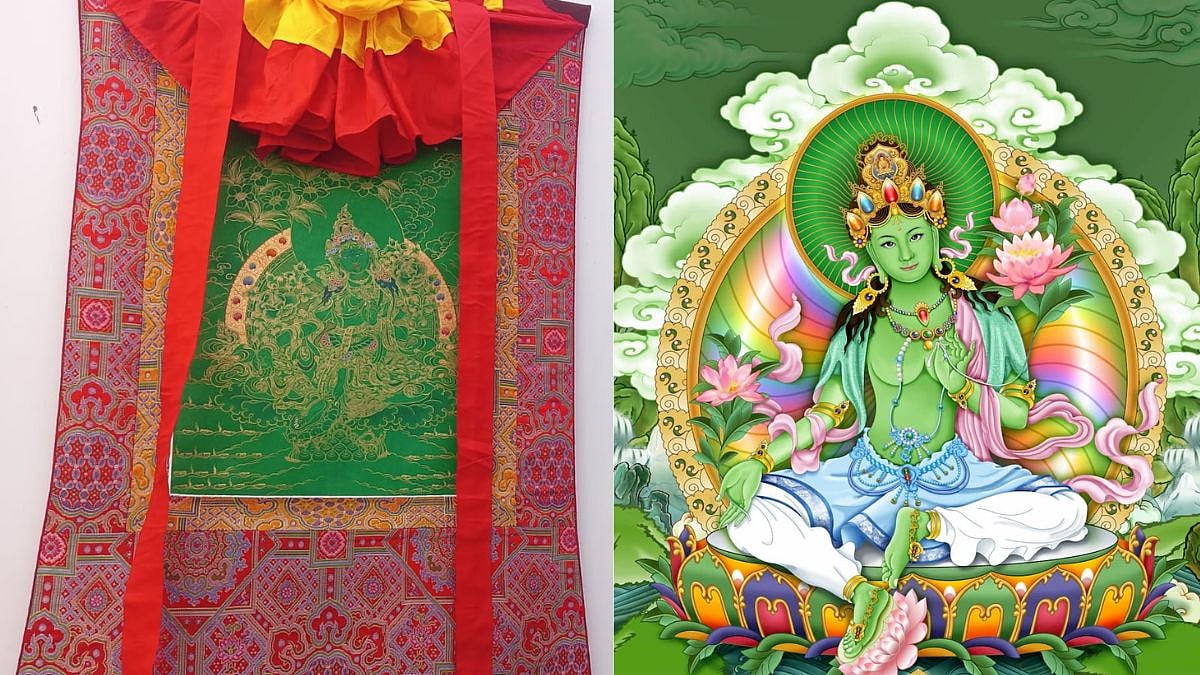
Tibetan Thangka Painting At Kala Ghoda Arts Festival 2026 | FPJ/ True Buddha School Net
Mumbai’s Kala Ghoda Festival is one of the most iconic cultural celebrations in India. The cultural festival has been rooted in the city’s colonial past and its vibrant artistic present. The nine-day festival celebrated art, heritage, and creativity. It features a diverse range of arts, including visual arts, music, dance, theatre, literature, and much more. The 26th edition of the Kala Ghoda Arts Festival, which commenced on Saturday, January 31, and will run through Sunday, February 8, 2026.
But, did you know, this year's edition of the Kala Ghoda festival features Tibet's one of the most culturally and traditionally rich art forms, which is known as Thangka Art? The art beautifully pictures Goddess Green Tara. If you had no idea about Green Tara, then you have come to the right place. Here's to know everything about the goddess, Thangka paintings, and where you can find them in Mumbai.
Kala Ghoda features the Tibetans' Thangka Art
Mumbai's Kala Ghoda never disappoints, and every time the festival features something different. This time, for the first time, Tibetans also participated in this event, where a group of Tibetans from Norbulingka (Norbulingka in Tibetan means Jewel Park) Institute, which is based in Dharamshala, Himachal Pradesh, featured Tibetan Thangka paintings. Thangka is a combination of two words: Thang, which means flat surface, and ga, which means pictures in the Tibetan language.
Tibetans' Thangka paintings featured Green Tara: Who is she?
One type of Thangka painting can be Bodhisattvas, and another can be a storytelling Thangka. These religious paintings also show high Lamas or big Lamas, their lineage, and their storytelling. These paintings also show Buddha coming down from heaven, from his birth. This year's Kala Ghoda features Green Tara in Thangka paintings. Green Tara is the mother of all Bodhisattvas. She is also known as a wish-granter. She is a prominent, compassionate female Buddha who is also worshipped in Hinduism. One of the most special things about these Thangka paintings is that they only use natural colours, which are made up of different mineral pigments, stones, flowers, branches, and more.
Thangka: A religious painting
Thangka paintings are used for meditational or devotional practices. And all the measurements of Thangka paintings are taken from the holy scriptures, which cannot be altered, either the measurements or the colours. Once the main Thangka is made, it is stitched on the various types of brocade borders.
What does Green Tara represent?
Green Tara, a revered female Buddha, often appears in green colour, and she sits on a lotus throne. The goddess symbolises air and nature. She is associated with healing, and is believed to have been born from the tears of Avalokiteshvara. In Tibet, she is associated with the Nepalese princess Bhrikuti, wife of Emperor Songtsen Gampo. Green Tara is a meditation deity with her practice aimed at fostering rapid spiritual growth and practices.
Is Green Tara a significant figure in Hinduism?
Green Tara is not only worshipped in Buddhism, but she is also a revered deity in Hinduism. According to Hindu belief, she is one of the 10 Mahavidyas (wisdom goddesses). She is recognised as a form of Shakti, and is worshipped particularly in Tantra. In Hindu traditions, she is also worshipped in various forms, including blue or with other colours.
Spiritual practices in Thangka paintings
According to Tibetan tradition, painters follow spiritual practices before creating religious paintings. All the workers come together and recite a prayer, and then they start their work.
ALSO READ
Where to get a Thangka painting at Kala Ghoda Arts Festival 2026?
If you want to buy these paintings, visit Chhatrapati Shivaji Maharaj Vastu Sangrahalaya (CSMVS) and stop by at the Tibetan stalls at the entrance of the museum.
RECENT STORIES
-
-
-
-
-