Who Creates Kiswah? The Sacred Black Cloth Draping Islam’s Holiest Shrine Kaaba In Makkah
The Kiswah or Kiswa is a black cloth that covers the Kaaba in Mecca. The sacred cloth is draped every year, although the draping date has changed over the years. The term Kiswah means robe and garment. It is considered one of the holiest objects in Islamic art and worship, heavily embroidered in gold and silver with Quranic verses.

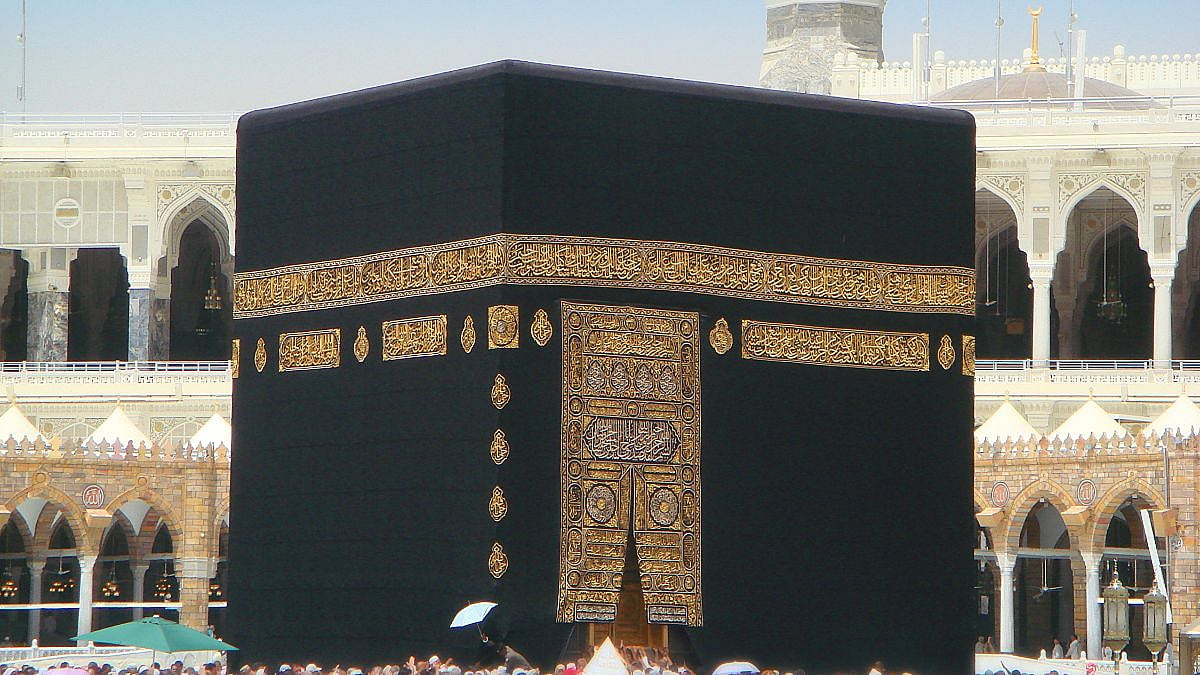
Who Creates Kiswah | Photo Credit: Canva
The Hajj is one of the most sacred pilgrimages and is also considered the fifth pillar of Islam. The Kiswah, the sacred black cloth covering all four sides of the Holy Kaaba from floor to ceiling in Makkah, is one of the most revered symbols in Islam. Every year, millions of Muslims visiting for Hajj and Umrah witness the majestic silk covering draped over Islam’s holiest shrine inside Masjid al-Haram. But few know about the remarkable craftsmanship and dedication behind its creation. The Kaaba is a cube-shaped stone structure at the centre of the Grand Mosque in Mecca.
Who makes Kiswah?
The Kiswah or Kiswa is a black cloth that covers the Kaaba in Mecca. The sacred cloth is draped every year, although the draping date has changed over the years. The term Kiswah means robe and garment. It is considered one of the holiest objects in Islamic art and worship, heavily embroidered in gold and silver with Quranic verses. The sacred Kiswah is handcrafted by skilled artisans in a dedicated workshop in Mecca. It takes roughly 154 craftsmen and tons of pure silk, gold thread and silver to weave it. The curtain part of the Kiswah is highly decorated.
The Kiswah is produced at the King Abdulaziz Complex for the Holy Kaaba Kiswah in Saudi Arabia. Established by the Saudi government, the complex employs highly skilled artisans, calligraphers, weavers and technicians who work throughout the year to prepare the cloth. The Kiswah is made from high-quality natural black silk and decorated with verses from the Holy Quran embroidered in gold and silver-plated threads.
A meticulous process
Creating the Kiswah is a meticulous process involving multiple stages, including silk dyeing, weaving, printing Quranic inscriptions, embroidery and stitching. More than 600 kilograms of silk and hundreds of kilograms of silver and gold threads are used annually. The cloth stands around 14 metres high and consists of several large panels stitched together with exceptional precision. It costs more than six million dollars.
The tradition of covering the Kaaba dates back centuries
The tradition of covering the Kaaba dates back centuries and has evolved through different Islamic eras. Earlier, rulers from Egypt and other Muslim regions were responsible for making the Kiswah. Today, Saudi Arabia oversees the entire process to preserve its spiritual and artistic significance. The Kiswah was first draped over the shrine in pre-Islamic times by King Tubba' As'ad Abu Karib of Yemen around the 4th century C.E. He originally covered the structure with a cloth made of striped red wool.
ALSO READ
Every year on the 9th day of Dhul Hijjah, during the Hajj pilgrimage, the old Kiswah is replaced with a new one in a deeply symbolic ceremony. The old covering is then carefully preserved, and pieces of it are often gifted to dignitaries and Islamic institutions worldwide, reflecting its immense religious value.
RECENT STORIES
-
-
-
-
-