Vintage Watches Take Centre Stage
Call it a vintage comeback, but at Watches and Wonders 2026, archival designs returned with a new relevance for today’s collector

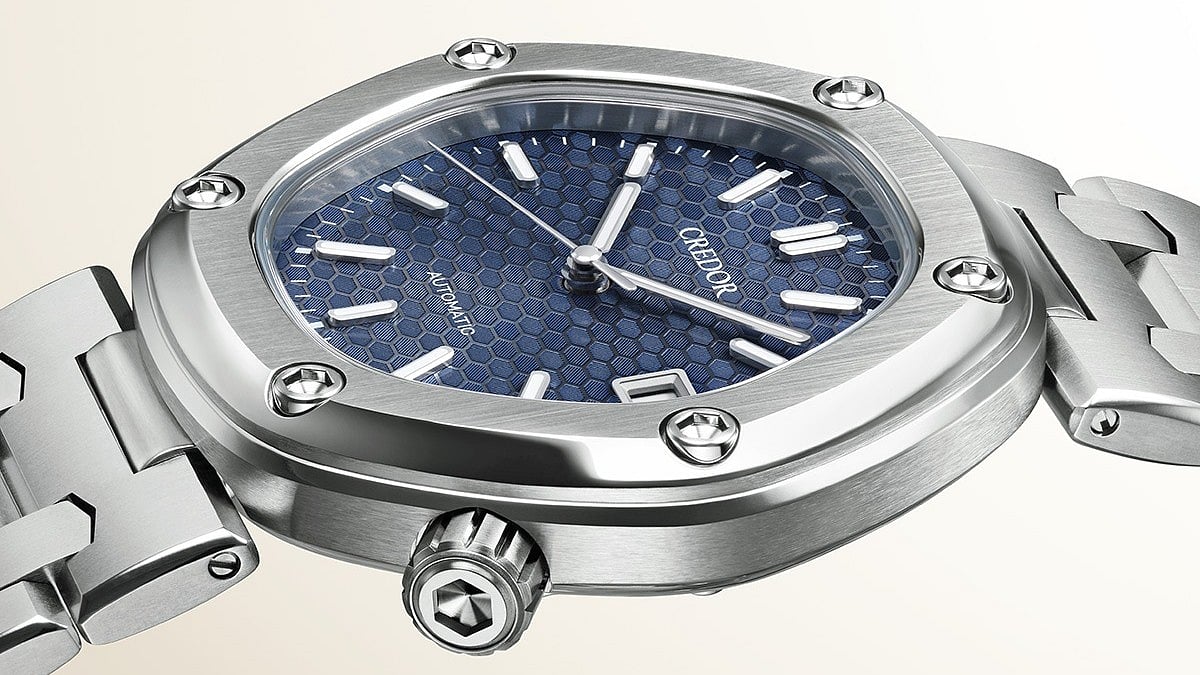
Credor Locomotive Dawn Blue | Pic: Credor
The resurgence of vintage design at Watches and Wonders 2026 was more than a stylistic detour—it signalled a decisive shift in how the industry engages with its past. Rather than borrowing nostalgic cues, watchmakers leaned into authenticity, revisiting archival models with remarkable fidelity. This reflects a more discerning, historically aware collector—one who values provenance as much as performance. This year’s standout releases made a compelling case: heritage is no longer a constraint, but a creative catalyst. Across maisons, historical character was not just preserved, but elevated through contemporary craftsmanship and technical precision.
Revisiting icons, reimagined with intent
Among the most compelling revivals was the Monarch by Tudor. Its 39mm faceted steel case strikes a careful balance between vintage elegance and modern wearability, while the papyrus-toned dial—featuring an unusual mix of Roman and Arabic numerals—retains the charm of its predecessor. Popularly known as the ‘California dial,’ Tudor refers to this mix as “error proof.” What elevates this reissue beyond nostalgia is its Master Chronometer certification by METAS, which imposes stricter tolerance levels than COSC, the Official Swiss Chronometer Testing Authority. It underscores Tudor’s commitment to precision and durability within a historically inspired design.
Equally notable was the Oris Star, a faithful homage to its 1966 original. The release carries historical weight—it honours the efforts of Oris’ Honorary Chairman, Dr. Rolf Portmann, who played a pivotal role in challenging an antiquated Swiss law that had restricted the use of the Swiss lever escapement. The Oris Star marked the brand’s first use of this mechanism in 1966. With a modest 35mm barrel-shaped case, the reissue resists the modern inclination toward larger dimensions. The use of Plexiglas further reinforces its vintage appeal, offering a tactile warmth absent in contemporary sapphire crystals. The brand’s approach highlights a growing appreciation for smaller proportions and subtlety, appealing to collectors who value historical accuracy over modern reinterpretation.
Form, function, and the return of character
The return of the Roadster by Cartier after 14 years reaffirmed the brand’s mastery of form. Originally celebrated for its automotive-inspired curves and tonneau silhouette, the Roadster remains a distinctive alternative to conventional round dials. Presented in multiple sizes and materials, the 2026 Roadster retains its distinctive barrel-shaped case and automotive inspiration. The inclusion of Cartier’s QuickSwitch system in the new models allows wearers to seamlessly alternate between alligator and rubber straps, a much-needed addition to keep up with modern lifestyles.
At its debut at Watches and Wonders 2026, Credor unveiled a striking reissue of the Locomotive, originally conceived by the legendary Gérald Genta in the 1970s. With its soft, angular architecture and integrated bracelet, the design channels Genta’s enduring aesthetic language. The new iteration, featuring a blue honeycomb dial titled Dawn Blue, avoids excessive modernisation. Instead, Credor preserves the structural integrity of the original, allowing the piece to resonate with contemporary collectors while maintaining its historical essence.
Where watchmaking meets jewellery
Piaget revived its Swinging Pebbles concept from the 1960s '21st Century Collection.' These watches blur the boundary between horology and jewellery, featuring organic shapes, vibrant stone dials, and pendant-style formats. Highlighting Piaget’s stone mastery, each piece in this series of three is carved from a single slice of ornamental stone—tiger’s eye, verdite, or pietersite—hollowed out to house a Manufacture movement, then sealed to form a smooth, organic pebble-shaped case. Suspended from twisted gold chains, the designs pay homage to the maison’s legacy in goldsmithing and chainmaking. Piaget’s revival of the Swinging Pebbles underscores the artistic dimension of vintage design, celebrating individuality and craftsmanship over conventional watchmaking norms.
Together, these releases illustrate a broader industry trend: a shift toward authenticity and restraint. By honouring original proportions, materials, and design philosophies, brands are responding to a more discerning audience that values heritage as much as innovation. Watches and Wonders 2026 ultimately demonstrated that the past is not merely a reference point—it is a foundation upon which the future of watchmaking continues to be built.
RECENT STORIES
-
-
-
-
-