Two Great Indian Bustards Released In Desert National Park, Jaisalmer; Know About This Endangered Bird
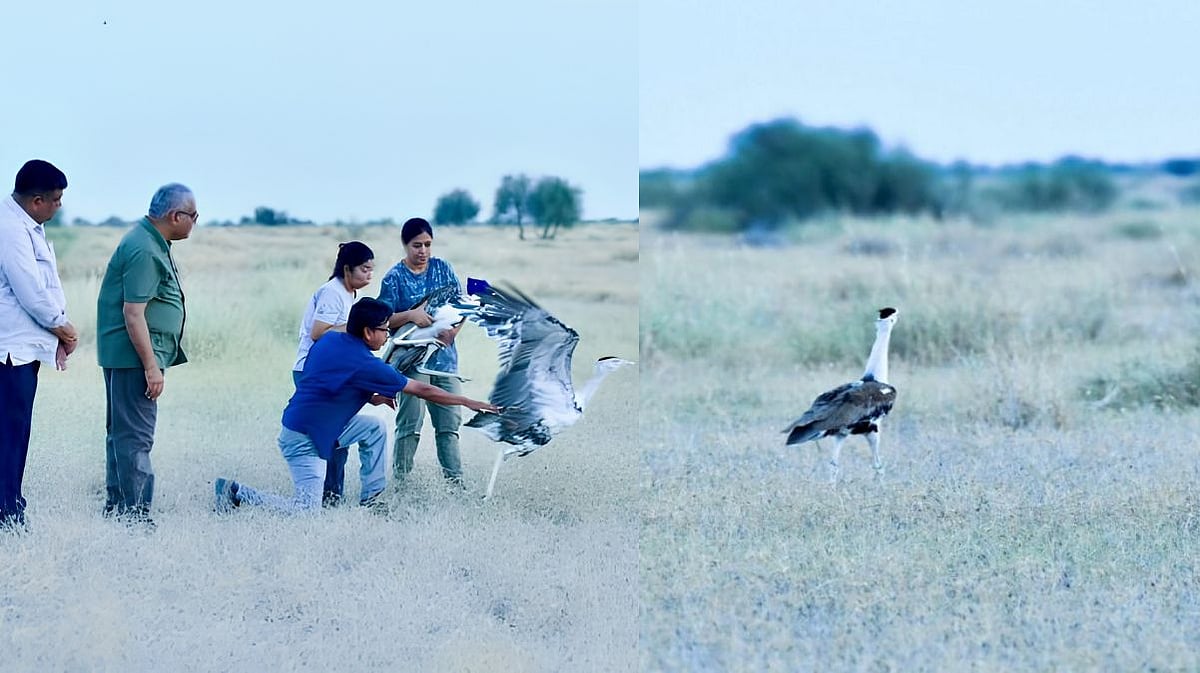
On Sunday, October 4, 2026, Union Environment Minister Bhupender Yadav released two captive-bred male GIBs into the wild at Sam in the Desert National Park, Jaisalmer, Rajasthan. During the release, Rajasthan Forest and Environment Minister Sanjay Sharma, along with senior officials from the Union and state governments, was present.

Two Great Indian Bustards Released In Desert National Park, Jaisalmer; Know About This Endangered Bird | X
Two Great Indian Bustards have been released into the Desert National Park in Jaisalmer, Rajasthan, on Sunday, as part of ongoing conservation efforts to protect one of India’s most threatened bird species. The release marks another step towards strengthening the population of the critically endangered Great Indian Bustard, locally known as Godawan. On October 4, Union Environment Minister Bhupender Yadav released two captive-bred male GIBs into the wild at Sam in the Desert National Park. Rajasthan Forest and Environment Minister Sanjay Sharma, along with senior officials from the Union and state governments, was present during the release.
Two Great Indian Bustards released
On Sunday, October 4, 2026, Union Environment Minister Bhupender Yadav released two captive-bred male GIBs into the wild at Sam in the Desert National Park, Jaisalmer, Rajasthan. During the release, Rajasthan Forest and Environment Minister Sanjay Sharma, along with senior officials from the Union and state governments, was present. Bhupender Yadav said this landmark success has been made possible by the nearly decade-long unwavering dedication of scientists, researchers, and ground staff who have spent years ensuring GIBs reclaim the deserts of Rajasthan.
What is the Great Indian Bustard?
The Great Indian Bustard (Ardeotis nigriceps), also known locally as the Godawan, is one of the heaviest flying birds in the world and is native to the grasslands and semi-arid landscapes of the Indian subcontinent. It is recognised by its tall stature, long legs, black crown and distinctive white-and-brown plumage. The bird stands about 1.2 metres (4 feet) tall and weighs up to 15 kg (33 pounds).
The species once had a much wider distribution across India. However, its population has declined drastically over the years due to habitat loss, collisions with power transmission lines, hunting and other human-related threats.
Why is the bird endangered?
The Great Indian Bustard is classified as Critically Endangered on the International Union for Conservation of Nature (IUCN) Red List. Rajasthan is considered one of its most important remaining habitats.
Power lines are among the major threats to the species because the birds are large and have limited manoeuvrability while flying. Conservation programmes have therefore focused on habitat protection, reducing the risk of power-line collisions and supporting captive breeding and reintroduction efforts.
RECENT STORIES
-
-
-
-
-