TimeVallée Bets On Hyderabad’s Quiet Luxury Boom
The global luxury watch retail chain has opened its fourth store in the tony neighbourhood of Jubilee Hills

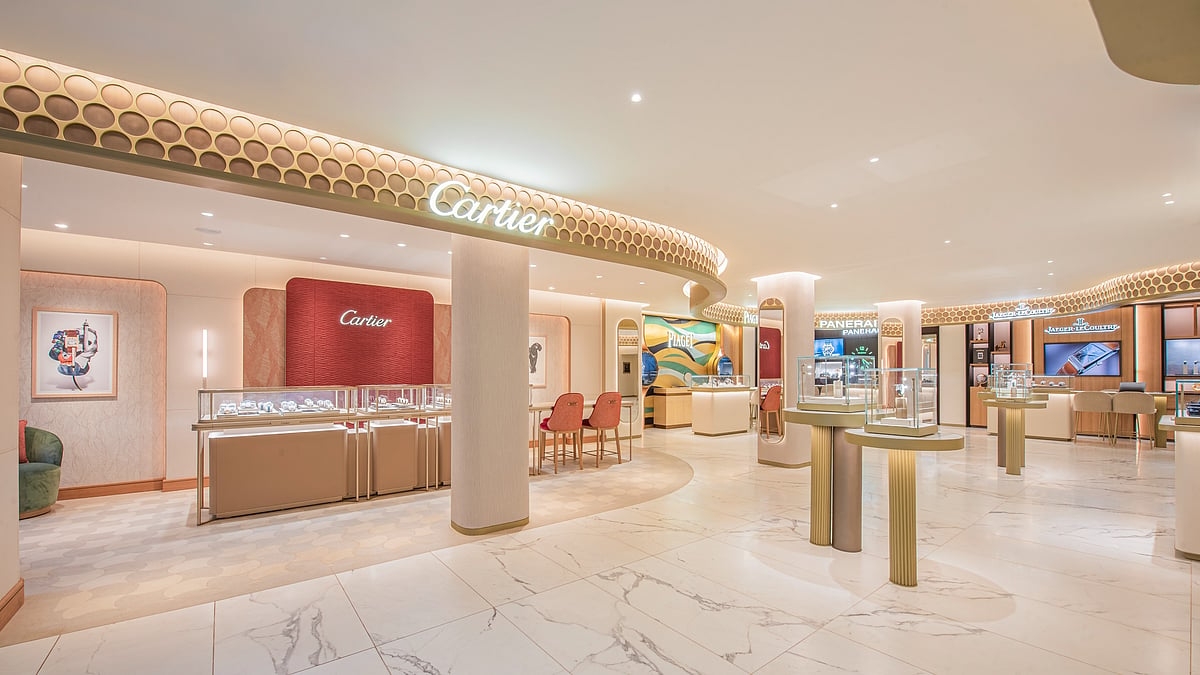
Art Of Time launches the TimeVallée boutique in Hyderabad | Pics: Art of Time
Hyderabad has long been a quiet force in India’s luxury story—discreet, discerning, and steadily growing. Now, with Art of Time bringing TimeVallée to the city, that undercurrent is coming into sharper focus. The new Jubilee Hills address isn’t just another store opening; it reflects a shift in how luxury watches are being discovered and experienced in India and increasingly shaped by a new generation of informed buyers. A global multi-brand luxury watch retail concept, walking into a TimeVallée boutique is like entering the world of horology, with a curated suite of experiences and services.
Ahead of the launch, we speak with Gaurav Bhatia and Bharat Kapoor, Co-Founders of Art of Time and with Hélène Maslin, Deputy CEO of TimeVallée, about why Hyderabad—and why now.
Hyderabad wasn’t an obvious luxury retail choice earlier. What changed?
GB: Hyderabad was always a private market for us. We’ve been visiting the city consistently for the last six years—every six months—to really understand what’s happening on the ground. The market's taste has evolved significantly. Compared to other southern markets, it’s very different and extremely important in many ways. I can’t name the brands, but we’re talking about three major international high-luxury brands in Mumbai where over 25–30% of their business actually comes from Hyderabad, simply because those brands don’t exist there. That gave us a very strong perspective on the scope we can tap into. And now, finally, it’s ready. We’re ready to roll.
What’s new in the Hyderabad boutique in terms of brand mix?
BK: The brand mix is largely similar to what we have in other cities, but we’ve added Grand Seiko and TAG Heuer as new introductions. These are part of our portfolio, but we’ve never showcased them before in this format; this is a first for us within TimeVallée as well. We still have space for one more brand and are in discussions to complement the mix further. Grand Seiko, in particular, has been a revelation. The numbers are incredible—it has a strong community-driven following, especially in the South. Its Japanese heritage, culture, and positioning bring something very distinct to our overall offering.
What strategic role will Hyderabad play in TimeVallée’s India expansion?
HM: India is a strategic market for TimeVallée. Our journey began in 2023 with Tata CLiQ Luxury, which helped us understand client needs and gather insights before entering physical retail in 2024. We now have boutiques in Mumbai, Bengaluru, Chennai, and Hyderabad. The idea is not to open stores for the sake of expansion. It’s about finding the right time, the right location, the right partner, and the right brand mix. Sometimes everything aligns, and when it does, we move forward.
What’s next for TimeVallée in India?
HM: We will open a boutique at Mumbai’s Terminal 2 airport later this year, in partnership with Adani. It’s about complementing our existing network. Airports are a very different business. While TimeVallée is familiar with such environments globally, we are selective. Not every airport is mature enough for the TimeVallée experience.
How does Indian consumer behaviour differ from global markets?
HM: Globally, you see both monobrand and multibrand preferences. In India, what stands out is that customers rarely shop alone. It’s usually families, couples, or groups. Everyone comes in with different preferences, styles, and expectations. That’s where a multibrand environment works beautifully; it allows exploration and comparison.
Have buying patterns shifted in recent years amongst Indian watch lovers?
BK: Absolutely, clients today know exactly what they want. They come in with a clear idea, and we guide them through the process. Travel has played a big role as customers are more exposed and aware of global brands. Earlier, buying was limited to a few big names. Now, that’s changing. We’ve also seen a shift in product trends; smaller dial sizes are gaining popularity among men, moving away from the oversized watches. Also, the rise in women buyers is an exciting shift. Earlier, the ratio was about 70–30. Today, it’s almost 50–50. Women are no longer just buying jewelled watches; they’re asking for automatics, complications, and even high horology pieces.
How important is digital in a luxury-first market like India?
HM: Digital is essential for awareness and education, especially in emerging markets. But luxury is still deeply emotional and customers want to experience the product physically before purchasing.
GB: In cities where we have stores, almost no one completes a purchase online. They come in-store or opt for home presentations. However, digital plays a crucial role in Tier 2 and Tier 3 markets, where we offer tailored delivery experiences—even down to personalised packaging and occasion-based touches.
Finally, what does luxury retail need to stay relevant today?
Hélène Maslin: It always comes back to the client. To stay relevant, you have to stay connected to their needs.
BK: Luxury today is about emotion, experience, and relationships. Buying a watch isn’t just a transaction—it’s a celebration. And that’s something digital alone can’t replicate.
RECENT STORIES
-
-
-
-
-