This ‘Guilt-Free’ Snack Is Quietly Replacing Chips—Here’s Why
Why this humble superfood is finding a place in every health-conscious kitchen

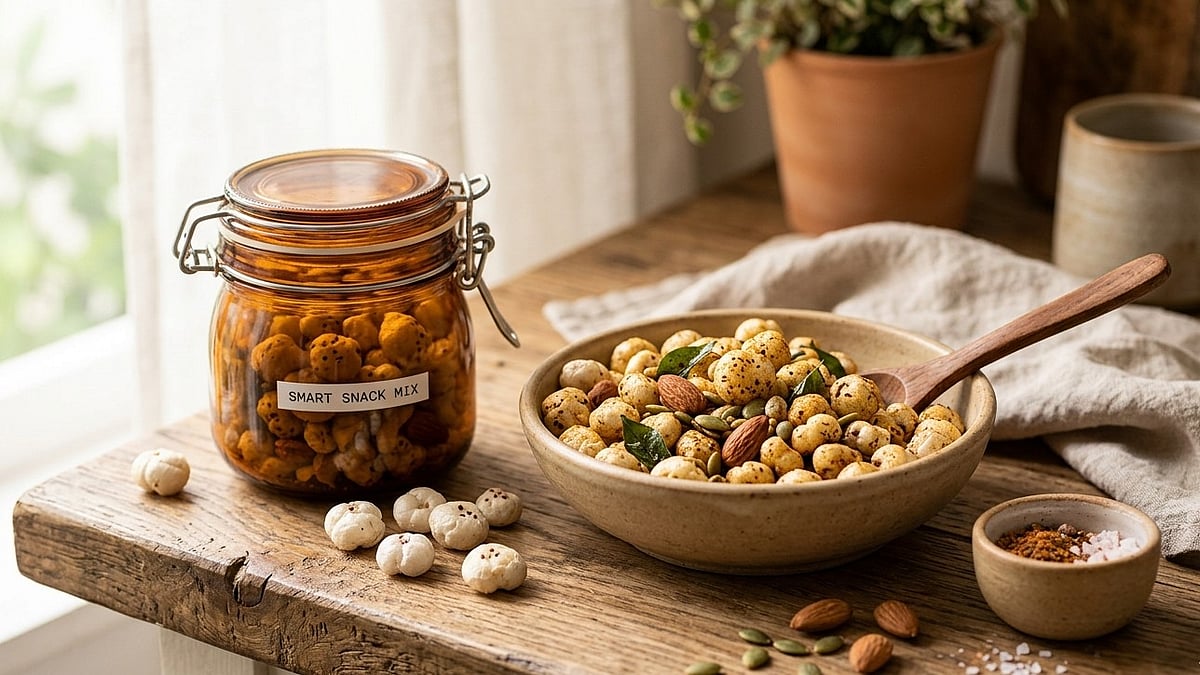
Is makhana the new mantra for your goodness bowls? Glance through your health diary to check if wholesome fox nuts or lotus seeds or the desi dry-roasted and puffed white makhana are included in your diet chart.
Nutritionists call it a nutrient-abundant superfood with low calories and minimal fat, thus making makhana an ideal light, crusty, weight-cutting snack. Ample in fibre, protein, calcium, magnesium and antioxidants, makhana boosts heart health, fortifies bones, maintains digestive health and controls blood sugar levels.
Also, popularly dubbed prickly waterlily or Gorgon plant and scientifically termed as Euryale ferox, makhana is a species visibly present in southern and eastern Asia. For the uninitiated, it is the sole surviving member of the genus Euryale that sprouts and matures in freshwater ponds. The edible seeds are parched and widely consumed across Asia.
Makhana magic
Super makhana is nutrient-dense, gluten-free, versatile and rooted in traditional Indian eating.
“It is a smart grub and more salubrious than most ultra-processed options like chips, biscuits or fried namkeens. When eaten in right proportions, it offers fibre, minerals, antioxidants and better satiety. What makes it valuable is not just its nutrition element but also how easily it fits into fasting meals, children’s comfort food, travel titbits and everyday Indian kitchens,” informs Deepika Rathod, head nutritionist and foundational medicine expert from Team Luke (the wellness, integrative medicine and holistic lifestyle team based in India).
Chef Deepak Gore of Tata Sampann spice brand thinks that in today’s fast-paced world, finding a snack that is both delicious and healthy can pose a big challenge.
“Makhana bridges this gap perfectly. Sourced from the finest lotus seeds, it is naturally gluten-free and scanty in calories. Evidently, it emerges as a perfect bet for fitness enthusiasts. What sets makhana apart is its versatility. Enjoy it roasted as a crispy brittle snack, add it to the curries for extra texture or use it in desserts for a nutritious twist. Every handful delivers a satisfying taste without compromising on health. Choosing makhana means opting for purity, quality and wellness, thus inching towards your preset lifestyle aims with every morsel,” notes Gore.
Nutrition on plate
Makhana contains complex carbohydrates, fibre, minerals and plant compounds. Plus, it provides some protein, though it should not be mistaken for a high-protein food. It also comprises magnesium, potassium, phosphorus, trace calcium and iron as well as antioxidant compounds like flavonoids and phenolics. Its fiber content supports satiety and digestion, while minerals like magnesium and potassium aid muscle, nerve and heart function. “The key is to eat it as part of a balanced plate, not as a standalone health fix,” shares Rathod.
Health upside
Makhana can crack wonders instilling better stomach-filling habits with something substantial when prepared well. Since it is light and crunchy, it works as a good alternative to refined, oil-soaked or packaged bites and nibbles. Its fibre may drive gut health and fullness, while its mineral content reinforces muscle and nerve function. Its antioxidant compounds may help the body regulate oxidative stress. For people watching blood sugar levels, makhana performs better when paired with nuts, seeds, roasted chana (chickpeas) or yogurt. The benefit lies in both what it delivers and what it replaces with.
Super snack
“Makhana is often called weight-loss friendly but I would definitively label it as weight management-friendly. It is positively impactful when eaten mindfully,” reminds Rathod.
Dry-roasted makhana gives you that guilt-free feeling of digging into culinary delights sans those excess drops of slippery, greasy oil, unhealthy artificial flavours and the heaviness of fried fritters. Its fibre can help keep your stomach full for longer. However, portion control matters because makhana is still carbohydrate-rich. A small dish is enough. Combining it with protein or healthy fats can further retain blood sugar balance.
Illness check
Can makhana prevent diseases from occurring? No single food can impede any disease by itself, and makhana should not be positioned that way either, hold expert views. However, it can be part of a lifestyle that assists enhancement of metabolic, gut and heart health. When makhana supplants fried snacks, sugary biscuits, chips or refined munchies, it can help reduce the unwanted intake of poor-quality oils, excess salt, sugar and additives. Its low-glycemic profile and a robust fibre-mineral-antioxidant content may help upkeep the blood sugar balance, satiety, oxidative stress control and cardiovascular health. Disease deterrence comes from consistent lifestyle patterns, not one food type alone, note dieticians.
Daily intake
A vital query is that whether makhana should be consumed daily.
Makhana can be a regular munchie if it suits the person’s digestive system, health condition and overall food plan. A feasible quantity is about one small bowl consisting of 20-30 grams. The issue is not makhana itself but mindless overeating, especially from large packets. People with diabetes, kidney disease, digestive sensitivity or any prescribed dietary restrictions should personalise their intake with professional guidance. Makhana can be teamed up with curd or other protein-rich foods instead of being eaten alone.
No one-size-fits-all solution
One wonders if makhana consumption is suitable for everybody and whether it causes any negative effects.
“Makhana suits many people but not necessarily everyone. It should be customised based on digestion, blood sugar response, kidney health, food sensitivities and overall diet regime. Some may experience bloating, gas, constipation or discomfort if they overeat it or do not chew it well,” warns nutritionist Shimpli Patil from integrative and lifestyle medicine at LCHHS (Luke Coutinho Holistic Healing Systems).
“People with diabetes should monitor the portions and couple makhana with protein or healthy fats. Those with kidney disease, potassium restrictions, pregnancy, digestive concerns or any prescribed dietary curbs should discuss their problems with experts for precise results. Packaged makhana can also be counterproductive. So, we advise our patients to buy raw makhana and roast the same at home for the most nutritional benefits,” she enlightens ahead.
A simple, wholesome recipe of makhana:
Spiced, roasted makhana with nuts and seeds
Take 2 cups of makhana (raw) and dry roast it on low flame until it turns crisp. In another pan, add 1 teaspoon ghee, curry leaves, turmeric, cumin powder, black pepper and a pinch of rock salt. Add almonds, pumpkin seeds or roasted chana. Then mix in the roasted makhana. Toss everything for a minute and let it cool. Store the makhana mix in an airtight jar. This makes the dish crunchy and a more satisfying snack with better satiety power than plain makhana.
RECENT STORIES
-
-
-
-
-