Theatre Review: 'Pudhchya Shukravari Saat Vaajta' — Neeraj Shirvoikar’s Marathi Play Explores Addiction, Ambition And Redemption
A gripping Marathi drama that explores addiction, ambition, and human vulnerability, unfolding a layered story of guilt, healing, and second chances

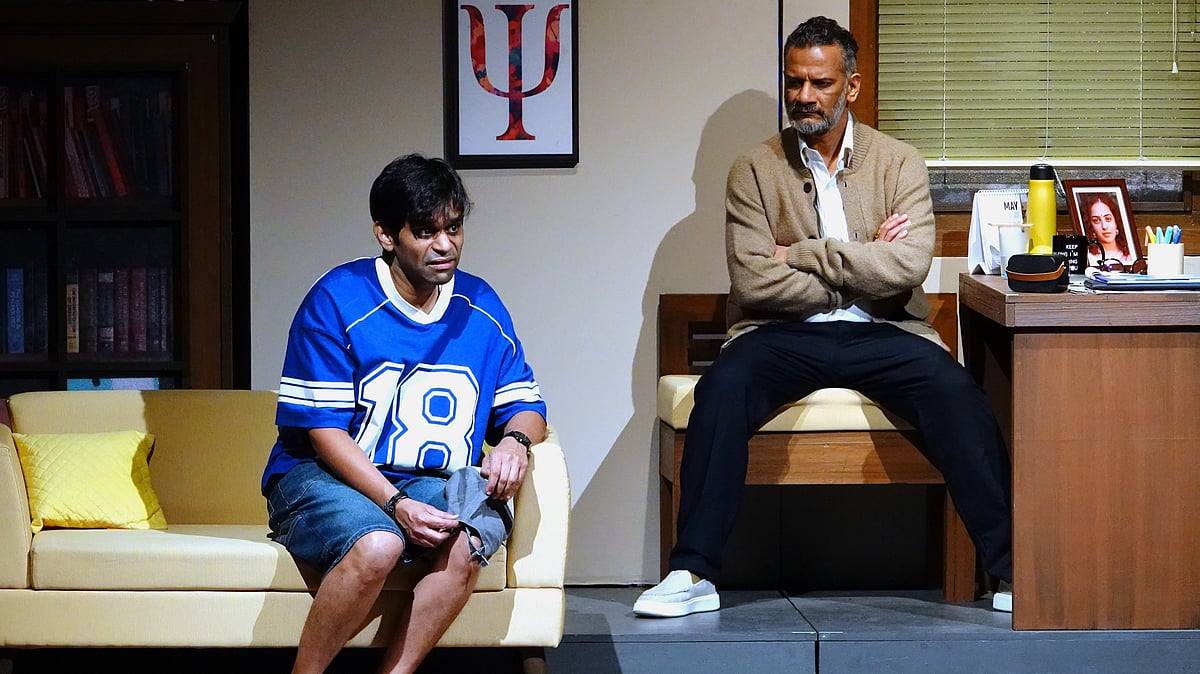
Pudhchya Shukravari Saat Vaajta is one of those rare contemporary Marathi plays that manages to be emotionally stirring without becoming melodramatic, and socially relevant without sounding preachy. Written by Sudeep Modak and directed by Neeraj Shirvoikar, the play explores addiction, ambition, class divides, and the fragile but transformative power of human connection.
At the heart of the story are three sharply etched characters – Radhika Joshi, an ambitious corporate professional; Mangesh Gaikwad, a young man from a slum battling substance abuse; and Dr. Atul Mankad, a principled therapist committed to rehabilitation rather than judgment. What begins as an attempt to rescue one individual from the clutches of drug addiction, gradually unfolds into a deeper examination of how people carry their past wounds, prejudices, and hopes.
Play opens with Radhika stepping into psychiatrist and rehab specialist Dr. Mankad’s clinic when he is in midst of wrapping up operations and closing the clinic. He is all geared up for a sabbatical when Radhika brings him a new patient. One, seemingly simple, comment convinces him to take the case and stay back.
Mangesh Gaikwad, the patient, is a money-making machine for Radhika. A brilliant professional hacker that he is, an Australian company is willing to pay a sizeable amount to Radhika for facilitating his hiring. For Dr. Mankad, he is a revival of a forgotten past.
The play goes on to reveal stratums of human nature and unspoken past of Radhika and Dr. Mankad. The struggle of Mangesh to survive and to fight the addiction matches the struggle of Dr. Mankad to relive the past.
The end of the play can be called a twist in the plot if you fail to read the small print during the play. However, the way it is delivered impacts you little softly than the expected punch on the nose.
The writing by Sudeep Modak is the play’s greatest strength. It resists easy answers and instead asks difficult questions. Can someone truly change? Does compassion have limits? And can relationships heal what medicine alone cannot? The dialogues are authentic and layered, allowing each character to evolve in surprising ways.
The performances are uniformly good. Satish Rajwade brings his signature understated authority and warmth to Dr. Atul, making him both morally grounded and deeply human. It is a tailor-made role for Rajwade.
Chaitrali Gupte delivers a nuanced portrayal of Radhika, balancing professional confidence with emotional vulnerability. Her corporate persona is bang on.
Sudeep Modak is impressive as Mangesh, capturing the rawness, confusion, and yearning of a man caught between self-destruction and redemption. However, he can mellow down a bit of his melodrama in places to display a better sway and command over the role.
Technically, the production is polished and imaginative. The transforming set design by Sandesh Bendre is particularly impressive. He has captured the Dharavi ambiance with immense exactitude. Evocative lighting by Sheetal Talpade enhances the already communicative set. Rahul Ranade’s subtle music creates an immersive atmosphere that heightens the emotional impact without overwhelming the narrative.
What makes Pudhchya Shukravari Saat Vaajta memorable is its honesty. It acknowledges the darkness of addiction and loneliness yet never loses faith in the possibility of recovery and reconnection. The play lingers long after the curtain falls, prompting audiences to reflect on the people in their own lives who may be waiting for a second chance.
RECENT STORIES
-
-
-
-
-