'The doctor in me keeps the entrepreneur honest': Padma Shri Dr Mukesh Batra
Padma Shri Dr Mukesh Batra on 50 years of practice and the enduring power of homeopathy. Half a century of healing, and homeopathy's most passionate champion is just warming up

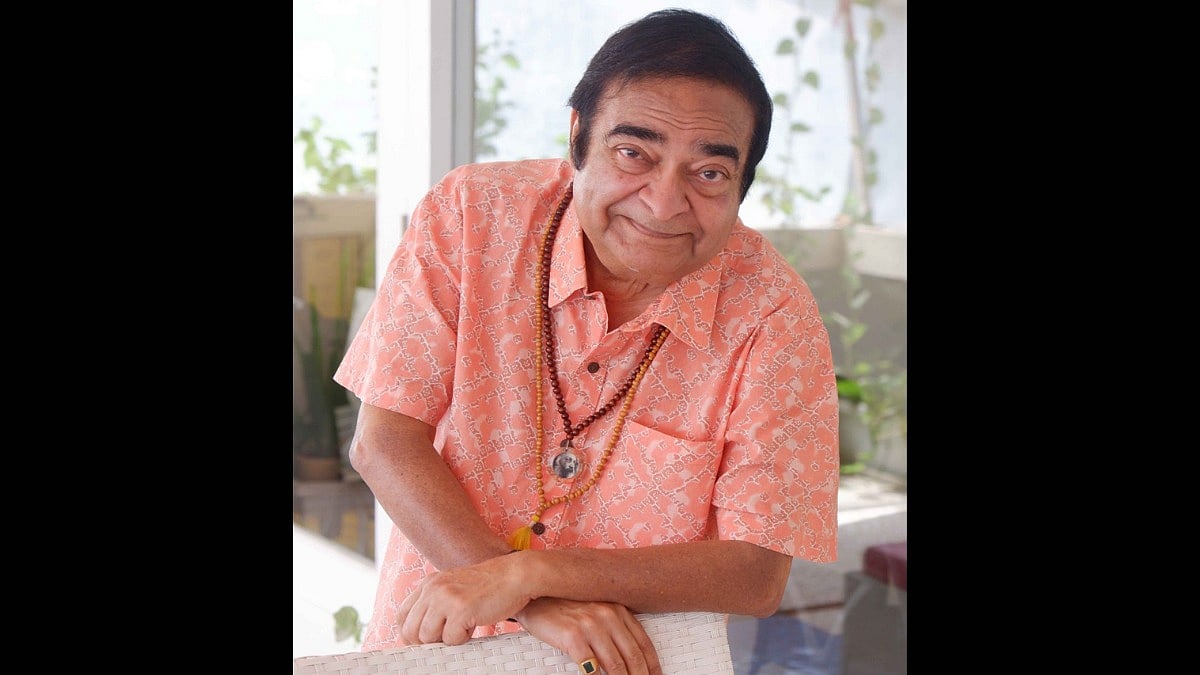
Mukesh Batra needs no introduction. The Padma Shri awardee is a multi-faceted personality—entrepreneur (founder of Dr Batra’s® Healthcare), photographer, author, and singer—with a famously jovial demeanour. Despite his many roles, Dr Batra wears them lightly and manages to strike a fine balance across pursuits.
“I believe people who want to do something can always do it… where there is a will, there is a way,” he says, when asked how he juggles his varied interests. He is quick to acknowledge that a strong team plays a crucial role in keeping his professional life running smoothly.
With World Homeopathy Day around the corner (April 10), we caught up with him to talk about homeopathy, his creative pursuits, and more.
Excerpts from the interview:
How do you see the role of homeopathy evolving in modern integrative healthcare?
Over five decades, I have watched homeopathy move from the periphery to the centre of conversations about holistic health. Today, people are no longer choosing between modern medicine and homeopathy — they are asking how the two can work together. That, to me, is the real evolution. Integrative healthcare is no longer an idea; it is a practice. Homeopathy brings something that no diagnostic machine can replace — the art of listening, of treating the whole person, not just the disease. As chronic conditions like autoimmune disorders, stress-related illnesses, and lifestyle diseases become more prevalent, homeopathy's individualised approach becomes not just relevant but essential. I see a future where homeopathy is a cornerstone of integrative care, not a footnote.
What are some common misconceptions about homeopathy that you still encounter today?
The most persistent misconception is that homeopathy is slow and suitable only for minor ailments. In my five decades of practice, I have seen homeopathy effectively address skin conditions, hair loss, respiratory disorders, allergies, emotional health challenges and even some very difficult to treat disorders like GB Syndrome and Dentinogesis Imperfecta often with results that surprise the most sceptical patients. Another misconception is that it is merely a placebo. If that were true, how do we explain its effectiveness in children and animals, who have no concept of placebo? The science of homeopathy is rooted in the principle of individualisation — no two patients are the same, even if their diagnoses are. That is not unscientific. That is profoundly human.
In an age of AI and advanced diagnostics, where does homeopathy stand?
AI is a remarkable tool, and I embrace it. At Dr Batra's®, we have invested in technology to enhance patient experience and treatment protocols. But here is what AI cannot do — it cannot sit across from a patient, sense their anxiety, understand their grief, or intuit what lies beneath the symptom. Homeopathy is a deeply relational medicine. The consultation itself is therapeutic. I believe AI will make homeopathy better — more precise, more data-driven — but it can never replace the homeopath. In fact, as diagnostics become more mechanised, the human touch that homeopathy offers will only become more valuable.
What kind of patients today are increasingly turning to homeopathy — and why?
The modern homeopathy patient is educated, informed, and often frustrated. Frustrated with treatments that manage symptoms without addressing root causes. Frustrated with side effects. Frustrated with being treated as a case file rather than a person. We see a lot of young professionals dealing with stress, anxiety, and burnout. We see parents who prefer a gentler approach for their children. We see patients with chronic skin and hair conditions who have tried everything else. And increasingly, we see people who simply want to take charge of their own health — who are asking deeper questions about what it means to be well. That shift in consciousness is one of the most exciting developments I have witnessed.
How has your approach to healing changed over the years?
When I started practising fifty years ago, I was focused on the remedy — on getting the prescription right. Over time, I realised that healing is as much about presence as it is about the pill. The patient sitting in front of you carries not just a disease, but a story. The more deeply I listened, the better a healer I became. I also grew humbler. Medicine — any medicine — has its limits, and acknowledging that is not weakness; it is wisdom. Today, my approach is one of deep listening, of treating the person first and the pathology second. That has not changed — if anything, fifty years have only deepened that conviction.
You built one of the largest homeopathy healthcare networks in the world. What were the key decisions that shaped this journey?
The first decision was to think beyond the clinic. When I founded Dr Batra's twenty-five years ago, homeopathy was seen as a cottage industry. I believed it could be a credible, quality-driven healthcare institution. The second was standardisation — creating protocols that ensured every patient, whether in Mumbai or Manchester, received the same quality of care. The third was technology — embracing it early, not reluctantly. And the fourth, perhaps most importantly, was people. Building a team of doctors and professionals who share the belief that medicine is a calling, not just a career. Today, with over 200 clinics across 150 cities and 10 countries, I am proud that we have made quality homeopathy accessible at scale.
How do you balance the roles of a doctor and an entrepreneur?
I do not think of them as separate roles — they are two expressions of the same purpose. As a doctor, I want to heal. As an entrepreneur, I want to build systems that heal at scale. The tension between the two is actually generative. The doctor in me keeps the entrepreneur honest — reminds me that behind every metric is a patient, a family, a life. And the entrepreneur in me gives the doctor wings — the ability to reach patients I could never have reached from a single clinic. The balance is not always easy, but it is always meaningful.
You are known to have a deep passion for photography. What kind of subjects or moments do you enjoy capturing the most?
Landscapes, overwhelmingly. There is something about standing before a vast, indifferent mountain or a silent, still lake that puts everything in perspective. I have had 54 international exhibitions — a journey I never planned but that unfolded naturally, the way the best things in life do. What I love most about landscape photography is its honesty. The light is what it is. The mountain does not perform for you. You simply have to be present, patient, and ready. I also donate my photographs to causes that support the blind — because I believe that beauty, experienced in any form, is healing.
Does photography influence the way you observe patients or understand healing?
Deeply. Photography taught me to see — really see — what is in front of me. The moment before you press the shutter, you are entirely present. That quality of attention is exactly what a good consultation requires. In photography, you learn that the frame you choose defines the story. In medicine, the questions you ask define the diagnosis. Both arts are about perception — about noticing what others might miss. I genuinely believe that photography made me a better doctor, and medicine made me a more thoughtful photographer.
Who or what continues to inspire you even today?
My patients, more than anyone else. Fifty years in, I still feel a quiet thrill when someone walks in burdened and walks out lighter. That never gets old. I am also inspired by young people — by their questioning minds and their refusal to accept things at face value. They are pushing homeopathy to prove itself, and that rigour is good for us. And then there is nature itself. Every landscape I photograph reminds me of the extraordinary intelligence built into living systems — the same intelligence that homeopathy seeks to stimulate and support. That never stops being wonderful.
What is your vision for the future of homeopathy?
I envision homeopathy as a first-line option in primary healthcare — not an alternative, but an integral part of the mainstream. I see it supported by robust research, embraced by integrative medical institutions, and practised by a new generation of doctors who are as comfortable with data as they are with the classical texts. I see Dr Batra's® continuing to lead that charge globally. Most importantly, I see a world where patients have a genuine choice — where they are empowered to decide what kind of care is right for them, with full knowledge and full confidence. That is the future I am working toward.
Are there any innovations or initiatives you are currently excited about?
I am very excited about my 11th book, published by Bloomsbury — yes, the publishers behind Harry Potter. On the clinical side, we are investing in AI-assisted case analysis that helps our doctors make more precise prescriptions, without losing the human element. We are also deepening our research collaborations to generate the kind of evidence base that will satisfy the scientific community. And we continue to expand internationally — because good medicine should have no borders.
Homeopathy has been under the scanner and accused of using steroids to address certain ailments. What's your take on that?
I take this allegation very seriously, and I condemn it unreservedly. The use of steroids or any allopathic substance under the guise of homeopathy is not just unethical — it is criminal. It is a betrayal of the patient's trust and a disgrace to the profession. At Dr Batra's®, we have always operated with absolute transparency and integrity. Our medicines are sourced from certified pharmacies, our protocols are documented, and our results are achieved through genuine homeopathic practice. The bad actors who adulterate remedies do tremendous damage to a system of medicine that has served millions responsibly. The answer is tighter regulation, greater accountability, and an industry that polices itself without flinching. I have always stood for that, and I always will.
Quick Takes
One word to describe homeopathy: Safety.
A book that shaped your thinking: Ivan Illich’s Medical Nemesis. It changed the way I looked at medicine. “Medical nemesis" or "iatrogenesis," creates more sickness than health by making people dependent on doctors.
A place that inspires you: The mountains. Every time I stand before those mountains with my camera, I am reminded how small our worries are and how immense life's possibilities are.
Photography, singing, or medicine — which relaxes you more? Singing – for me it’s like meditation at the end of a tough day.
One message for young India on health and wellness: Your body is wiser than you think. Listen to it. Invest in prevention, not just cure. Eat well, sleep well, move well and think well. When you do need medicine choose wisely – a system of medicine which safe and holistic like homeopathy.
RECENT STORIES
-
-
-
-
-