Spotted Black Marks On Your Onions? Here’s What They Mean And What You Should Do
It is very common to witness black marks on onions. It is often linked with fungal growth, commonly known as black mould. Black mould is commonly caused by the fungus Aspergillus niger. It can develop when onions are exposed to warm, humid conditions or are stored for a long period. The fungus may appear as black, dusty patches between the onion's dry outer layers or around the neck and base.

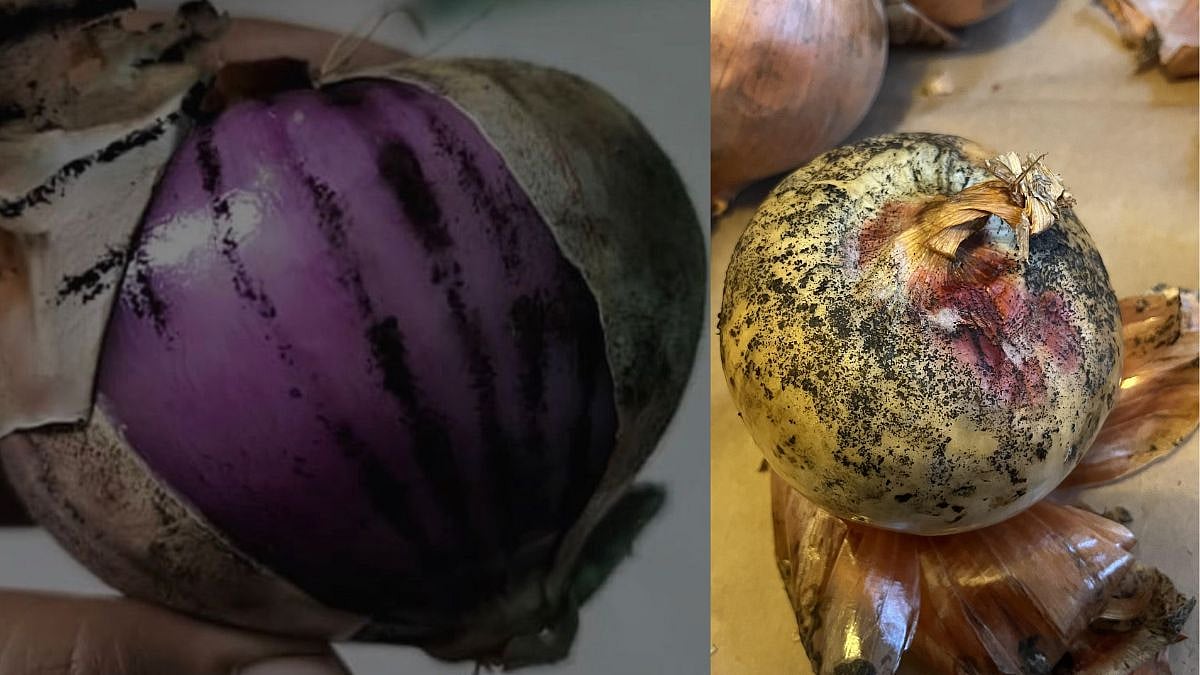
Spotted Black Marks On Your Onions? Here’s What They Mean And What You Should Do |
An onion is a widely cultivated underground bulb vegetable from the Allium genus. It is known for its pungent taste and layered structure. However, have you ever peeled an onion and noticed black spots, patches or a dark powdery substance on its surface? While it may look alarming, black marks on onions are often linked to fungal growth, particularly a condition known as black mould. It is known as Aspergillus niger. Let's understand more about it.
Black spots on onions
It is very common to witness black marks on onions. It is often linked with fungal growth, commonly known as black mould. Black mould is commonly caused by the fungus Aspergillus niger. It can develop when onions are exposed to warm, humid conditions or are stored for a long period. The fungus may appear as black, dusty patches between the onion's dry outer layers or around the neck and base.
Are black spots on onions safe?
If the black marks are limited to the dry outer skin, the onion may sometimes still be usable. You can remove the affected outer layers and carefully inspect the flesh underneath. If the onion is firm, smells normal and has no visible mould or soft, discoloured areas inside, it can generally be washed thoroughly and used after removing the affected portions.
However, do not use an onion if the black mould has spread into the inner layers. A soft or slimy texture, unpleasant odour, extensive discolouration or visible fungal growth are red flag signs that the onion should be discarded.
It is also advisable not to simply cut away a large mouldy section and consume the remaining onion, because over time, the fungus produces mycotoxins, toxic compounds known to damage liver cells and impair detoxification processes in the body.
ALSO READ
How to prevent black mould onions?
Proper storage can help reduce the chances of fungal growth. Keep onions in a cool, dry and well-ventilated place, away from excess moisture. Avoid storing them in sealed plastic bags, as trapped humidity can encourage mould.
Onions should also be kept away from potatoes and other produce that can increase moisture levels during storage.
RECENT STORIES
-
-
-
-
-