Shardiya Navratri 2026: Goddess Durga Arrives On Elephant; What Does It Symbolise?
This year, Shardiya Navratri has already begun from Sunday, October 11. It is believed that the goddess has come this year on an elephant. When Shardiya Navratri begins on a day associated with an elephant as the goddess' vahana, it is traditionally considered an auspicious sign. The elephant is associated with wisdom, prosperity, strength, stability and abundance in Hindu religious traditions.

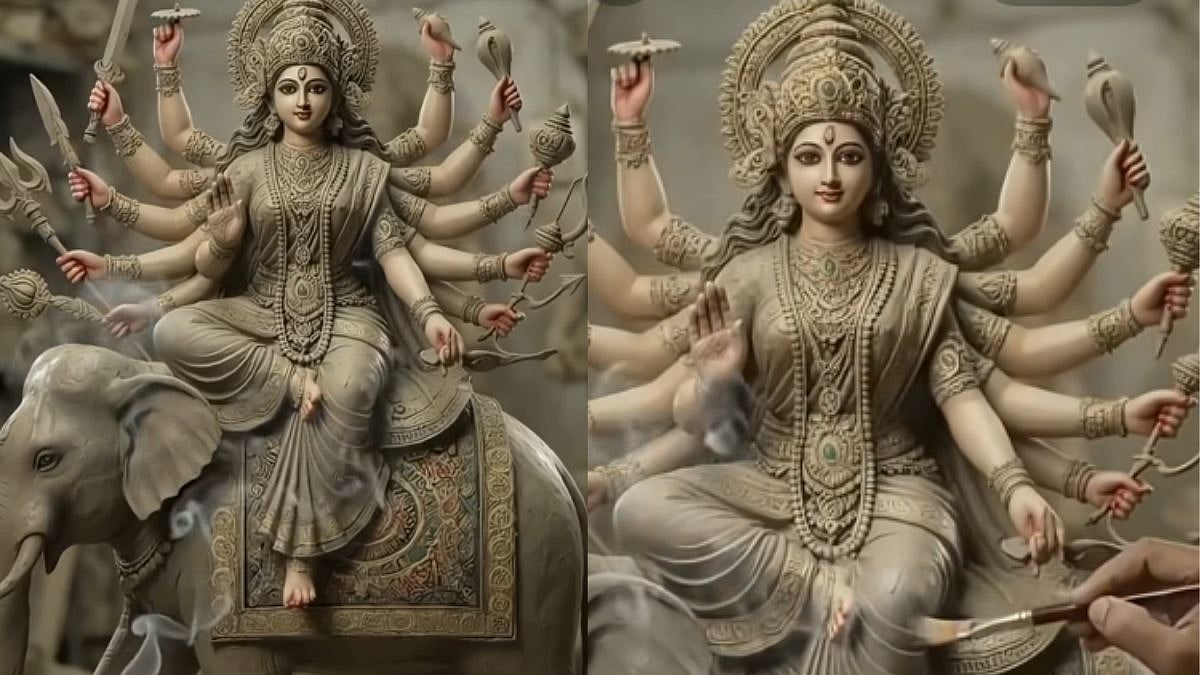
Shardiya Navratri 2026: Goddess Durga Arrives On Elephant; What Does It Symbolise? |
Shardiya Navratri is one of the most celebrated Navratris observed across the country, especially in Gujarat, Madhya Pradesh, Maharashtra and other northern regions of India. This year, the festival is being observed from Sunday, October 11. The first day of Navratri is dedicated to Goddess Shailputri, whereas the second day is dedicated to Goddess Brahmacharini. While the lion is traditionally regarded as her primary mount, religious traditions associate her arrival and departure during Navratri with different vehicles based on the day on which the festival begins and ends.
According to Hindu beliefs, Goddess Durga's vahana, or mode of transportation, during Navratri is associated with the day on which the festival begins. These traditional interpretations are believed to offer symbolic indications about the events and circumstances that may unfold in the coming period. This year, Goddess Durga has arrived on an elephant (Gaj). But what does it symbolise and what does it mean? Let's understand the symbolism.
What does Goddess Durga's arrival on an elephant symbolise?
This year, Shardiya Navratri has already begun from Sunday, October 11. It is believed that the goddess has come this year on an elephant. When Shardiya Navratri begins on a day associated with an elephant as the goddess' vahana, it is traditionally considered an auspicious sign. The elephant is associated with wisdom, prosperity, strength, stability and abundance in Hindu religious traditions.
Goddess Durga's arrival on an elephant is often interpreted as a symbol of prosperity, good rainfall, agricultural abundance and overall well-being. In agrarian traditions, rainfall is particularly important because it supports crop growth and contributes to the livelihood of farming communities.
Elephant symbolises stability and power
According to Hindu belief, the elephant is also regarded as a symbol of dignity, patience and power. Therefore, the goddess's arrival on this majestic animal is believed to represent stability and the possibility of positive developments.
How is Goddess Durga's vahana determined during Navratri?
According to popular Hindu traditions, the day of the week on which Navratri begins determines the goddess's symbolic vehicle. Different weekdays are associated with different vahanas, including an elephant, horse, palanquin and boat.
The elephant is generally associated with a Sunday or Monday start, while a Thursday or Friday beginning is traditionally linked to a palanquin. Tuesday or Saturday may indicate a horse, and Wednesday is associated with a boat in commonly followed interpretations.
Shardiya Navratri is dedicated to the nine forms of the goddess, and it is a time to pause, reflect, for devotion, spiritual reflection and the celebration of feminine divine energy.
RECENT STORIES
-
-
-
-
-