Rhododendron Arboreum Blooms In Himalayas: Is It A Warning Sign?
Yes, the early blooming of the Buransh (Rhododendron arboreum) in the Himalayas is a widely recognised warning sign of climate change and ecological disruption. Right now, Buransh is blooming 2 to 4 weeks earlier than usual, and early or unusually widespread blooms have raised concerns among scientists and environmentalists.

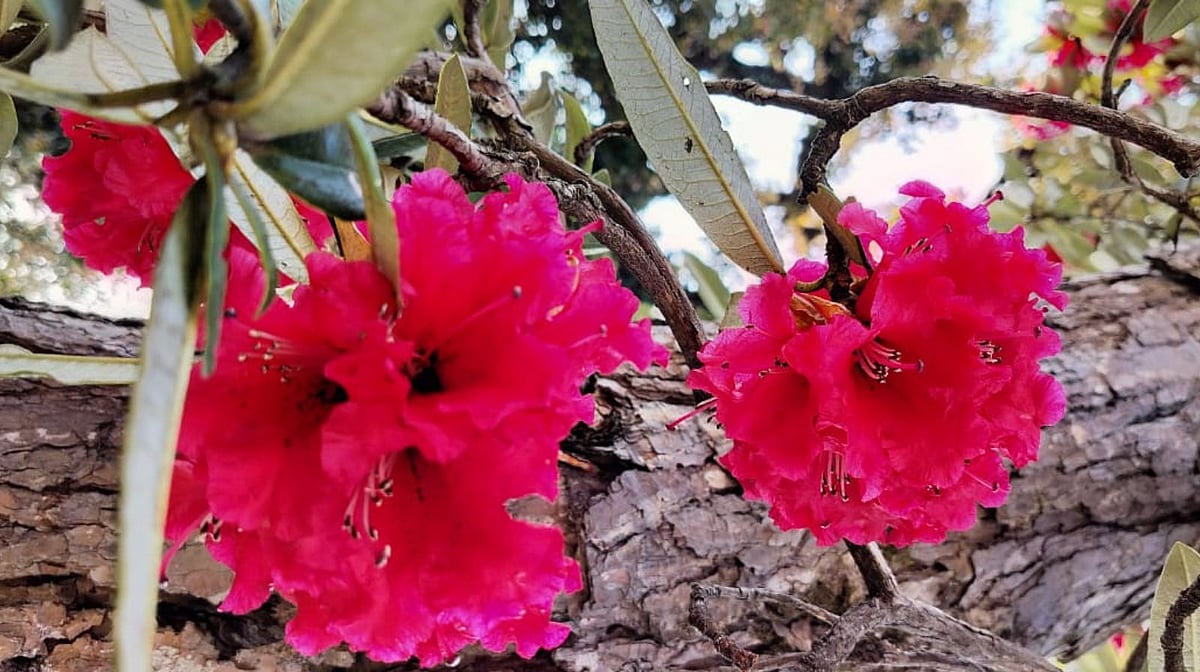
Rhododendron Arboreum Blooms |
Rhododendron arboreum, also known as Buransh, which grows primarily in the Himalayan region. The red blooms are found in many mountainous regions, including Uttarakhand, Himachal Pradesh, Sikkim, Bhutan, and Nepal. They are indigenous to the Himalayan belt at altitudes of 1500–3300 metres. However, they also grow in other high-altitude areas in India, including parts of West Bengal and Nagaland. The blooming of Rhododendron arboreum across the Himalayan range is a striking seasonal event, painting the hills in vibrant shades of red and pink.
About Rhododendron arboreum
Typically, this species flowers during spring, between February to May, depending on altitude and local weather conditions. Buransh is a flowering tree which is also called the state tree of Uttarakhand and the national flower of Nepal. The edible flowers have medicinal properties. Rhododendron arboreum, the tree rhododendron, is an evergreen shrub or small tree which is also found in Myanmar, China, Pakistan, Sri Lanka, and Thailand. Buransh is also the state flower of Nagaland, and it was discovered in 1993 at Mount Japfü in the Kohima district of Nagaland. The country also holds a Guinness record for the tallest rhododendron at 20 m (65 ft).
Is Rhododendron arboreum blooming in the Himalayas: A nature's warning sign
Yes, the early blooming of the Buransh (Rhododendron arboreum) in the Himalayas is a widely recognised warning sign of climate change and ecological disruption. Right now, Buransh is blooming 2 to 4 weeks earlier than usual, and early or unusually widespread blooms have raised concerns among scientists and environmentalists.
Experts suggest that such changes may be linked to shifting weather patterns and rising temperatures. Warmer winters and early onset of spring-like conditions can trigger premature flowering in many plant species, including Rhododendron arboreum. While a bloom itself is not unusual, deviations in timing, intensity, or geographic spread can indicate ecological imbalance. Premature flowering is directly linked to rising temperatures in winters, unusual snowfall, long dry spells, and much more.
Buransh: A dominating community in the Himalaya
Buransh plays a very crucial role in our ecosystem because it is one of the first trees to bloom in spring. They provide a vital nectar and pollen source for birds, bees, and insects, which help in sustaining these populations when food is still scarce. In the Himalaya, they are a dominant community that helps in stabilising slopes, preventing soil erosion, and also protecting watersheds, and when these forest systems are disrupted in any way, it affects communities living in the Himalayan region.
Due to their sensitivity, changes in their flowering time or growth are used to monitor climate change. The next time you see a Buransh premature blooming or unusual blooming, remember that it's nature warning.
RECENT STORIES
-
-
-
-
-