Neelakurinji Flower Blooms Again In Munnar After 12 Years; What Makes This Flower So Special?
After a wait of nearly 12 years, the rare Neelakurinji flowers have started blooming in large numbers in Munnar, one of the most beautiful hill stations in Keralam. The extraordinary event that turns the stretches of Western Ghats into purple is drawing attention from travellers, botanists and photographers eager to witness a fleeting natural wonder that lasts only a few weeks.

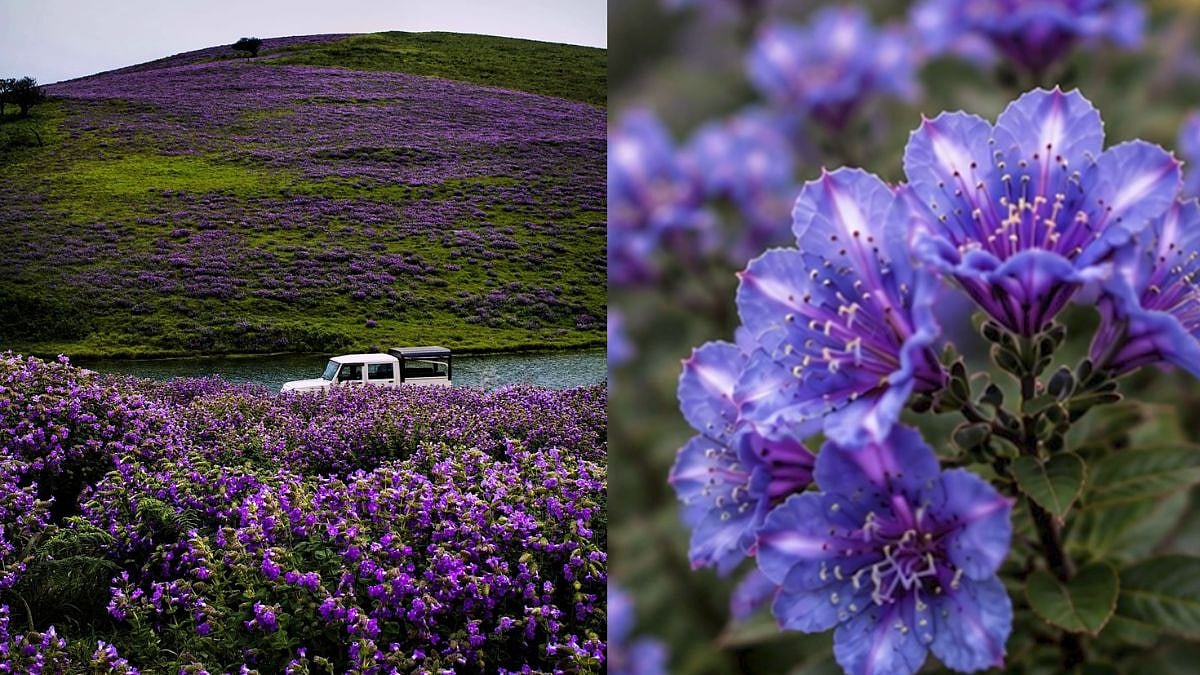
Neelakurinji Flower Blooms Again In Munnar After 12 Years |
The picturesque hills of Munnar in Keralam are turning shades of purple as the Neelakurinji flower makes its much-awaited appearance after 12 years. The rare blooming event has once again drawn attention to the ecological and cultural significance of this iconic flower of the Western Ghats. The Neelakurinji flowers have begun blooming across the Korandakadu hills near Mattupetty, transforming stretches of Western Ghats into a striking carpet of blue and purple. Keep on reading to know about the flower and why it took place after 12 years?
Neelakurinji blooms in Munnar after 12 years
After a wait of nearly 12 years, the rare Neelakurinji flowers have started blooming in large numbers in Munnar, one of the most beautiful hill stations in Keralam. The extraordinary event that turns the stretches of Western Ghats into purple is drawing attention from travellers, botanists and photographers eager to witness a fleeting natural wonder that lasts only a few weeks. The flower grows at high altitude between 1,300 and 2,500 metres above sea level in Keralam, Tamil Nadu, and Karnataka.
About Neelakurinji
Known scientifically as Strobilanthes kunthiana, Neelakurinji is famous for its unusual flowering cycle. The plant typically blooms once every 12 years, and it covers vast stretches of grasslands and hills with vibrant violet-blue and purple flowers. After flowering and producing seeds, the plants complete their life cycle, making every blooming season a special natural phenomenon.
Munnar is located in Keralam's Idukki district. It is among the best-known places to witness the spectacular bloom. The sight of entire hills covered in purple has made Neelakurinji closely associated with the region's identity and tourism.
Why is Neelakurinji so special?
Neelakurinji is a rare shrub native to the Shola forest and grasslands of the Western Ghats in South India. Famous for its purplish-blue blossoms, the flower undergoes a 12-year flowering cycle which is its most remarkable feature. While several species of Strobilanthes are known to have periodic blooming patterns, Strobilanthes kunthiana is particularly famous for its mass flowering in the high-altitude grasslands of the Western Ghats.
Plays important role in ecosystem
The bloom also plays an important role in the local ecosystem. When large numbers of flowers appear simultaneously, they provide food for insects and other pollinators. The plants are also part of the unique shola-grassland ecosystem found in the higher elevations of the Western Ghats. The flower name is derived from two words, Neela means blue and kurinji is the local name for the flower. The Nilgiri Mountains (Blue Mountains) got their name from these flowers.
Mentioned in ancient Tamil Sangam literature
Neelakurinji has a special place in local traditions as well. The Kurinji landscape is mentioned in ancient Tamil Sangam literature, where the mountainous region and its natural features were closely connected with poetry and culture.
RECENT STORIES
-
-
-
-
-