Nostalgia Fashion Is The Biggest Trend Of 2026—Here’s Why Everyone’s Looking Back
From vintage red carpets to Banarasi revivals, designers reveal how the ’70s, ’80s, ’90s and Y2K are shaping today’s biggest fashion obsession—and why we can’t let go

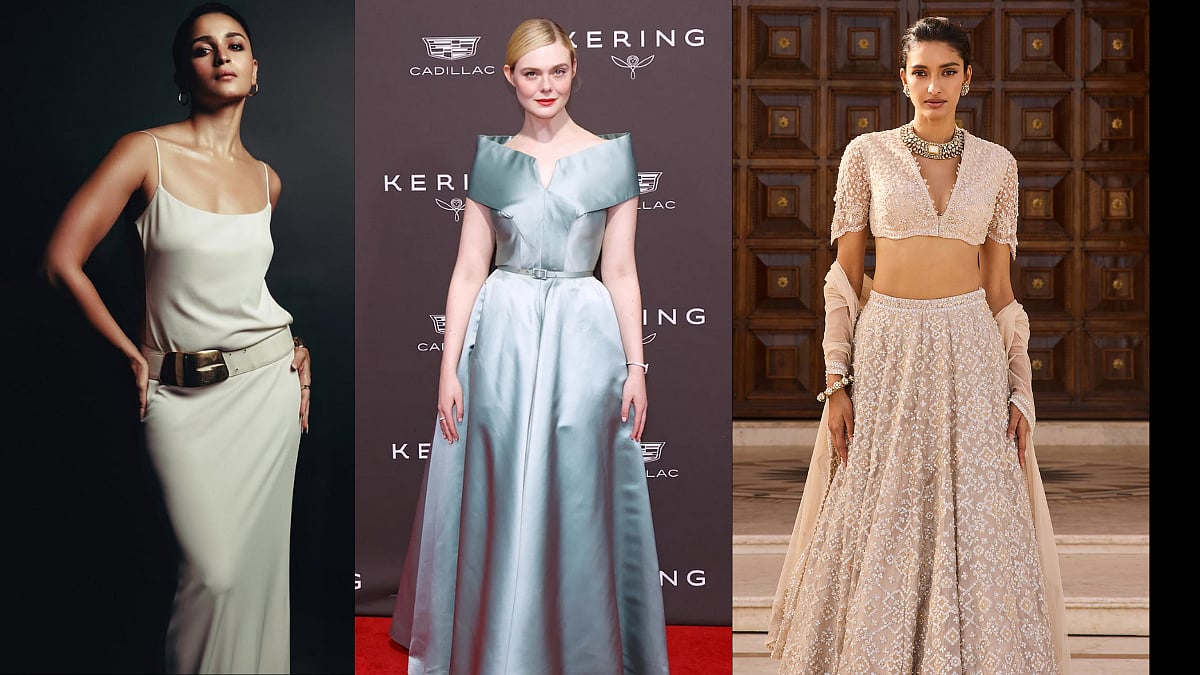
There’s a different allure to nostalgia - it softens memory, making reminiscence feel warmer and more emotional. In moments of uncertainty, that pull becomes even stronger. Today’s landscape is full of economic jitters and exhaustion from hyper-digital lives, which have only intensified fashion’s nostalgic cycle.
Fashion, with its deep ties to collective memory, becomes one of the most visible expressions of this impulse. Those years had a distinct sartorial zeitgeist: the unapologetic maximalism of Y2K, the laid-back grunge and hip-hop influences of the 1990s, and the polished preppy codes that defined the 1980s. Now, the silhouettes and aesthetics of the 1970s, ’80s and ’90s are revived and have become fashion’s most powerful mood board.
“The ’70s through the ’90s were decades where individuality in dressing really came alive, silhouettes were expressive, and styling began to tell stories. Memory gives fashion its emotional depth - people respond to silhouettes or textures that remind them of an era they associate with glamour or freedom. Marketing then amplifies that sentiment. But ultimately, nostalgia works only when designers reinterpret it with relevance,” tells designer Abhishek Sharma.
Performance of nostalgia
One of the clearest markers of this revival is stylists turning to archival fashion. This awards season alone has seen several stars embrace vintage on the red carpet, proving that when styled well, archival silhouettes can feel just as modern on the step-and-repeat. At the Palm Springs International Film Festival, Elle Fanning wore a blue off-the-shoulder gown from vintage Nettie Rosenstein couture. She continued the vintage streak at the Critics' Choice Awards, stepping out in a plunging gold Ralph Lauren dress from 2003. Meanwhile, at the Screen Actors Guild Awards, Sarah Paulson opted for an embellished 1979 gown by Yves Saint Laurent.
Bollywood isn’t far behind. Alia Bhatt wore an ivory slip dress from Tom Ford’s Fall/Winter 1996 collection for Gucci. Kareena Kapoor Khan stepped out in archival Valentino. The revival isn’t limited to global fashion houses; Kajol has also been seen in an archival saree by Manish Malhotra, highlighting how nostalgia is shaping red-carpet fashion closer to home.
Archival fashion - once confined to museum exhibitions - has now become a celebrity favourite. “Vintage silhouettes are inherently iconic, but we often let intuition guide how we reinterpret them. Sometimes it’s an off-balance proportion, unexpected layering that sparks a completely new form. Drapes become both soft and sculptural, embroidery turns into textural storytelling, and textiles are given a global sensibility so they feel at home anywhere - from a Parisian atelier to a studio in Calcutta. It’s really about taking something familiar and evolving it in ways that feel fresh, honest and wearable,” shares Sneha Kunwar Singh, co-founder of Reik clothing brand.
Even cinema is particularly influential in this space. When a film recreates a specific decade with meticulous costume design, audiences often feel inspired to replicate those looks in their own wardrobes. The visual storytelling of movies makes historical fashion feel accessible rather than distant.
“Cinema continues to drive trends because it translates fashion into emotion and narrative. It has always shaped the visual language of fashion in this country. From the chiffon saris of the ’70s to the dramatic silhouettes of the ’90s, films created aspirational imagery that audiences wanted to recreate in their own wardrobes. Today, that influence is still very strong, but it’s more layered,“ Sharma reasons.
When a celebrity channels the glamour of the 1970s, the power dressing of the 1980s or the pared-back minimalism of the 1990s, the reference is instantly recognisable. The effect quickly trickles down, inspiring people to experiment with those aesthetics in their own wardrobes. But is this revival driven by clients?
“Designers often introduce the aesthetic first, but clients are increasingly aware of these references and respond to them quickly,” explains designer and founder Aakriti Grover of resortwear brand Flirtatious. “We’ve noticed that customers gravitate towards pieces that subtly echo vintage moods - whether it’s painterly prints, vibrant colour combinations or relaxed co-ord sets reminiscent of ’70s and ’80s holiday dressing. They may not always label it as ‘retro,’ but they instinctively connect with the sense of familiarity and escapism those styles bring.”
Return Of The Trends
During this period, fashion responded rapidly to a changing world, with the dawn of new eras bringing both excitement and uncertainty. If the 1970s were soft and free-spirited, the 1980s arrived with unapologetic boldness - defined by power dressing and statement silhouettes. The iconic Y2K era, spanning the late 1990s to the early 2000s, was shaped by technological optimism, pop culture, and a spirit of bold self-expression. Red carpets leaned into playful experimentation - low-rise jeans, crop tops and micro-minis became defining staples. The early 2000s also ushered in the age of the ‘It Girl’, with figures like Paris Hilton turning reality television into a cultural phenomenon while popularising maximalism, rhinestone embellishments and velour tracksuits.
When people recreate retro looks, they are connecting with eras that symbolise freedom, confidence or effortless cool. “Indian consumers often connect retro fashion strongly with cultural heritage and traditional silhouettes. Globally, retro may be more trend-driven, whereas in India, it carries emotional and familial significance. That makes the interpretation more personal,” highlights designer Ridhi Mehra.
For Mehra, her designs often lean into a vintage-inspired aesthetic, reimagining the classic chiffon saree, creating ruffled sarees styled with embellished belts, and introducing bohemian touches through traditional threadwork such as phulkari. “I reinterpret vintage silhouettes by simplifying them and adding modern structure and comfort. Pre-draped sarees, classic lehenga shapes, and intricate embroidery work are done beautifully today.”
On the other hand, Sharma draws on elements closely associated with the 1970s to the 1990s - think the dramatic shoulders of the ’80s, the fluid draping of the ’70s and the structured tailoring of the ’90s. “Clients today are far more visually aware than they were even a decade ago—they are constantly consuming imagery through film, social media and global fashion weeks. So when they gravitate toward something reminiscent of the past, it’s often because that aesthetic already resonates with them,” he adds.
Designers, however, ultimately shape how those references evolve. In his collection Ratiaranya, sculpted shoulders and structured drapes may echo the glamour of earlier decades, but the craftsmanship and construction techniques are entirely contemporary. The result is a blend of fluid drapes, sculpted forms and strong shoulders that nod to the glamour of the ’70s and the power dressing of the late ’80s and early ’90s, while still feeling distinctly modern.
When it comes to prints, Indian consumers tend to interpret retro fashion through a far more expressive, colour-forward lens. While global revivals often lean toward minimalism and muted palettes, Indian wardrobes comfortably embrace bold prints, saturated hues and statement silhouettes.
“Vintage silhouettes are often reworked with lighter fabrics, sharper tailoring and more versatile styling so they feel relevant today,” explains Grover. “In our resort collections, relaxed co-ords, draped skirts and statement prints nod to earlier decades but are designed to move seamlessly between beachwear, vacation dressing and evening styling. Retro elements like bold prints, wrap silhouettes, fluid layering and playful colour blocking translate particularly well for Indian festive wardrobes because they already align with our love for vibrancy and visual impact.”
In Indian Glamour
In Indian fashion, nostalgia reaches into the country’s own rich visual history. While the past years may have led to a dip in demand for indigenous products, recent times have successfully turned the tide, leading us back to where we started. What makes this revival particularly interesting is how Indian designers are translating nostalgia into modern couture.
For textile-led labels like Shanti Banaras, the idea of revival feels less like a trend and more like continuity. “I grew up surrounded by Banarasi textiles and heirloom sarees. Many of the motifs, colours and drapes we see today have existed in Banaras for decades - sometimes generations. So when these elements return, it doesn’t feel like a trend revival as much as a continuation of a legacy,” shares Khushi Shah, who is the creative director.
Indian consumers often interpret retro fashion through craft and textiles just as much as through silhouette. There is a far stronger emotional connection to heirloom dressing - especially with pieces like sarees, brocades and handwoven textiles - so when these elements return, the revival feels deeply personal rather than purely trend-driven.
“There is definitely a renewed interest in classic sarees with strong borders, vintage-style blouses and timeless Banarasi weaves. For Indian festive and occasion wear, elements like classic Banarasi drapes, structured blouses, rich jewel tones, strong borders, woven textures and enduring silhouettes will always remain the code. Clients are gravitating towards pieces that feel archival and enduring rather than overly trend-driven,” she says.
Similarly, in Abhishek Sharma’s Threads of Tradition collection, it explores older craft languages and surface techniques that have existed for generations through new proportions, modern colour stories and contemporary silhouettes. “Nostalgia in fashion succeeds when it evolves - when it carries the soul of the past but belongs fully to the present.”
What makes the current nostalgia wave particularly fascinating is how designers and stylists are blending decades, creating hybrid aesthetics that feel both familiar and new. Fashion moves forward, certainly, but it often does so by glancing back - finding inspiration, romance and reinvention in the silhouettes that once defined their time.
RECENT STORIES
-
-
-
-
-