No Phones, No Tiger Selfies: Can India's Safari Ban Bring The Focus Back To The Jungle?
In a landmark judgement, the SC of India has banned mobile phones for visitors in national parks on safaris. Does this change how we see wildlife?

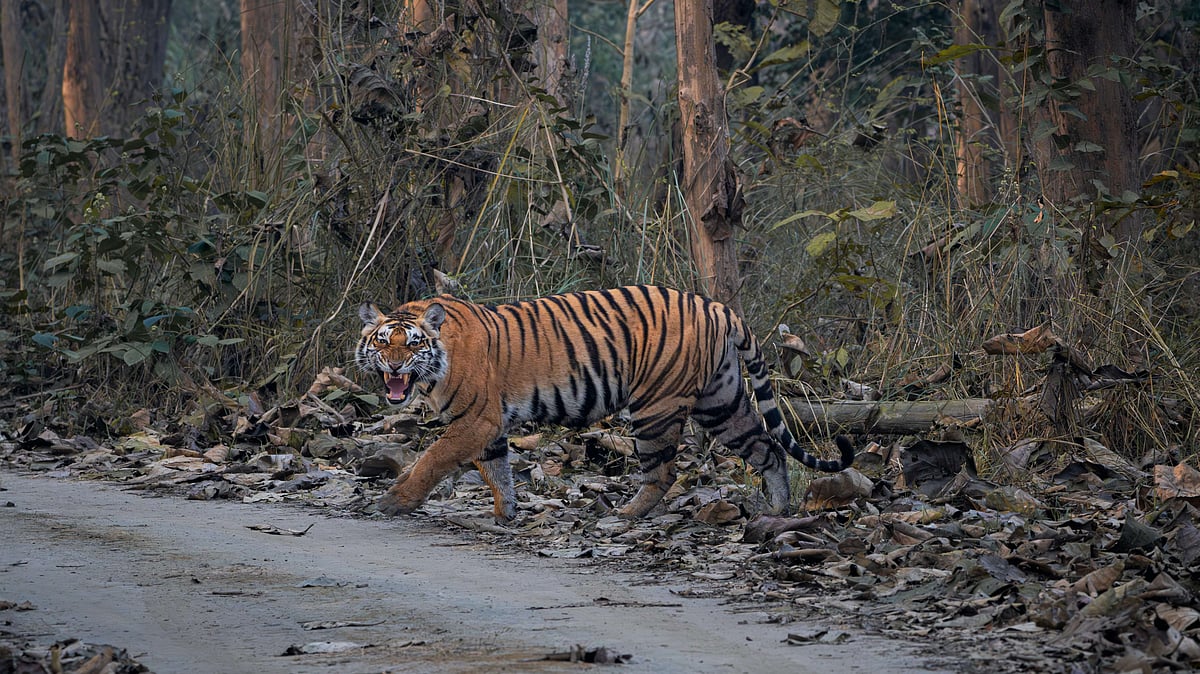
Across India's national parks, home to over 3,600 tigers, safaris are the only way to see the big cat in its own habitat. Growing interest among domestic and inbound travellers has sustained micro-economies around parks like Ranthambore, Tadoba, Jim Corbett, Kanha and Bandhavgarh for close to 50 years. But the pressure has also exposed cracks in a system regulated separately by each state's forest department. Despite measures like online permit booking and widened zone selections, safaris in popular parks often turn into a circus, with vehicles racing to catch a sighting.
Viral reels of congestion at sightings recently led to a landmark Supreme Court judgement. In November 2025, the Court banned mobile phones during safaris across all tiger reserves, national parks and wildlife sanctuaries in India. Guests can no longer carry phones on their person; they have to submit them to a locked box carried by the vehicle's guide. Worth noting here that Tadoba Andhari Tiger Reserve had already banned phones on its own in 2018.
"While it's difficult to point to a single reason for this ban, it's important to understand how having a cellphone during a safari changes visitor behaviour," says Varun Taneja, Brand Head, Sublime Wilderness Odyssey. Many guests, he explains, consider a safari "successful" only if they've spotted the biggest predator, and the added goal of a great shot or a "selfie with a tiger" pressures guides and drivers into chasing sightings and getting closer, raising safety risks for humans and wildlife alike.
Smaller parks saw more pushback. This author heard a group of guests at a zone adjoining Corbett National Park try to bribe their guide into letting them keep their phones. He refused.
Juhi Jain, an entrepreneur from New Delhi who has safaried both before and after the ban, says, "I am finally seeing the jungle instead of recording it. I was annoyed at first and even bought a DSLR, but barely touched it, choosing instead to just take the moment in. Recently, our group had an unexpectedly close tiger sighting in Bandhavgarh and not one of us reached for a camera. We simply watched, breathless. Without the race for the perfect shot, the experience feels calmer and slows us down naturally."
At a time when digital overuse is straining attention spans everywhere, the ban indirectly puts nature back in focus.
Not everyone agrees it's the right fix. Pradyumna Ravindra, a wildlife enthusiast from Mumbai, welcomes the end of phones ringing mid-safari, but feels an outright ban misses the point for visitors who simply want to capture a memory. "Because for most of us, the phone is the camera. I'd rather they enforce flight mode and fine anyone caught talking on a phone, than ban the device outright."
Why the ban finally happened isn't fully clear, and it notably doesn't extend to guides and drivers, whose phones remain useful for contacting gate officials in emergencies. A Nagpur-based tour operator, who asked not to be named, points out the flip side: "They can also contact each other about sighting locations, which is one of the primary reasons of crowding."
Uttara Gangopadhyay, a Kolkata-based writer and longtime safari traveller, blames indisciplined visitors rather than phones themselves. "I've been visiting parks since long before cellphones existed, and camera-toting visitors were no less indisciplined even back then. I've watched photographers climb out of safari vehicles and lie flat on the ground for low-angle shots of passing elephants." She wants awareness-building made compulsory before every safari, and guides given real authority to turn a vehicle back the moment a rule is broken, without fear of losing a tip.
Manavendra Mishra, a disputes lawyer and aspiring naturalist from Mumbai, thinks it is unrealistic to expect people to leave something so central to how they document their lives at the gate. "The deeper issue is enforcement, not the device." He'd rather see a graded system, such as a no-fly list barring repeat offenders for a couple of years, than a blanket ban that doesn't address why the problem exists in the first place.
Gangopadhyay agrees enforcement is the real gap: "A good number of the worst offenders are affluent tourists showing off expensive gear, and I've seen guides quietly accept extra money to look away. Without real enforcement, the crowding will just find a new form."
For Taneja, the trade-off is worth it regardless. Disconnecting from technology, he says, eases the pressure on guides and drivers and allows for a slower, gentler safari. "This is how a good safari experience should be, anyway."
RECENT STORIES
-
-
-
-
-