Navratri 2026: Why Is Goddess Durga Sometimes Seen Riding A Tiger And Sometimes A Lion?
The lion and tiger are not merely decorative elements in depictions of Goddess Durga. They represent qualities that devotees associate with the divine feminine. The vahana of Devi is different in different regions of the country. The deity is seen in different forms, in different lights. In the northern part of India, she is called Mata Rani, which means she is worshipped like a queen.

Navratri 2026: Why Is Goddess Durga Sometimes Seen Riding A Tiger And Sometimes A Lion? | Canva
Navratri is one of the most significant Hindu festivals dedicated to Goddess Durga and her nine divine forms. One of the most celebrated Navratris is Shardiya Navratri, which is being observed in India. Today, on Monday, devotees are observing the second day of Navratri, which is dedicated to Maa Brahmacharini.
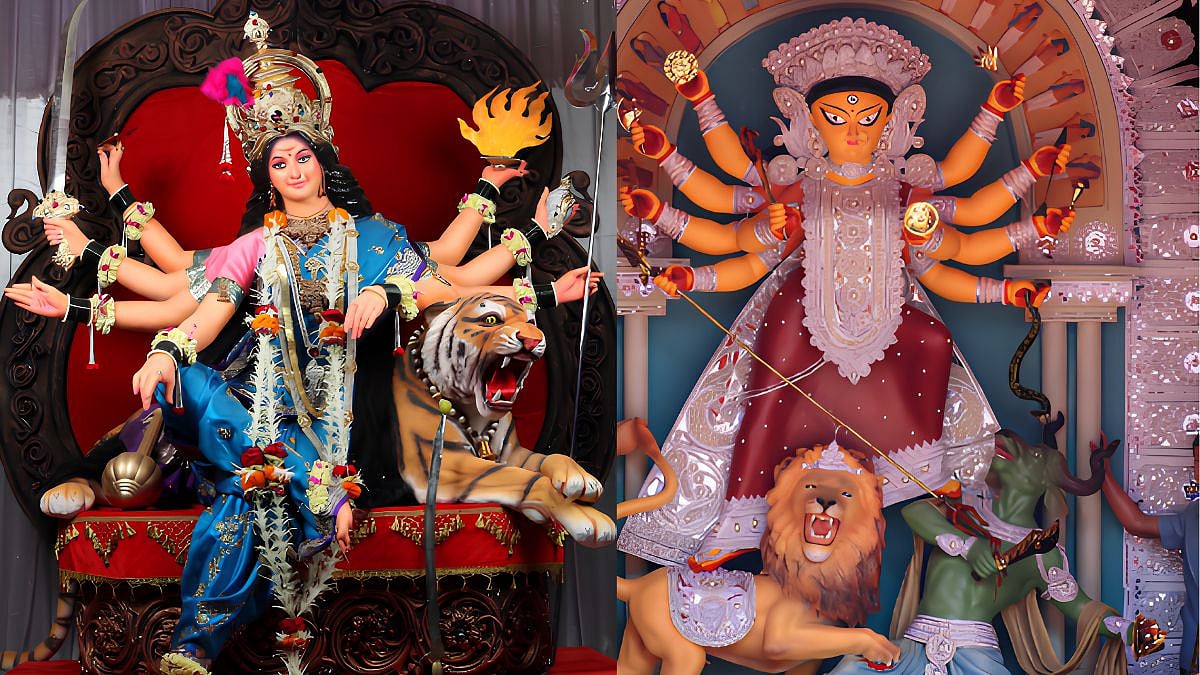
During the festival, devotees worship the goddess as a symbol of strength, courage and the victory of good over evil. One striking feature of her depictions is her vahana, or divine mount. While Goddess Durga is commonly seen riding a lion, some images and artistic representations portray her riding a tiger. But why does her vahana differ, and why is she sometimes seen riding a tiger?
Shardiya Navratri begins
India marks the beginning of Shardiya Navratri on Sunday, October 11, 2026, and it will end on October 20, 2026, concluding on Vijayadashami. Navratri is one of the most celebrated festivals in India, which is dedicated to Goddess Durga and her nine divine forms, collectively known as Navadurga. Each form carries a special significance and symbolises different aspects of life, teaching us valuable lessons of strength, purity, wisdom and compassion.
Goddess Durga depicted with a lion and tiger
In Hindu iconography, Goddess Durga is widely depicted riding a lion, which represents courage, power, authority and fearlessness. The lion reflects her ability to confront and overcome evil forces while maintaining cosmic order.
However, in several regional traditions and artistic representations, the goddess is shown riding a tiger. The tiger is associated with strength, determination, independence and the ability to overcome challenges. Its presence also conveys the goddess's power over nature and her control over powerful forces.
Both animals represent the immense strength of the goddess, although their symbolism can vary across traditions and interpretations.
Why the difference?
The lion and tiger are not merely decorative elements in depictions of Goddess Durga. They represent qualities that devotees associate with the divine feminine. The vahana of Devi is different in different regions of the country. The deity is seen in different forms, in different lights. In the northern part of India, she is called Mata Rani, which means she is worshipped like a queen.
However, in Bengal, she is seen and worshipped as the daughter of a sadhak. So, in the north, she is seen with a lion, representing vigilance; it also represents the speed of the queen, while in Bengal, she is seen with a tiger, representing grandeur. In tribal traditions and other regions, the tiger stayed closer, with Devi as the daughter of the soil rather than a queen from a distance. Both the tiger and lion are symbols of warriors.
ALSO READ
Symbolism of Durga's divine mounts
The lion is often interpreted as a symbol of fearlessness and royal authority, while the tiger can represent raw power, energy and determination. In both forms, the goddess is portrayed as the force that controls these powerful animals, symbolising mastery over fear, aggression and other negative tendencies.
RECENT STORIES
-
-
-
-
-