Move Over Offices! Why Young Indians Are Ditching Traditional Workspaces For Coworking Life
Here’s how coworking spaces are reshaping modern work culture with flexibility, community, and improved work-life balance

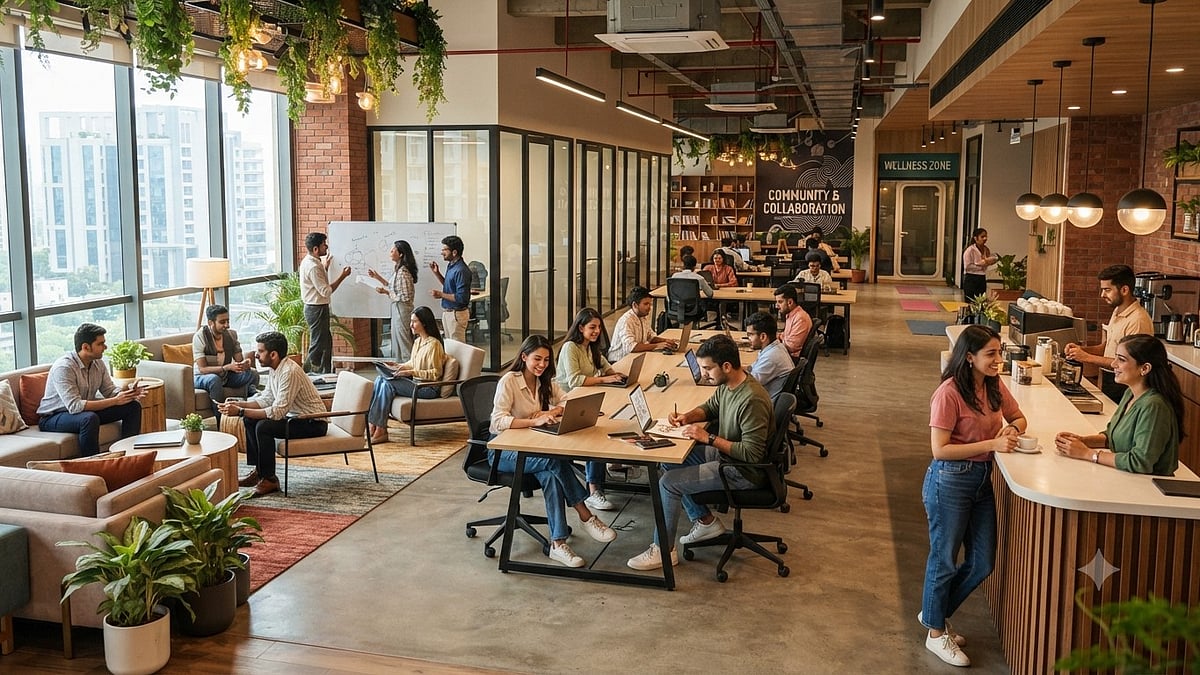
A decade ago, choosing an office was largely an employer’s decision. Today, for many young professionals, the workplace has become an important lifestyle decision one that influences their commute, fitness routine, daily schedule, and time outside work.
The modern workplace is no longer evaluated only by its address or the number of desks it houses. It is judged by a far more personal question: Does this space make my everyday life better?
That question explains why coworking spaces have gradually evolved from shared offices into experience-led work environments.
Everyday well-being
For millennials and Gen Z, work is no longer expected to dominate life; it is expected to fit into it. A workplace should minimize commuting, support focused work without isolation, enable meaningful interactions, and leave enough mental bandwidth to pursue interests outside office hours. In many ways, the office has become central to the employee experience, just as customer experience has become central to hospitality and retail.
The rise of premium coworking spaces reflects this changing expectation. They are being designed less like conventional offices and more like environments in which people genuinely enjoy spending time. Comfortable lounges replace sterile waiting areas. Community cafés encourage conversations that may not happen inside meeting rooms. Wellness zones, quiet pods, collaborative spaces, fitness facilities, and thoughtfully designed interiors recognise something traditional workplaces have often overlooked that productivity is deeply influenced by how people feel.
Flexibility
Perhaps the biggest advantage, however, lies in the flexibility that extends beyond work schedules. For many professionals, especially in India’s growing Tier II and Tier III cities, the ability to work closer to home has become a quality-of-life decision. Reducing a long daily commute is not simply about convenience; it can create more time for family, fitness, hobbies, or simply unwinding before the next workday begins. Work-life balance is often discussed in terms of policies, but geography plays an equally important role.
Work environment matters
This becomes even more relevant as younger professionals continue to grapple with workplace stress. Deloitte India’s 2025 Gen Z and Millennial Survey found that 36% of Gen Z professionals and 39% of millennials said their jobs contributed significantly to their stress or anxiety. While no workplace can eliminate stress entirely, the right work environment can reduce some of its everyday triggers: long commutes, social isolation, uninspiring surroundings, and the inability to disconnect from work.
Coworking spaces also address another need that remote work can struggle to fulfil: the desire to belong to a professional community. Unlike traditional offices, where interactions are generally confined to one organization, flexible workspaces create opportunities to exchange ideas with entrepreneurs, consultants, creators, start-ups, and enterprise teams working side by side. These chance encounters can spark collaborations, mentorships, and business opportunities that cannot always be scheduled on a calendar.
This is one reason flexible workspaces are no longer viewed as temporary solutions. According to CBRE India, flexible workspace operators consistently account for more than 15% of the country’s overall annual office absorption, reflecting their growing role in long-term workplace strategies across industries.
ALSO READ
Better living
The next chapter of India’s workplace story will not be written by companies alone. It will also be shaped by employees who increasingly expect their workplace to complement their lifestyle rather than compete with it.
In that sense, coworking spaces are no longer selling just space. They are offering something far more valuable: time reclaimed from commuting, communities built through shared experiences, flexibility without sacrificing collaboration, and workplaces that recognize that people are not simply employees; they are individuals trying to build fulfilling lives alongside successful careers.
(Kushal Bhargava, Founder, MyBranch)
RECENT STORIES
-
-
-
-
-