May’s ‘Flower Moon’ Lights Up The Sky, Stunning Visuals Take Over The Internet; Know Why It's So Special
Skywatchers across the world were treated to a breathtaking celestial spectacle as May’s full Flower Moon illuminated the night sky on May 1. From glowing horizons to dreamy nightscapes, pictures and videos of the moon quickly flooded social media, capturing its soft radiance as it traced a gentle arc across the sky.

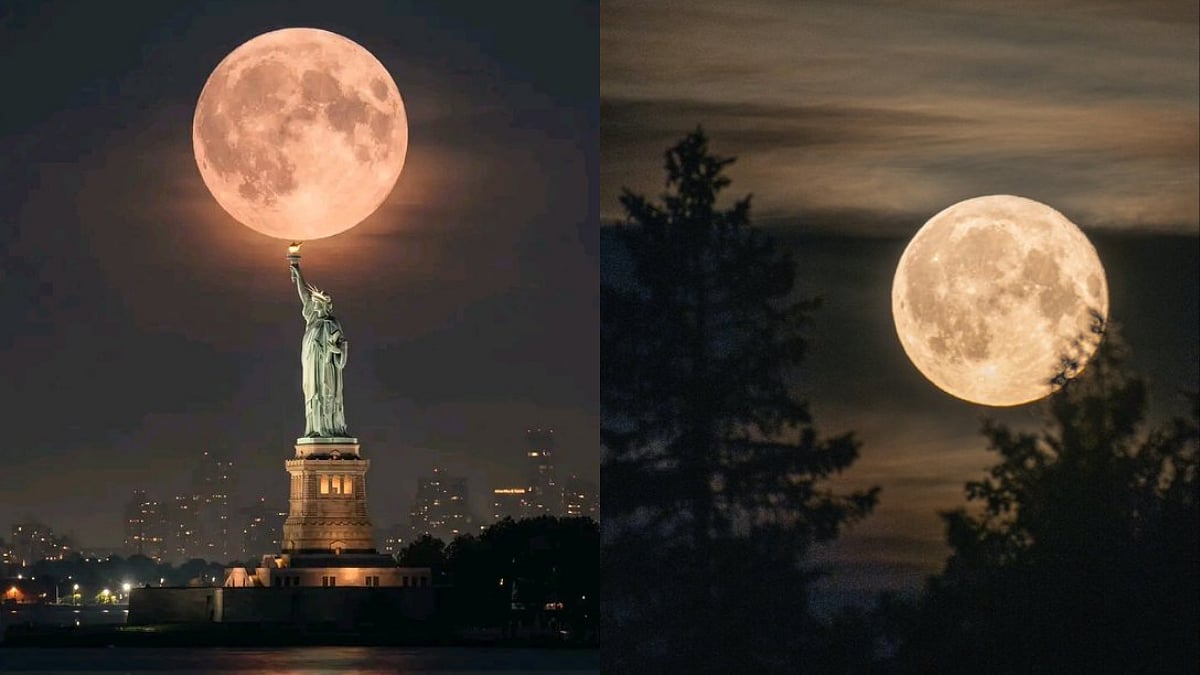
May’s ‘Flower Moon’ Lights Up The Sky, Stunning Visuals Take Over The Internet; Know Why It's So Special |
Skywatchers across the world were treated to a breathtaking celestial spectacle as May’s full Flower Moon illuminated the night sky on May 1. From glowing horizons to dreamy nightscapes, pictures and videos of the moon quickly flooded social media, capturing its soft radiance as it traced a gentle arc across the sky.
The full moon reached its peak at 1:23 p.m. EDT, becoming the fifth full moon of 2026 and the second full moon of spring in the Northern Hemisphere. As dusk set in, the moon rose beautifully, accompanied by bright celestial neighbours like the star Spica and the reddish glow of Arcturus, making the sight even more magical for stargazers.
Why Is It Called The Flower Moon?
The name “Flower Moon” comes from the seasonal bloom of wildflowers across the Northern Hemisphere during May. Traditionally, it symbolises growth, renewal and the peak of spring. Over time, different cultures have also referred to it as the Planting Moon, marking the beginning of the agricultural season, the Hare’s Moon, and even the Milk Moon, linked to a period when livestock had abundant fresh pasture.
What Made This Year’s Flower Moon Special?
Despite its bright and captivating appearance, this year’s Flower Moon was among the smallest full moons of 2026. However, its visual charm remained unmatched, especially as it appeared low on the southern horizon, creating a larger-than-life illusion for viewers.
Another highlight is that May 2026 is witnessing two full moons, a rare occurrence that happens only once every two to three years due to the Moon’s 29.5-day orbit around Earth. This makes the Flower Moon the first of a rare pair.
The Blue Moon
Astronomy enthusiasts won’t have to wait long for another lunar treat. The second full moon of the month, known as a Blue Moon, will occur on May 30–31, reaching peak brightness at 4:45 a.m. ET on May 31. The best time to catch it will be late on May 30 or in the early hours of May 31.
RECENT STORIES
-
-
-
-
-