Mario Miranda@100: The Man Who Turned Everyday India Into Timeless Art
India’s notable late cartoonist, Mario de Miranda, turns 100 this May. Gerard Da Cunha shares memories, impressions and more

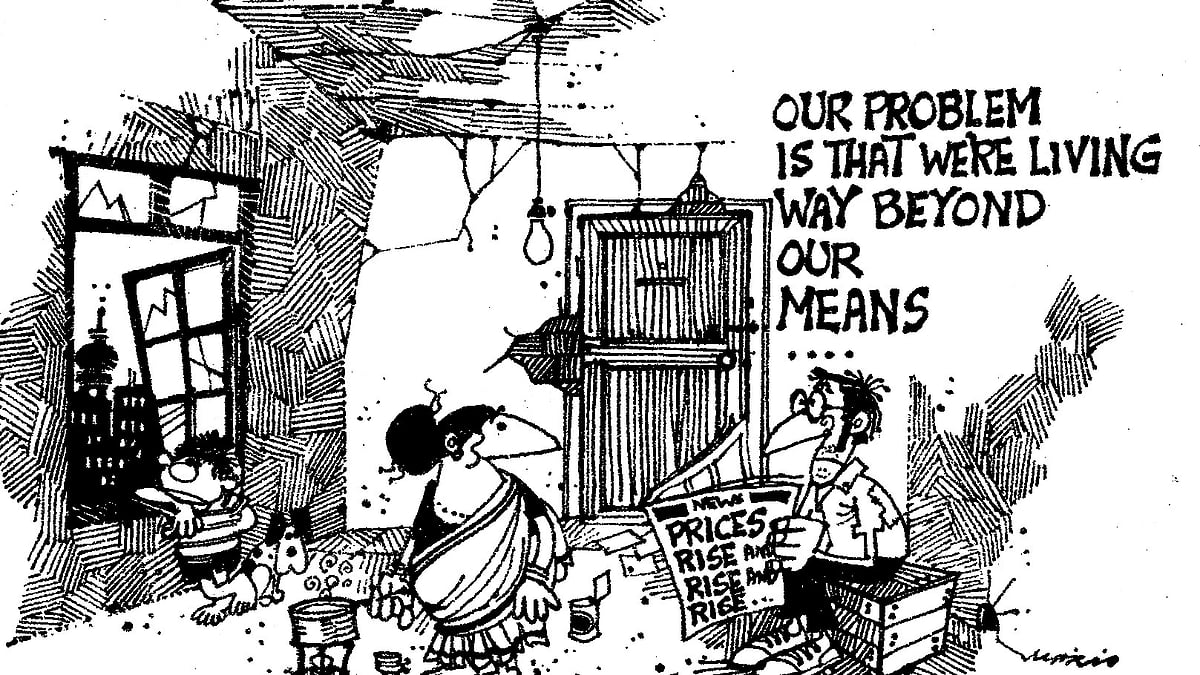
India, and much of the world, knows him as Goa’s celebrated cartoonist. Yet, Mario de Miranda once described himself with characteristic modesty: “To be quite frank, I am not even a cartoonist. I draw… Give me a pen and blank paper and I will draw… I just love to draw.” These words capture not only his humility but also his instinctive, almost compulsive relationship with art. Drawing was not a profession he adopted; it was a way of being.
That impulse flowed across thousands of pages over decades, filled with keen, affectionate observations of everyday life. His work documented scenes both intimate and chaotic: bustling village feasts in Goa, lively taverns, and crowded lunch-hour streets in Mumbai.
Journalist and editor Vinod Mehta once wrote about the artist’s quiet observational habits on the Mario Gallery website. Whenever the two visited a pub or restaurant, Miranda would often slip away unnoticed. On one occasion, at a French restaurant, Mehta discovered him near the kitchen, hunched over, hand cupped, sketching rapidly. “The notes were a few hasty lines which to my untutored eye meant very little,” Mehta recalled. “For Mario, however, they represented homework, the germ of a future drawing.”
This May marks what would have been Miranda’s 100th year — a milestone that has prompted commemorations in his home state of Goa. Among those preserving and promoting his legacy is architect Gerard Da Cunha, who shared a close association with the artist. The recent centenary program he hosted included an exhibition showcasing select works and a talk offering insights into Miranda’s life and process.
Through his Mario Galleries across Goa, Da Cunha has made Miranda’s art accessible to a broader audience, offering prints and memorabilia like bags etc. which bring his work into everyday spaces. He also curated a permanent exhibition at the Reis Magos Fort, ensuring that Miranda’s legacy remains firmly in the public domain rather than confined to private collections.
Although Da Cunha first met Miranda at the launch of his book Houses of Goa in 1999, he had long admired him. “In 1971, all of us in architecture college would copy his drawings,” Da Cunha recalls.
“There was something about his work; he captured everyday life with such positivity. He drew everybody. There was no hierarchy, no sophistication barrier.”
When Miranda later approached him to curate a book, Da Cunha immersed himself deeply in the artist’s world. Today, he holds an enviable collection of around 12,000 to 13,000 works. Among these, he highlights a lesser-known treasure: Miranda’s diaries.
“His diaries are phenomenal,” he says. “His mother insisted he keep them, and he maintained one every year until he was about 24. They are filled with fabulous sketches of Loutolim, bus rides, priests, and everyday encounters.”
These early works reveal not only technical skill but also the roots of his lifelong fascination with people and place.
Following the success of their first collaboration, Da Cunha signed a contract with Miranda’s family to ensure that a portion of proceeds from future projects would return to them.
Reflecting on Miranda’s place in the art world, Da Cunha is unequivocal. “Mario was an artist for the common man because he was democratic about his subjects. Everybody knows and loves Mario. You walk into a bar, and you’ll find his drawings copied on the walls.”
This accessibility sets him apart in a landscape often dominated by exclusivity. While high-profile artists command staggering prices—sometimes running into crores—recognition is frequently limited to elite circles.
Ironically, Miranda’s global recognition has not always translated into comparable market value. The label of “cartoonist” may have contributed to this disparity. Yet Da Cunha remains optimistic. “Mario will eventually reach there,” he says.
At 100, Miranda remains as relevant as ever and one of the compelling documents of the decades before us. He celebrated everyday life in all it’s small, joyful absurdities, reminding the viewers to seek beauty, humour, and inspiration in the simple life.
RECENT STORIES
-
-
-
-
-