Jaipur Rugs: Global Story Written In Rural India
From rural Rajasthan to global design capitals, Yogesh Chaudhary maps this trajectory

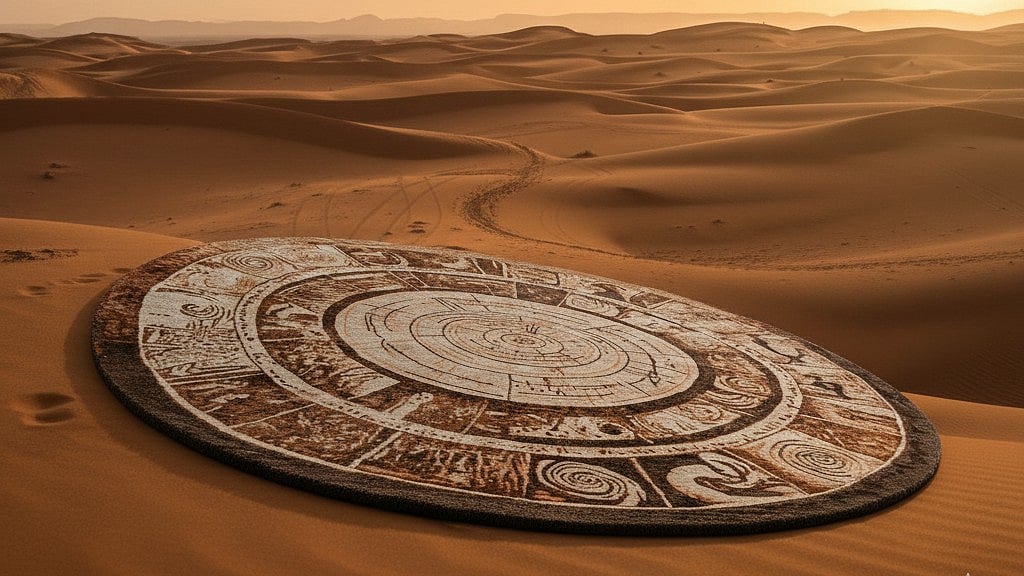
The Whispers of the Desert line is inspired by landscapes in UAE | pics: Jaipur Rugs
Walking into the Jaipur Rugs headquarters in Jaipur feels less like entering a corporate space and more like stepping into a living archive of craft. Spread across thoughtfully curated displays of vintage, minimalist, maximalist, designer and a dozen other styles, the space reveals the quiet story of what the brand stands for. Of preserving and evolving the 2500- years-old weaving tradition of rug making. What began in 1978 with two looms in a modest home in Rajasthan has evolved into an international design-led brand with stores in Milan, Dubai, London, and Singapore, and a clientele that includes some of the world’s most prestigious hotels.
Founded by Nand Kishore Chaudhary and now driven globally by his son Yogesh Chaudhary, Director, Jaipur Rugs, the company’s journey is not merely a business success story. It is a narrative of social reform, women’s empowerment, design innovation, and sustainability. Forty thousand artisans, 50 collections, over 90 countries, and 12 stores, including Milan, Dubai, London and Singapore, Jaipur Rugs continues to lead quiet revolutions in hand-crafted luxury, rooted in sustainable and ethical practices. In a candid chat with Yogesh Chaudhary, we find out how the brand is doing more than just selling rugs and taking over the world one weave at a time.
Bold beginning in Churu
The story begins in Churu, a small town in Rajasthan. Nand Kishore Chaudhary came from a traditional Marwari family and wanted to do something different. A British friend suggested that the carpet industry held immense potential. The Indian government was also training artisans in weaving. Sensing an opportunity, Chaudhary moved to Jaipur, secured small export orders as a contract manufacturer, built two looms, and transported them back to Churu. With just nine trained weavers, Jaipur Rugs was born in 1978.
What started as a commercial experiment soon became a lifelong passion. Chaudhary immersed himself in the creative process, spending long hours at the looms, learning the craft from the artisans themselves. His early years were marked not only by financial risk but also by social resistance. However, he persisted, driven by respect for the craft and the people behind it. Over time, he recognised that women artisans displayed remarkable discipline and consistency. Employing women was not only socially progressive—it made ample business sense. Today, more than 90 percent of Jaipur Rugs’ grassroots workforce is women. He also redefined the artisan economy by introducing a monthly payment structure and offering training and guidance. The company works across approximately 600 villages in five Indian states, primarily Rajasthan and Uttar Pradesh. Thousands of artisans are engaged not only in weaving but also in hand-spinning yarn, reinforcing traditional craft practices.
Financial freedom as true empowerment
For Jaipur Rugs, empowerment is not a slogan—it is financial independence. In many rural households, when only men earned, income distribution within the family was often skewed. Women had little say in how money was spent. When women began earning ₹10,000 to ₹12,000 per month through weaving, the family dynamic changed dramatically. Women gained not only income but voice and influence. The ripple effect extended beyond individual households to entire communities.
Manchaha: Carpets from the heart
Built on authenticity and individuality that drive the core of this artisan-led enterprise, one of Jaipur Rugs’ most celebrated initiatives is Manchaha, meaning 'from the heart.' Initially conceived as a way to use leftover yarn, it evolved into a creative revolution. In Manchaha, artisans are given complete creative freedom. Instead of following a predefined design, they weave stories from their lives—memories, local landscapes, aspirations, and personal symbols. Some carpets feature animals, symbolic patterns, or even phone numbers woven discreetly into the design. “The process is deeply human. In one instance, artisans who initially struggled to collaborate gradually developed harmony as the carpet progressed. In another, a husband—an experienced weaver—began designing a carpet, only for his novice wife’s bold interpretation of a traditional Lahariya pattern to win admiration. He eventually adapted his design to hers,” shares Chaudhary.
Each Manchaha carpet is unique, carrying the emotional imprint of its creators. Collectors value them not merely as décor but as narrative art pieces. They also extended their philosophy to correctional institutions, beginning with the open jail in Jaipur. The idea was to create a constructive environment where inmates could learn weaving as a livelihood skill. “We installed looms in facilities such as Jaipur Central Jail and Dausa Jail and trained prison inmates and integrated them into the weaving ecosystem. We observed that the design patterns reflected their psychological minds, emotions and skills. Their designs were more open, expansive compositions, reflecting their longing for space through their work. The initiative demonstrated how craft can become a tool for rehabilitation, dignity, and self-expression.”
Design-led luxury house
Jaipur Rugs positions itself as a design-first company with collaborations forming the backbone of its creative evolution. Over the years, the brand has demonstrated how local craft can achieve global relevance through partnerships with both Indian and international designers. Projects with Indian designers such as Vinita Chaitanya and Pavitra Rajaram brought fresh perspectives, while international collaborations, including one with Dutch designer Richard Hutten, blended traditional carpets with playful contemporary elements.
Venetian artist Lorenzo Vitturi pushed boundaries further by incorporating Murano glass and sculptural yarn extensions into carpets, transforming them into wall installations and conceptual art. Their latest collaborative collection with cultural visionary Sheikha Bodour bint Sultan Al Qasimi, titled Whispers of the Desert, is an evocative series of six handwoven rugs that draws on desert landscapes, memory, and movement. Rather than diversifying into unrelated product categories, Jaipur Rugs has chosen to reinterpret the carpet itself—on walls, ceilings, and as immersive design elements.
For the Chaudharys, sustainability is not a marketing buzzword but a lived philosophy rooted in India’s culture of reuse and respect for resources. Hand-spun yarn, waste minimisation and ethical labour define operations, while authentication technologies promise traceability and protection of originality in an age of imitation. Looking ahead, Jaipur Rugs plans to deepen storytelling, expand design partnerships and strengthen brand equity, undeterred by headwinds.
RECENT STORIES
-
-
-
-
-