'In All My Romantic Songs, There Is An Element Of Roohaniyat': Irshad Kamil Opens Up About Krishna Poetry And The Soul Behind His Songs
From Krishna Kavya to Bollywood hits, the lyricist traces his journey of spirituality, poetry and storytelling through music

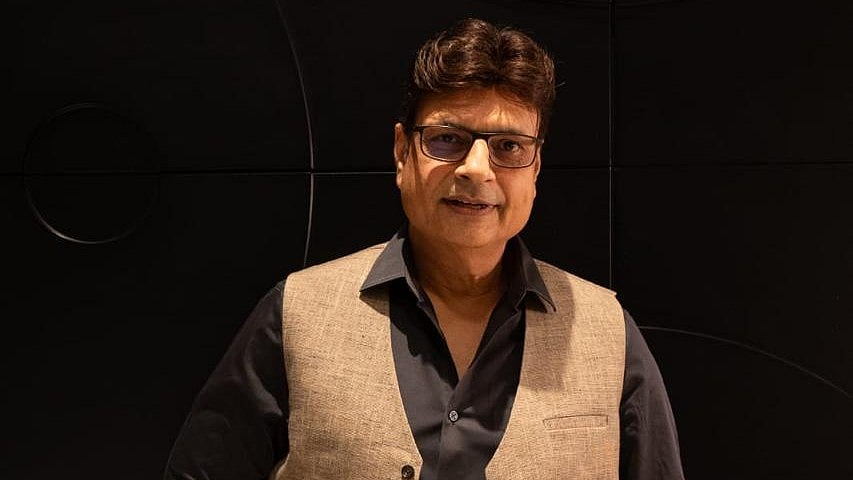
If this were a television interview or a live show, one would say that Irshad Kamil needs no introduction. But that is true, because we have classics like Bhaage re man (Chameli), Jag ghoomeya (Sultan), Zor ka jhatka (Action Replayy), Tune maari entriyaan (Gunday), Agar tum saath ho (Tamasha) and many more gems from his variegated repertoire.
As prolific as he is versatile, Irshad has been having a purple patch from last year, with Chhaava, Saiyaara, Sky Force, Kesari Chapter 2, Tere Ishq Mein and the Dhurandhar franchise apart from Ek Din and Krishnavataram Part 1: Hridayam.
We begin a delightful conversation with the last film, in which his lyrics are suffused in romantic spirituality.
Excerpts from the interview:
How did such perfection in your songs about Lord Krishna come about?
(Smiles) I have done my Masters in Arts (M.A.) from Punjab University. In the second year there is a specialization and I had to choose a subject—and I selected Krishna Kavya. I later did my Doctorate (Ph. D.) in Literature (Contemporary Poetry).
What made you opt for this specialisation?
I think it was inherent! At the back of my mind was always this desire to come to Mumbai and write for films. And I loved the delicacy in the Krishna Kavya of giants like Vidyapati, Nand Das (who wrote the Bharamar Geet), Kumbhan Das, Surdas, Ras Khan and others. Talking of Ras Khan, you can Google and you will find an entire history of Muslim poets who are into Krishna Kavya. I too wanted to understand the Shringar Ras and romanticism and study it. Shringar Ras and Birha are the two parts of the subject. Birha or the pain of longing is about the phase when Lord Krishna left Brindavan for Mathura.
And you had a special liking for all this?
Yes! If you have studied my work, you will see that in all my romantic songs, there is an element of roohaniyat (spirituality), some mysticism rather than sheer objectification. The spirituality and delicacy in the poems of Krishna and Radha always touched me. I was also impressed by the Bhramar Geet, whose deeper meaning can be found out by interested readers.
There were other attractions: the Bhakti Kaal era is a key part of History as well as Literature, which is divided into Saakaar Bhakti, such as Ramcharitramanas and Krishna Kavya, and Niraakaar Bhakti, which includes the Sufi mat or segment and the work of what are known as Rahasyavaadi Kavis, like Kabir, who explore mysticism.
Coming to specifics, how did you get this film, because I know that neither director Hardik Gajjar nor composer Prasad Sashte knew of all this when they signed you!
I know Prasad since the time he programmed Tumse hi for Jab We Met (2007) and some more songs. We developed a temperamental rapport from almost 20 years back! Yes, Hardik approached me and said that he wanted me to write songs in Krishnavataram, and I told them that I would enjoy doing so because I had studied Krishna Kavya and it would be both a joy and a challenge!
Many Urdu lyricists have excelled at songs in the Hindu ethos.
I do not see it that way. I can’t tell you how much I enjoyed writing as I had never had the opportunity to write such songs before, though I had penned a song called Ram Katha in the 2010 Aakrosh. I only know that I cannot write superficially in any movie.
Like I enjoyed writing the great philosophical truth that was Anth mein aarambh hai, Aarambh mein hi anth hai in Krishnavataram. One must have a one-to-one equation with the Supreme Power, regardless of whatever name he is given. That is called the Anhad Naad, or a sound not heard with one’s ears but experienced within one’s consciousness during meditation. It is uniquely enjoyable where you spontaneously express something!
So did you write these songs first or did you pen lyrics to the tunes?
Anth mein aarambh was a concept suggested by me and was organically composed later. I have mostly written to tunes, even in Ek Din, Dhurandhar and Dhurandhar The Revenge. The percentage is almost 99 of a 100!
Which makes your work even more amazing! What can we expect next from you?
My Main Wapas Aaonga directed by Imtiaz Ali is releasing in June. I am also doing his brother, Sajid Ali’s Heer Ranjha, John Abraham’s Force 3 and Rajkummar Rao’s production, Raftaar.
I believe Raftaar has multiple composers. You have been a part of such films before, as a solo lyricist. How do you look at such assignments because you have often said that you prefer solo composers?
See, a solo lyricist writes something like 20 to 25 minutes of a script through his songs, for without them, the film will be longer by at least half an hour to explain the situations or character. Today, multi-composer films are working, and that’s like a bouquet with diverse flowers. A solo lyricist, then, is the ribbon that ties them together! (Laughs) Obviously, a single composing entity and a solo lyricist share a 50-50 responsibility for the music.
Have you thought of people with whom you have loved with work among filmmakers and composers who existed before you?
Raj Kapoor and Guru Dutt, of course! And Yash Chopra as a director, though I have done films for his banner. I would have loved to work with Laxmikant-Pyarelal and Kalyanji-Anandji, as I always wonder, how they would create their wonders? But then, another query comes to mind: Would I have survived then, amidst all the giant lyricists? Like how were songs like Jab pyar kiya to darna kya (Mughal-E-Azam) or a Zindagi khwab hai (Jagte Raho) or a Solah baras ki bali umar (Ek Duuje Ke Liye) visualized and created?
ALSO READ
It’s been a long innings. How has it been?
It’s still been very satisfactory! I have worked with the best talents among filmmakers, composers, singers and actors and that’s my good luck! I am so satisfied with whatever I have done. When I came to Mumbai in 2003, and signed my first films, Socha Na Tha and Chameli, I never thought that I would come this far.
Work-wise, which films have given you the maximum satisfaction?
In terms of the creative atmosphere, Prem Ratan Dhan Payo with Sooraj R. Barjatya and Himesh Reshammiya and the Dhurandhar franchise with Aditya Dhar and Shashwat Sachdev.
RECENT STORIES
-
-
-
-
-