‘I Am The Most Entertaining Lyricist’: Lyricist Kumaar On His Bollywood Journey And More
With over 250 films to his credit, Kumaar reflects on his journey, his creative choices and why entertainment matters most

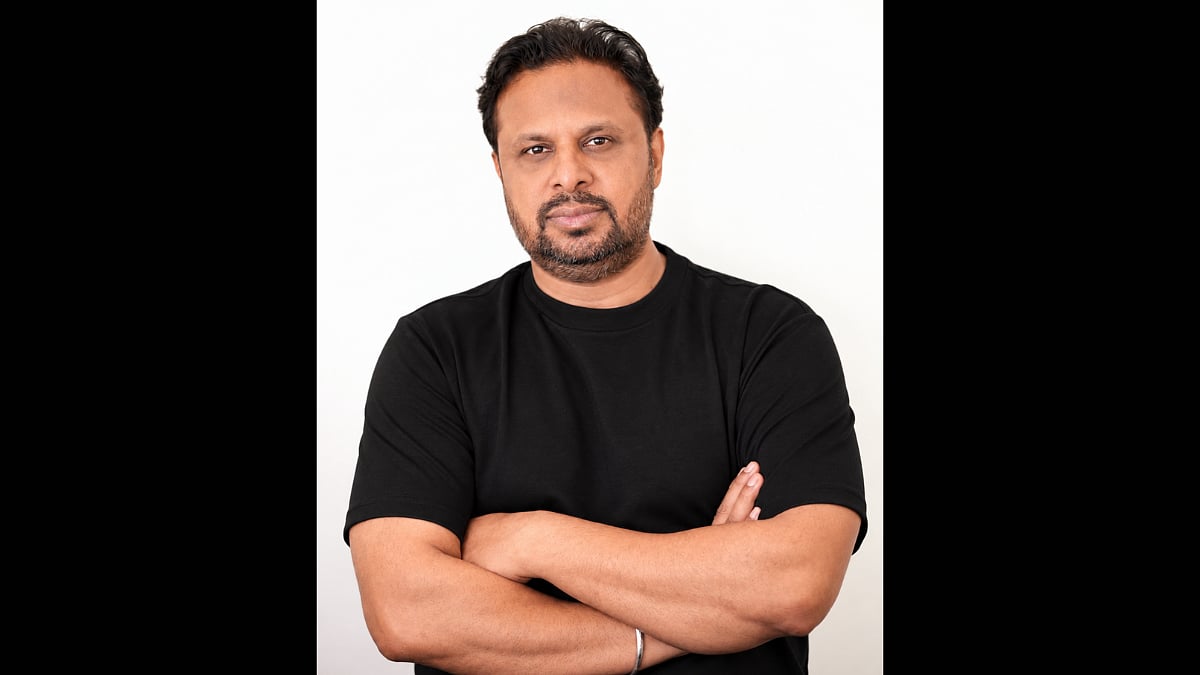
He’s busier than the proverbial bee. In the last two months alone, his latest releases have been Pehla Pyaar Doosri Baar and Meethe Mein Kya Hai, while his title track from Yeh Prem Mol Liya and Tu mil jaaye from King have already registered record views.
Kumaar, or Rakesh Kumar Pal, to give his full name, came from Jalandhar to write in films. A simple, earthy and immensely practical young man, Kumaar’s father had known a cousin to composer Raju Singh. The composer helped the youngster a lot, making him observe his sittings and learn lessons in writing to metres and understanding situations. His break came with the title-song of Raju’s Jassi Jaissi Koi Nahin, which was an instant hit.
“Time teaches you and shapes your thought-process through the criticism and appreciation you get,” says Kumaar. And yet, from 1996 when he arrived in the city, it was a long struggle despite doing more TV serial tracks and songs in albums. His song, Ishq tera tadpave from Sukhbir’s 1999 album Hai Energy was a massive hit. But his film break happened only when singer Suraj Jagan introduced him to Vishal-Shekhar.
“The mukhda I had written, Zindagi mein kabhi koi aaye na rabba was locked for Musafir (2004). But Hota hai hota hai from Plan was recorded first,” Kumar reveals. “And the same evening, we recorded the title-track for Jassi…, which I had written some weeks earlier.”
From there to a super-successful run in over 250 films as a lyricist has been a glorious tale of success for Kumaar. He has worked with almost every established and upcoming music composer and written almost every kind of song.
The recent Purani din and Kamaal, two standout songs in Pehla Pyaar Doosri Baar were written by him. “The film did not work, so the songs too did not. But theek hai (It’s okay). I don’t take either my hits or flops to heart. I just have a hunger for work, and that’s what I thrive on,” he smiles. “And what matters is working with good people. There are no rules for success.”
He is completely in sync with changes in music in the last two decades. Says Kumaar, “In the CD and cassette era, a consumer would buy an album even if he liked just one song. Then he would gradually start liking the others as well. Now everything is instant, and there is too much of music being heard. And as we all know, excess of everything, even nutritious milk, is bad!”
Still, does he not agree to one aspect: that depth is restricted in today’s songs? They are too generic and limited, as if the writer is working within a very small orbit? Kumaar demurs, “I think that such restriction was there in the 1990s, with overuse of some words. People like me thought that we would never get work. But from around 2000, a new lot of music makers came in—and loops and grooves became common. We fresh lyricists all fitted in this somewhere. I came to realize that we have to write something new and something the music directors did not dislike! We also changed the lexicon: in a dholak- and table-based song, for example, a word like sanam could sound very good, but it wouldn’t now.”
Kumaar had met me at the musical launch of Yeh Prem Mol Liya and enthusiastically declared that working with Sooraj R. Barjatya on the title song seemed as if it was his career-first recording. What did he mean by that?
“It was simply that I was working for the first time on a song based on the dholak and the tabla. Himesh (Reshammiya) sir took me through the song note by note, and Sooraj sir line by line, explaining the minutiae of the script and the scene. It was not just word-fitting. At that time, I thought that the mukhda was very long, but when I watched the result, I was stunned!”
He goes on, “Siddharth Anand is another filmmaker who gives weightage to his music and likes situational songs. That is why my work in his War, Pathaan and Fighter has definite substance. It’s like this. In earlier times, producers and directors were creative people with their own thought-processes. What do you expect today from corporate entities who are only thinking of commerce? I am a producer’s darling, not so much a director’s pet, because the producer wants hits.”
Kumaar remembers writing one of his profound lyrics: Main to nahin hoon insaanon mein / Bikta hoon main to inn dukanon mein (I do not reside in man but I am sold (as idols) in shops) from OMG—Oh My God! in 2012. “The director wanted me to change the key second line. It was Akshay (Kumar)-paaji who stood by me. It was about God stating that he had become a mere commodity. Today, a favorite excuse by filmmakers is that their feet did not start tapping. I have left such recordings and films, telling them that the fault lay in their feet!”
How does he explain a single song written or even composed by three entities? “You can call it a collab!” he says wryly. “Sometimes it is more of a majboori (compulsion) rather than marzi (will). Take the case of a composer or a lyricist who has a mukhda (main lines of a song) but cannot complete the song, and someone else does it.”
Nevertheless, he insists that today’s songs should be judged only decades later, like older songs are valued today. “Every daur (age) has its sound, its lyrics, its pros and cons. Like the mobile phones can connect us easily across the world, but they distance us from people within our homes!”
ALSO READ
How does he justify the overuse of Punjabi in lyrics today? Besides, how can one remember a song when we do not understand the language? Kumaar’s candid reply is, “If I did not know Punjabi, I would not have made a place here. Humein tadka lagaate lagaate daal banaane aa gayi (While seasoning the curry, I learned how to make the entire dish)! I may not be a great, thought-provoking lyricist, but I think I am the most entertaining one! And as for Punjabi ruling the songs, at one time we did have Bhojpuri, Haryanvi and Rajasthani lyrics as well. But Punjabi has had a wider and longer reign as it possesses a certain khanak (sharp resonance).”
Which veterans does he regret not being there in their time? “I wish that I had worked with Laxmikant-Pyarelal.” And who is his icon among songwriters? “Anand Bakshi!” he says instantly. “He is my hero. From shaayari he went to simple geet, with profound thoughts being stated effortlessly. It is because of him that we all have the courage today to come and make our careers in Mumbai! He is an ocean!”
RECENT STORIES
-
-
-
-
-