Haute Tea, India’s New Luxury In A Cup
In a country where chai runs through the veins of daily life, India’s tea ritual is being rewritten into an experience of quiet indulgence

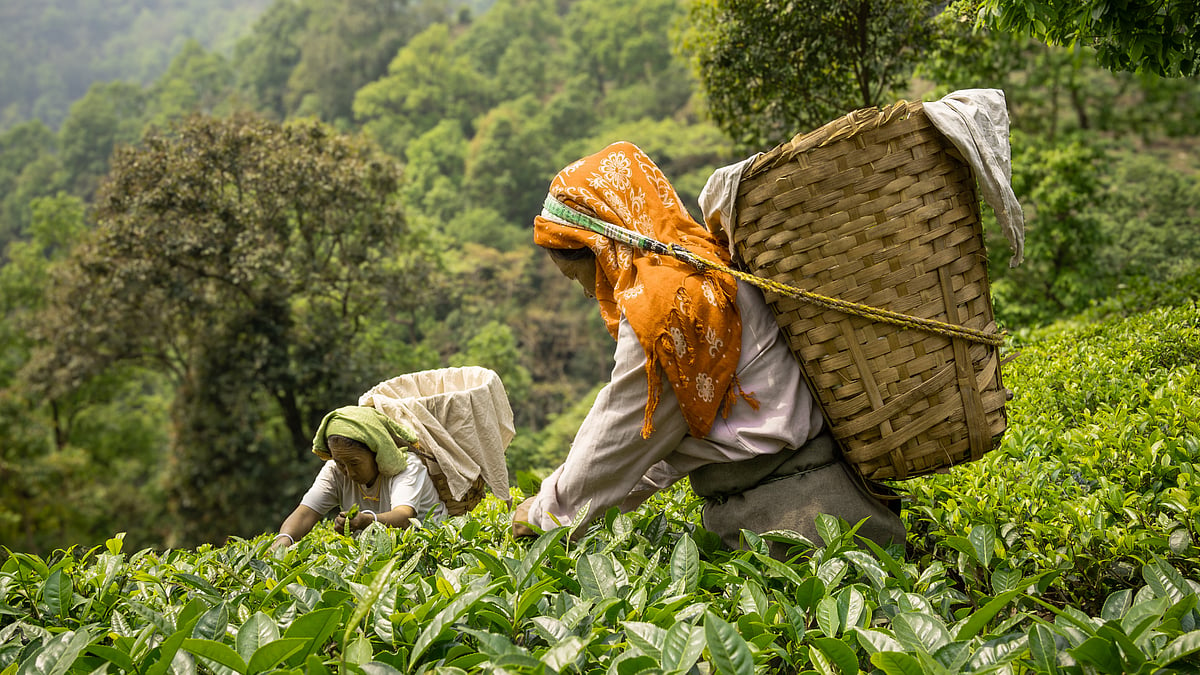
Local women picking leaves at Luxmi Tea's estates | Pic: Luxmi Tea
There is a meditative quality about the ritual of brewing a pot of tea. As the tea leaves steep in warm water, fragrant steam rises from the spout, reminding you of the lush green rolling hills of tea estates. The brewed tea, coppery-amber in colour, pours into a tea cup, signalling the final step—a calming sip of nuanced flavours. This is nothing like the masala chai that the average Indian finds rejuvenation in, and the world, exoticism. Yet this experience of tea is not new either; it has a historic provenance and geographical legacy that is seeing a revival.
Darjeeling’s prestigious first flush, Assam’s growing prominence and Nilgiri’s fair-trade teas are bringing a definitive focus back to premium teas of India. Urban consumers are increasingly curious about origin, craftsmanship and quality. Data backs it. According to IMARC Group’s Indian Tea Market Size, Share, Industry Report 2026–2034, the market size for tea in India was valued at $11.86 billion in 2025 and is projected to reach $15.44 billion by 2034. Black tea dominates the market with a share of 68% in 2025, while loose tea leads the market with a share of 44% in 2025.
Second-generation tea producer and tea sommelier, Anamika Singh, Founder Director of Anandini Himalaya Tea, adds, “Being able to sip something directly from the estate and to have a connection with the people involved in its making. That is pure luxury.” The 13-year-old company has its tea estates in the foothills of the Dhauladhar Mountains in Himachal Pradesh and retails its Darjeeling Vintage Muscatel, Risheehat Tea Estate for ₹890. Tea is one of the most terroir-driven beverages in the world. Factors such as altitude, climate, soil composition, rainfall and harvesting techniques all influence the final character of the tea. “Even teas from the same estate can vary significantly depending on the season or flush. What makes tea particularly fascinating is the diversity of experiences it offers,” explains Annapurna Batra, COO, Newby Teas India. The London-origin tea brand sources its teas from India, Sri Lanka, China, Japan, Kenya, Nepal and Taiwan. India occupies a particularly important position for Newby, both as a sourcing destination and as a growing consumer market. The second flush Rare Assam Gourmet tea 100 gms retails for ₹2900.
Building on the origin story and experiential nature of tea, high tea services like those at the Sea Lounge at Taj Mahal Palace, Mumbai and The Lobby Lounge & Terrace at Four Seasons Bengaluru, and the tea room at The Roseate House Delhi and Brooke Bond Taj Mahal Tea House in Mumbai are becoming havens for discerning tea drinkers. These spaces also become the first exposure to different leaves, estates and blends and have a key role to play. “From only being exposed to Earl Grey or Green Tea blends, there is a lot of education that is needed because only when you appreciate and sip it, is when you will go back to it,” shares Singh, who customises tea for hotels such as The Oberoi and Raffles Hotels & Resorts. As consumers become more discerning and seek richer experiences, we are seeing tea gradually transition from an everyday commodity to a category that can be appreciated in much the same way as fine wine, coffee or gastronomy. Even the current matcha and kombucha frenzy or fruit and floral cold-brewed teas has its upside in introducing a whole new audience to an experiential and premium tea culture.
Tea in India is part of the cultural ethos, but there has been a shift in perception that strengthens its future. The growing focus on wellness and mindful consumption is leading consumers to seek products that align with a more considered lifestyle. “Tea is becoming part of daily rituals rather than just a morning beverage. We're seeing growing demand for herbal infusions, functional blends, and caffeine-free options from consumers who want products that support relaxation, better sleep, or simply a moment of pause in a busy day,” shares Smit Gupta, E-commerce Head, Luxmi Tea. He adds that consumers want to understand where their tea comes from, how it is produced and what makes it unique. “They're asking which estate it came from, when it was harvested, and what makes it different from another tea sitting next to it.” Luxmi Tea owns the historic 165-year-old Makaibari Tea Estate in Kurseong that is also a pioneer in fairtrade and biodynamic production processes. The estate’s Silver Tips Imperial (₹1950 for 50gm) is one of the most expensive teas from India. Premium Indian tea combines heritage, craftsmanship, sustainability, and discovery in a way that very few products can.
RECENT STORIES
-
-
-
-
-