From Noodle Pulling To Crafting Cocktails, How Mumbai Cooked Up A Storm At The Kala Ghoda Arts Festival 2026
Kala Ghoda Arts Festival 2026 saw visitors step beyond watching performances to actively participating in food and culture workshops. From noodle-pulling sessions with Chef Rahul Punjabi to discussions on taste, MSG and Indian spirits like Mahura, these interactive spaces encouraged learning through doing, conversation and shared discovery in a relaxed, welcoming environment.

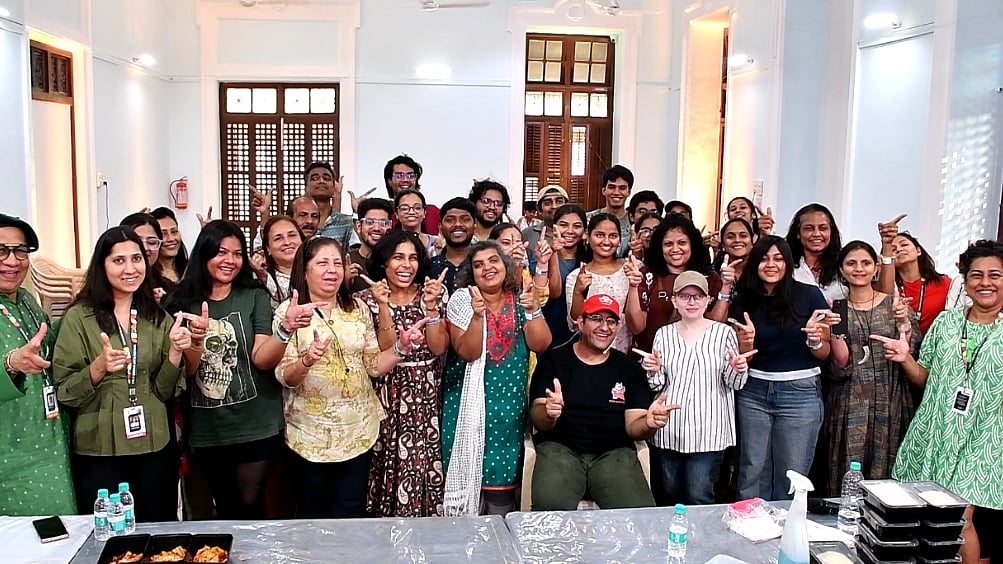
Chef Rahul Punjabi with the participants at his KGAF workshop |
At Kala Ghoda Arts Festival, it is no longer limited to watching performances or browsing installations. Instead, it is about participation, curiosity, and learning through doing. Visitors are stepping into workshops where they cook, mix, experiment, and understand the stories behind what they consume.
The shift feels very Mumbai. The city thrives on discovery, fast learning, and shared experiences. At these workshops, you see strangers bonding over failed attempts at new skills, laughing at messy results, and celebrating small successes. The environment is relaxed, interactive, and welcoming.
These sessions feel like classrooms without pressure. People learn through touch, taste, and conversation rather than formal teaching.
Noodles, Culture, And The Science Of Taste
Chef Rahul Punjabi’s noodle pulling workshop captured this spirit perfectly. Instead of just demonstrating techniques, he turned it into a shared experience. Participants tried stretching dough, struggled to get the right texture, and slowly began understanding the skill behind handmade noodles.
In an exclusive conversation with The Free Press Journal, he explained how dining today is about offering something unique. He believes Indian homes already serve excellent food, so restaurants must create experiences people cannot recreate easily at home. His passion for Sichuan cuisine comes from its chatpata spice, rustic character, and deep flavour layers.
His journey into mastering noodle pulling was built on trial and error. He learnt through online videos, translated recipes, and months of failed attempts before getting it right. That honesty connected with audiences, making the craft feel achievable rather than intimidating.
During discussions, he also spoke about MSG, explaining it as a naturally occurring flavour enhancer present in foods like tomatoes and cheese. Conversations like these turned workshops into learning spaces where myths were questioned and knowledge was shared openly.
Homegrown Spirits, New India Conversations
Another workshop explored modern Indian drinking culture through Mahura. Siddhesh Bhosale spoke about building a homegrown spirit category that is proudly Indian yet globally appealing.
Mahura’s appeal lies in its versatility. It can be enjoyed in simple home mixes with soda, lime, and salt, or used in complex cocktails. The larger vision is to create a spirit that belongs to India but fits seamlessly into global cocktail culture.
Why These Workshops Matter To Mumbai
Kala Ghoda Arts Festival reflects a larger cultural shift. Mumbai is moving towards participative experiences. People want to understand how food is made, how drinks are crafted, and how culture is built.
These workshops create memories. The dough that snapped, the spice that numbed the tongue, the cocktail balanced just right.
In a fast moving city, these become rare slow moments. And that is why Kala Ghoda Arts Festival feels less like an event and more like a shared creative playground for Mumbai.
RECENT STORIES
-
-
-
-
-