'Forbidden Fruit Is Juicier': Bhushan Korgaonkar On His Workshop On Erotica And More At Godrej Literature Live! The Mumbai Litfest
Ahead of his October 23 session, the Marathi writer explores the blurred line between romance and erotica and why society continues to burden desire with guilt and shame

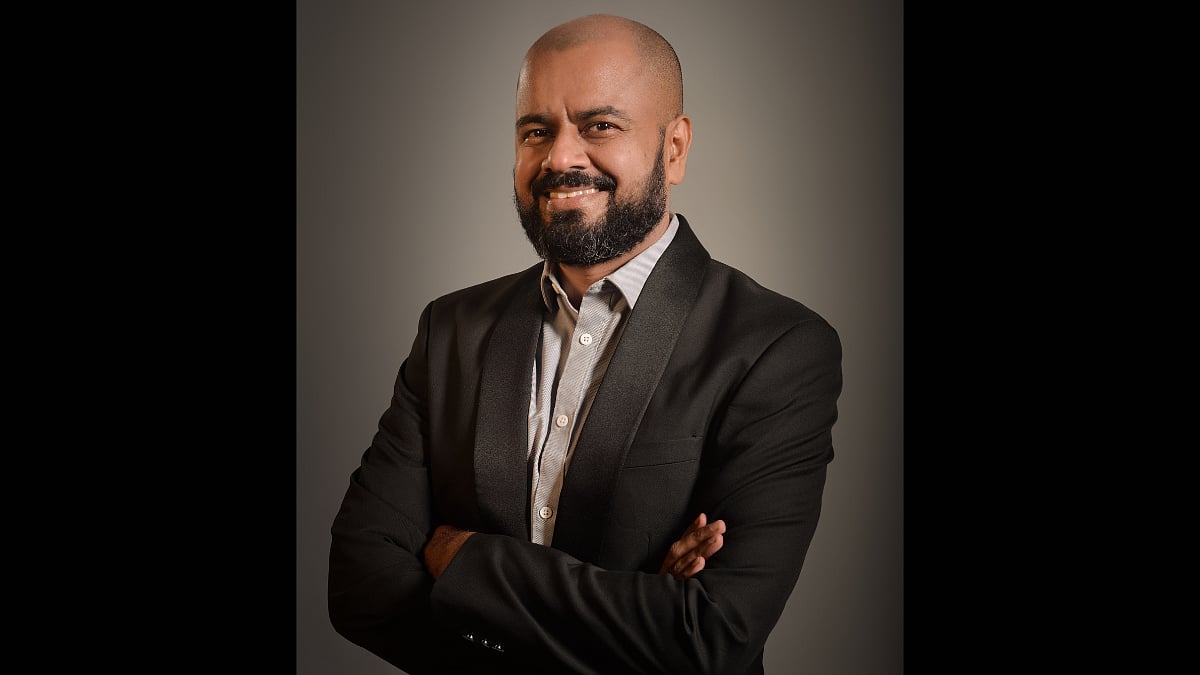
Bhushan Korgaonkar has been writing erotica in Marathi for quite some time now. He has worked with Lavani artistes closely to understand them and get them their dues. Bhushan also translated Anna He Apoorna Brahma by Shahu Patole to Dalit Kitchens of Marathwada to make dalit recipes accessible to the global audience.
Known for his workshops on erotic writing, Bhushan has a session scheduled for Friday (October 23) at the Godrej Literature Live! The Mumbai Litfest at NCPA, Mumbai
Excerpts from an interview:
What attracted you to Lavanis and stories of Lavani dancers?
The power, poise, and vulnerability that Lavani dancers demonstrate and conceal, all at the same time.
In today’s world, Lavani and Tamasha artistes are perceived differently than they were a few decades ago. What would you attribute that to?
Actually, traditional Lavani and Tamasha artistes are not perceived very differently even today. Only the very popular artistes from traditional backgrounds, and those from urban, upper-caste, or upper-class backgrounds who perform Lavani and Tamasha occasionally or as part of a project, are given their due respect. That said, respect has partially increased overall—or, one could say, disrespect has partially decreased. This can be attributed to many small factors, including efforts to recognise these art forms as the pride of the state.
Do you think Lavani can be classified not just as a folk art, but also as an erotic art?
Yes. I have been conducting lectures on the subject, deciphering both the text and the context of older Lavani songs.
Your columns on relationships were always different from those of most other columnists. Was that a conscious attempt, or did it just happen?
If you are referring to my food column in loksatta where i explored people's relationship with food...and yes, that was also considered different...because again here I brought out a wide range of communities and cuisines including some nomadic, matriarachal tribes...and a unique lens to look at things - respecting people's rituals and styles but also bringing out the sometimes funny, sometimes exploitative, sometimes illogical aspects in those traditions.
If you mean my stories, I think. I have written erotic audio stories for Storytel, and I am told they are different from those of many other writers. I simply believe that all stories, characters, and situations deserve to find their way into the mainstream. That is why I wrote about what I had seen, experienced, or heard from people from all walks of life. Some situations in my stories may raise questions of morality, but I try to handle them as matter-of-factly as possible. Through dialogue, I resolve unnecessary anxieties and dilemmas, allowing my characters to experience pleasure to the fullest.
Why do you think people perceive you as an erotica writer?
For three reasons: I have written erotic stories, I regularly conduct erotica-writing workshops, and I am associated with Lavani dancers.
Why did you choose to become an erotica writer, storyteller, and workshop facilitator?
I chose to become an erotica writer and storyteller because I personally enjoy eroticism and believe it can be a healthy space to immerse oneself in, provided there is consent from all parties involved, both directly and indirectly. I received encouraging feedback from my editors and readers and that further encouraged me to continue writing.
What disturbs me is the guilt, shame, and label of immorality attached to this emotion. On the other hand, eroticism is sometimes exaggerated or presented as hurtful humour. More often than not, it is either suppressed or oppressed, rather than given an aesthetic expression.
The workshops began as an external impulse. While discussing my work beyond Lavani with Prof. Preeti Das of Karnavati University, Gujarat, she became intrigued by my work as an erotica writer. She suggested that I conduct a workshop for her students. I liked the idea, developed a module, and have since been refining and redesigning it for different participants and durations.
Erotica is not yet very prominent in Marathi. Why, according to you?
Actually, Marathi has a rich tradition of erotic writing, dating back to the first century, when the language existed in its earlier form, Maharashtri Prakrit. However, puritanism and the conservative approach of mainstream society pushed it to the margins. Yet folk traditions, especially Lavani and Tamasha, are full of sensual and sexual texts, often expressed through innuendo.
Which old stories in Maharashtri Prakrit would you consider educational and essential for today’s audiences, and how do you present them?
There is a compilation titled Gatha Saptashati, or Gaha Sattasai, in Maharashtri Prakrit, which contains verses written by women about their sexual and romantic desires, longings, and experiences. This is important because most other texts are usually written from a male perspective. I have read a few translations, but I have not yet studied the work in enough depth.
We have so much in Sanskrit that could be termed romantic or erotic. Would you consider translating it soon?
No. I do not know Sanskrit well enough to translate directly. However, I recently read a story written from a typically male gaze, and I would like to transcreate it through a modern, liberal lens.
What, according to you, is the difference between romance and erotica in literature?
Romance is usually associated with so-called legitimate partners—heterosexual, monogamous couples who are married or planning to marry—while erotica is usually associated with so-called illegitimate partners: everything outside that accepted norm. However, I feel both are possible in either situation. Romance is often romanticised, while erotica is either suppressed or heightened to an impractical degree.
ALSO READ
Why is eroticism or erotica considered illegitimate? Why can’t legitimate sex be erotic?
I don’t think erotica should be considered illegitimate. But, as they say, forbidden fruit is juicier. This distinction arises from the divisions society creates between what it considers legitimate and illegitimate.
Do you think Dalit cuisine will soon receive the recognition it deserves, especially in fine-dining spaces, as other cuisines do?
I don’t know, but it should. In some ways, it already does. For instance, delicacies such as blood pudding and tongue roast are served in fine-dining spaces, though the condiments and preparation styles differ. However, many vegetarian preparations—such as the oil-free vegetable and dal dishes once common in Dalit, and even non-Dalit, households—remain absent from such spaces.
RECENT STORIES
-
-
-
-
-