‘Discipline Is The Root Of Freedom’: Nirvaan Birla On Balancing Ambition And Peace
Ahead of his May 22 concert, Nirvaan Birla on finding identity through music, mindfulness, and self-awareness

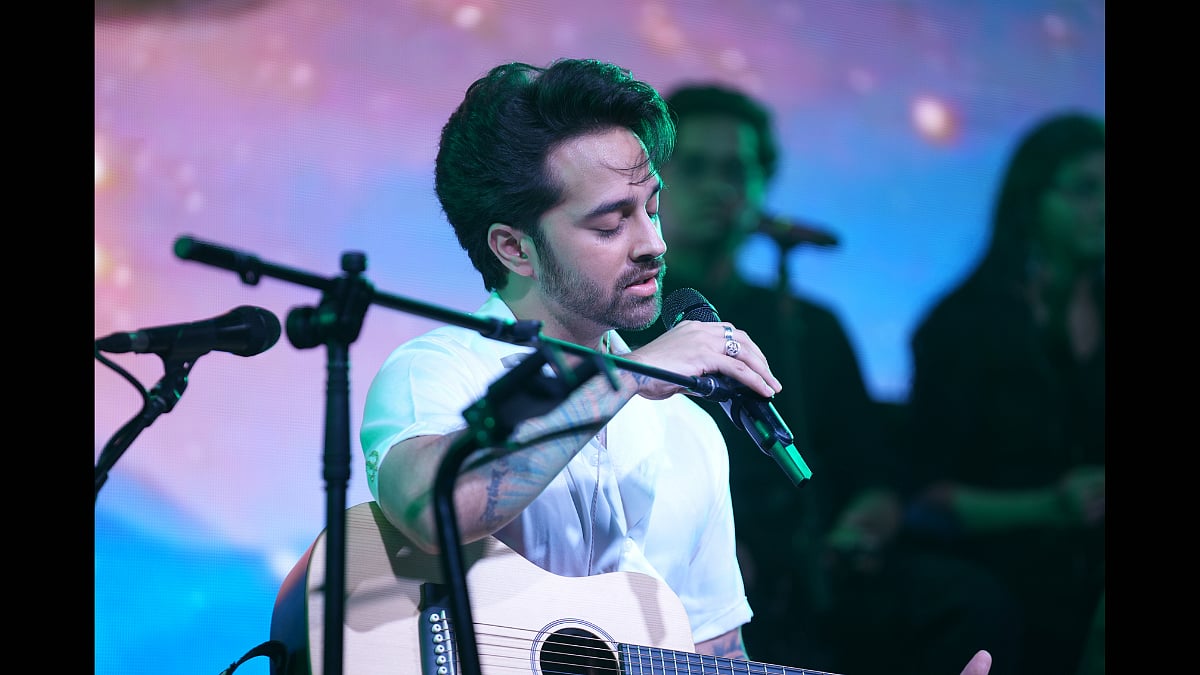
Ahead of his upcoming concert on May 22, Nirvaan Birla finds himself in a contemplative space that mirrors the essence of his music — rooted, introspective, and quietly powerful. In this candid conversation with The Free Press Journal, he reflects on music as a spiritual anchor, the evolving emotional landscape of modern masculinity, and the delicate balance between ambition and inner peace.
Do people meet you as an individual first, or as someone carrying inherited history before you even speak?
I feel people meet me first as a person rather than a personality, or an inherited legacy or name tag. I like to keep it that way because rare connections are very rare and few in today’s day and age — whether it’s old-time friends or new-age good friends. I like spending time having real conversations and moments together, so I wouldn’t like inherited legacy, history, or culture to come into it.
When did music stop being entertainment and become something emotionally necessary for you?
Music for me was something that completed the picture — my sense of self. But of course, I didn’t initially invest too much time or energy into it whilst I was growing up because I didn’t think it was a passion I’d be pursuing consistently throughout my whole life as a full-time gig.
For me, music has more of a spiritual connotation than simply something you like because of how it sounds. It’s genuinely something that completes my day. It makes me feel very centred. Music makes me feel closer to God. Any form of music, because music can be understood universally — it’s less about language and more about energy that gets communicated.
The real shift, where music became something I decided I was going to pursue actively as a line of work for the rest of my life, happened a year ago. That’s when I started pursuing music professionally — writing my own songs and doing a lot of live shows.
But music has definitely been a part of me my whole life, and it’s something that’s been at my core since I was 8 years old. Why I mention 8 years old specifically is because that’s the first time I sang for my mom, in Nashik. The song was Shri Krishna Govinda Hare Murari.
Does creating music feel more like release, reflection, healing, or confrontation?
Creating music for me is like a process of growth because, as humans, we have the general tendency to suppress a lot of emotions, thoughts, and ideas within us — like a whirlwind of thoughts that come and go in everyday life.
Music takes your deepest emotions and thoughts and allows you to express them in the form of a song.
Music-making is very sacred to me because of how an idea becomes the form of an immortal communication to the rest of the world and allows you to communicate that on scale.
Personally, I don’t like meeting too many new people or large crowds so much, so music allows you to express yourself on a very large scale. It also educates you because every song you put out there teaches you a lesson, and you take it one step further from there.
Would you describe music as a spiritual practice in your life?
I would 100% describe it as extremely spiritual, mindful, and healing. It’s something that allows me to grow, learn, and really channel my thoughts and emotions — to connect more with myself.
To me, all music is spiritual. Even when I hear love songs, I connect that to self-love and divinity rather than people or relationships from the past.
What feeling do you hope lingers in someone after they leave your shows or kirtans?
When people leave my shows or kirtans, I want them to feel a lot of positivity and upliftment of spirit — a lot of belief, faith, assurance, and self-love within themselves.
I just want them to feel a lot better.
When people come for my shows and kirtans, it’s a way to hit pause within the busy schedules of everyone’s everyday lives that we all live, and spend some qualitative time together — which is madly challenging in today’s times.
Do you think artists accidentally archive their emotional evolution through what they create?
I definitely think artists project, archive, and record their emotional evolution through their work.
A true artist — a great singer or musician — is someone who speaks their truth. Someone who expresses what they truly feel and experiences the emotions of what they feel. Not make-believe, not a third-person account, but rather a first-person account.
Therefore, music is about accepting one’s feelings and thoughts rather than hiding or escaping from them.
I think once you express your thoughts without hesitation or doubt, then that itself is growth in a way. And that shows the emotional growth, fluctuations, and journeys people go through.
Your public image blends introspection, discipline, spirituality, aesthetics, and performance in a very modern way. Do you think men today are becoming emotionally more expressive?
I definitely believe the men of today are becoming much more expressive, sensitive, and emotional. It’s not a taboo anymore to be in touch with their emotional self, to empathise, to let others know they care, or to let others know they’re vulnerable.
Sometimes people confuse what being a man really means. It doesn’t mean that they don’t feel or care. It means that you completely feel and care for your women and families, but it also simultaneously means that you can handle your emotions and not get swayed by them.
A real man is someone who can truly feel and connect because strength comes from love. A man should have that capability, yet still be in control of his feelings rather than letting his feelings control him.
Why do you think so many people are now investing in inner work alongside external success?
I think people are investing a lot more time in inner work and personal journeys because, especially after the huge shift during the pandemic, people realised that life is short and they want to make the most of the life we’re all living.
People want to explore places they always wanted to go to, and they’ve realised that living a content, happy, and peaceful life is the most important thing in this world.
I think that’s what actual success means.
You can be the most ambitious, wealthiest, or best-looking person in the world, but unless you have peace of mind, contentment, and satisfaction, all of that is worth nothing.
It may seem like gold to the external world, but if a person doesn’t have peace of mind and suffers every day, then all that they do is merely flash.
So inner peace, contentment, and self-love are extremely important, and I think the pandemic created a huge shift in that direction.
Your life seems to move between spiritually rooted spaces and highly curated modern culture. Do you think people today crave meaning and beauty in equal measure?
I believe life should be lived in the fullest aspect possible. I think life is a celebration.
I think the definition of spirituality is skewed because just because one is spiritual doesn’t mean one cannot be engaging, fun, connected to the real world, and celebrate life in all its aspects.
You don’t have to be an ascetic monk to be spiritual.
You can be an astute businessman, musician, or sportsman, and yet at the same time be very spiritual and invest yourself completely in what you do.
That also includes enjoying a good life, going to good places, living and eating well — so long as the fundamental truth is not contrary to genuinely making the most of one’s life, and so long as one isn’t causing harm or judgement to others.
Spirituality, joy, beauty, and luxury can absolutely coexist.
Has discipline brought you more freedom or more pressure internally?
I think discipline is actually the root of freedom, contrary to what a lot of people think.
It’s like the story of darkness and light — without darkness there wouldn’t be light. The same applies to discipline and freedom.
Unless you live a disciplined life, how can one actually enjoy freedom?
For example, if one has no discipline and leads an unstructured life with complete abandonment and no direction, then everything becomes the same. There’s no contrast.
That’s not true freedom because one simply becomes complacent and gives in to whims, emotions, and senses.
But if one exercises discipline and leads a purposeful life, then you command your emotions and senses rather than being controlled by them.
Discipline in your early years helps you grow faster and become more settled in life. Then you earn the freedom to live life on your own standards rather than experiencing a late wake-up call.
What does being in places like Rishikesh awaken or quiet within you emotionally?
Rishikesh is like my happy place. It’s my go-to place whenever I’ve gone through tribulations or adversities.
It’s where I go to deal with things mentally, to reset and recover — whether it’s a bad breakup or a wrong turn in business.
It’s like going into a bubble where one can completely be one with their embodied self.
More than the people, it’s the place itself — the foothills of the Himalayas. So many yogis and ascetics have come there and charged the destination with positive energy.
The moment you enter that space, all the noise in your mind and your anxieties get set aside. There’s an internal switch that gets ignited.
So many amazing childhood memories and rites of passage from my teenage years happened there. Rishikesh is like my true home.
How do you maintain a sense of self within a powerful family or public legacy?
I think this is something a lot of young people feel when the torch gets passed on to them from their parents or founding generations.
The important thing is to stay true to yourself without ignoring your roots or where you come from.
Always respect that because that’s what made you who you are and blessed you with the life you have.
It’s rare in today’s time and age to have a well-cared-for family, a great business to go to, and implicit trust within society, India, and globally overall.
That’s something you cannot forget in pursuit of your dreams and desires.
Be independent. Be true to your inner self. But never forget the merits of your ancestors, which you are now benefitting from.
You have to give 110% to uphold the legacy — not necessarily by copy-pasting what your father, brother, or grandparents did, but by carrying forward the class and honour your family legacy represents.
Do you believe ambition can exist without disconnecting someone from inner calm?
I definitely feel that inner peace and calm can be practiced and achieved at the same time as ambition.
It’s what we call Karma Yog — a type of yoga where spiritual growth is achieved through the act of doing, achieving, and creating something meaningful.
So long as ambition doesn’t turn into greed, it can itself become a catalyst for spiritual growth because it pushes you toward achieving something with a greater purpose.
So long as ambition is directed in the right way and for the right reasons, alongside spiritual mindfulness, meditation, yoga, kirtan, and knowledge, one can absolutely maintain inner calm.
The important thing is focusing on the journey rather than only the destination, so that one becomes passionate about the process rather than merely obsessed with the outcome.
ALSO READ
Are people being educated for stability, or for emotional resilience and life itself?
I don’t think there’s enough guidance or knowledge today about emotional resilience, inner calm, and stability — whether in schools, colleges, or life itself.
The world is very result-driven and impression-driven.
If someone is perceived as not doing well, not being well put together, or not being accomplished, unfortunately that gets more precedence than whether someone has a stable mind, good character, or emotional grounding.
I think this needs to be addressed, especially in schools and colleges.
That’s why in our schools, Birla Open Minds International School, we have a subject called Soul Science, which addresses mental health, anxiety, and stress using stories from scriptures along with practical life experiences.
Life skills need to be taught alongside textbook subjects and financial or business skills.
I know you have a deep affection for dogs — what do animals emotionally bring into your life that human relationships sometimes cannot?
I think animals, particularly dogs, are God’s gift to mankind. They’re like God’s messengers on this earth to help humans grow emotionally and spiritually, support them during difficult times, and give them unconditional love.
Honestly, with dogs, even if you don’t communicate in the same language, they understand a person much more deeply than another human being often does.
They’re always there for you, and they innately sense when you’re not okay. During those moments, they tend to shower you with even more love.
I’ve had a special relationship with dogs since I was a child. They’re creatures so full of love.
They give you an immediate sense of belonging and gratitude.
All dog parents know that dogs complete a person’s world.
RECENT STORIES
-
-
-
-
-