Chhath Puja 2026: Know The Significance Of Saffron Sindoor And Why Women Apply It From Nose To Head
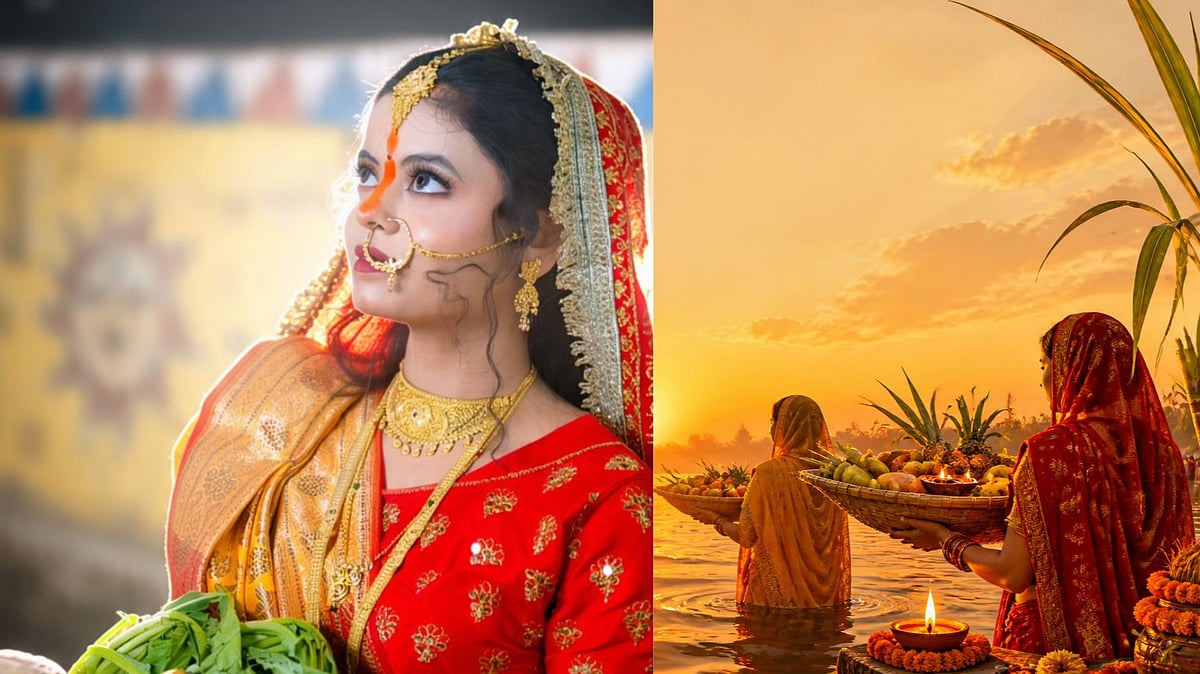
During Chhath Puja, some married women apply sindoor in an elongated manner, extending from the nose towards the hairline. This distinctive practice is traditionally associated with Suhag (marital prosperity) and is believed to symbolise prayers for the husband's long life, good health, marital bliss and the family's happiness.

Chhath Puja 2026: Know The Significance Of Saffron Sindoor And Why Women Apply It From Nose To Head |
Chhath Puja is one of the most significant Hindu festivals, celebrated over four days and involving elaborate rituals, prayers and strict fasting. One of the distinctive traditions observed during Chhath is the application of sindoor by married women, often extending from the nose to the hairline. On this occasion, one of the main rituals followed by women is applying saffron-coloured sindoor as part of their traditional practices.
Let's understand its significance and the beliefs associated with this tradition.
Chhath Puja 2026
Chhath Puja is being celebrated from November 13 to November 16, 2026. The festival begins with Nahay Khay, followed by Kharna on the second day. The third day is dedicated to Sandhya Arghya, when devotees offer prayers to the setting Sun while standing in water bodies. The festival concludes with Usha Arghya on the fourth day, when prayers are offered to the rising Sun.
Significance Of Saffron Sindoor
Sindoor holds special importance in Hindu traditions and is commonly associated with marriage, prosperity and the long life of a woman's husband. While red sindoor is traditionally worn by married Hindu women, certain regional customs also involve the use of saffron-coloured sindoor.
During Chhath celebrations, women apply this kesariya sindoor from the tip of the nose up to the hair parting as a sacred symbol of marital bliss, faith and devotion to Surya Dev and Chhathi Maiya.
In Chhath traditions, women apply saffron-coloured sindoor as a symbol of devotion, marital happiness and prayers for their family's well-being.
Why Is Sindoor Applied From Nose To Head?
During Chhath Puja, some married women apply sindoor in an elongated manner, extending from the nose towards the hairline. This distinctive practice is traditionally associated with Suhag (marital prosperity) and is believed to symbolise prayers for the husband's long life, good health, marital bliss and the family's happiness.
Another belief connects this tradition with the Sun, which represents life and energy. The orange or saffron colour mirrors the vibrant hues of the sky during sunrise and sunset. These are the exact moments when devotees offer Arghya to Surya Dev.
The practice also reflects devotion, faith and cultural traditions passed down through generations. However, customs and the colour of sindoor may vary across communities and regions.
RECENT STORIES
-
-
-
-
-