Charcha Time: Should Rapists Face Public Justice Or Stronger Legal Reform?
Experts caution against mob justice and harsher punishment demands, emphasising stronger investigations, faster trials, and survivor support over death penalty calls or jury trial proposals

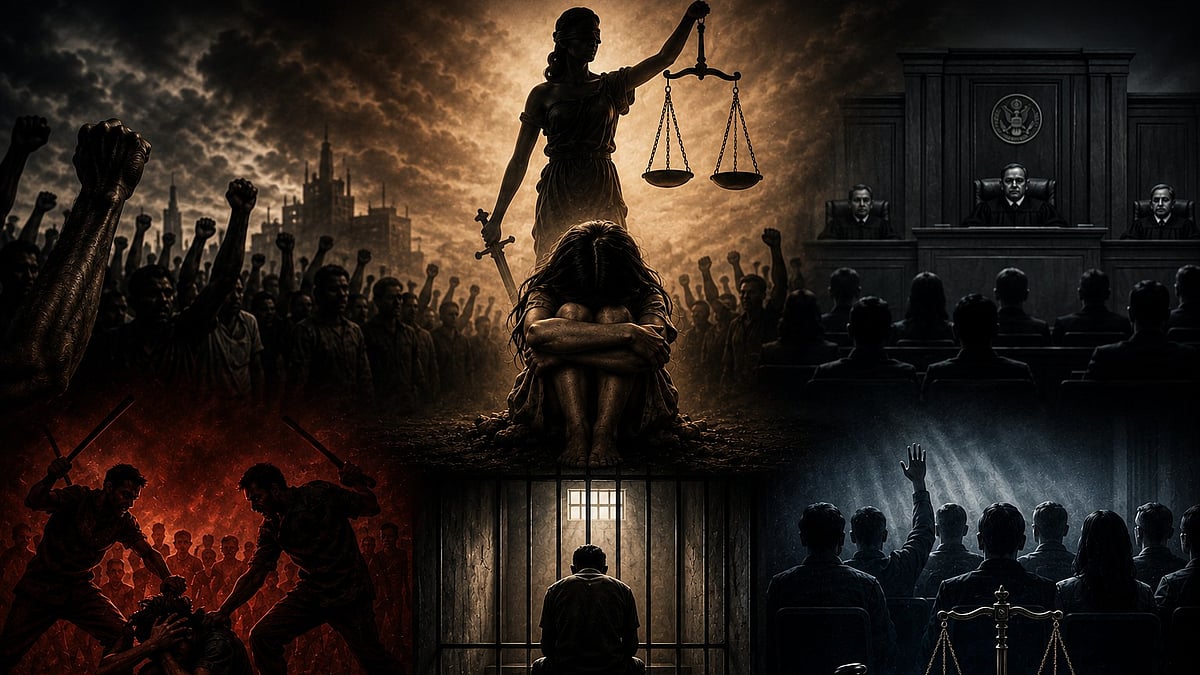
The recent Pune child rape case has once again sparked national outrage, grief, and a deep sense of helplessness. As public anger grows louder, so do demands for harsher forms of justice. This has reopened difficult questions — should rapists be handed over to the public? Would introducing jury trials in rape cases make justice more effective or more vulnerable to bias and emotion? Minal Sancheti seeks answers
Flavia Agnes, Indian women’s rights lawyer
There are two or three reasons why men in power think that women and children are easy prey and that they can use their power over them. The only way of changing this is by changing public perceptions and through legal measures. But the problem is that the legal procedures are so cumbersome and lengthy that there is no fear of the law in people’s minds.
I don’t support the death penalty at all in any situation. Our current laws regarding rape and sexual assault are very stringent. They award the maximum possible punishment for child abuse, child rape and other sexual offences against minors and women. There is also a death penalty for repeat offenders. So I don’t think we need any more stringent provisions in our statutes. What we need is better compliance.
The public asking to hand over the offenders to them and punish them amounts to taking the law into their own hands. Then it will become a Jungle Raj, and ‘might is right’ will prevail. How can people take matters into their own hands and give punishment? That is against the law. This is the work of the judiciary. And what if tomorrow that person is found to be not guilty? Under our legal system, everyone has a right to a fair trial and has to be given the opportunity to prove their innocence. We function under the legal maxim ‘innocent till proved guilty’. So, as a lawyer, I don’t support such strategies at all.
The reason why such heinous crimes are taking place despite a stringent law is that people’s patriarchal mindset has not changed. Women are still projected as property and are shown in subordinate roles. Even our education system does not inculcate the right values in our children that women are equal and deserving of respect and equal treatment. The portrayal of women in the media is contributing further to promote this mindset. The media portrays women as easy targets or as property to be acquired, and so on. The way women are shown in the popular media and popular films is the real problem.
When it comes to dealing with such offences, the government is performing its role adequately in most instances, though sometimes the police refuse to file an FIR and do so only under social pressure. Once the FIR is lodged, there are arrests, investigations, charge sheet if filed in court and the trial commences. But at times, the investigations are shoddy, several loopholes remain, and procedures are not complied with. At times, the public prosecutors are not up to the standard and do not adequately defend the prosecution.
If the investigations are shoddy, the procedures are not complied with, or the prosecutor does not argue the case well, the case ends in acquittal. Our conviction rape is very low, only about 27% or so. So the stringent legal provisions lose their impact.
Chayanika Shah, Member, Forum Against Oppression of Women and PUCL Maharashtra
For a long time, there’s something that has been discussed over and over again: stricter punishment can never be a deterrent. Whatever the crime is, we need good investigation, we need proper judicial procedure and a system that is seen to do justice irrespective of who the accused is. We also need a proper support mechanism for the survivor post the crime, during the trial and after.
All of this is important for women to feel safer. I don’t agree with the kind of demands people are making that give us this person, and we shall do justice. People should not take the law into their own hands, but for this, we need a system that responds with empathy to the survivor. The law and the procedures are necessary to make us feel safe. But the problem is that the law and order do not function in the way we want them to function. So people get frustrated and demand quick justice.
The justice system needs to ensure that the accused also gets a chance to say what their version of the story is. Nobody should have the power to take someone’s life, including the state. In fact, the women’s movement is against the death penalty all in all.
We have been very clear on this, and we have constantly taken a position, as an organisation and as many collectives across the country. One - no death penalty for rape, and two- more stringent punishment does not result in a reduction in the crime rates.
In fact, this goes. against women because the assaulter kills the woman after sexual assault, so that she does not identify him. Since the punishment for murder and rape is the same, it is a chance that the accused take.
I will give you a couple more examples of what the State should not allow to happen. Somebody like Bilkis Bano, who was gangraped and many members of her family were killed during the 2002 Gujarat riots. She fought that battle for a long time. The accused were given life imprisonment. They were set free after a mere 14 years. People who have been convicted of such grave crimes, how do you let them out after 14 years?
On the other hand, in the Badlapur child sexual abuse case, the police said the accused tried to attack them, and so they killed the accused. You cannot just say the accused got violent, and we had to kill the accused. There are ways they can handle the situation. You have to make sure that the process of law is followed.
The most important thing is that justice is seen to be done in a reasonable time and with good investigation, where the woman is supported, believed and strengthened. And where law and its processes are followed to make sure that justice is done.
RECENT STORIES
-
-
-
-
-