3 Reasons The Pavilion Of India Is A Must-Visit At Venice Biennale 2026
Here’s how the five Indian artists express the idea of home at one of the world’s biggest art gatherings

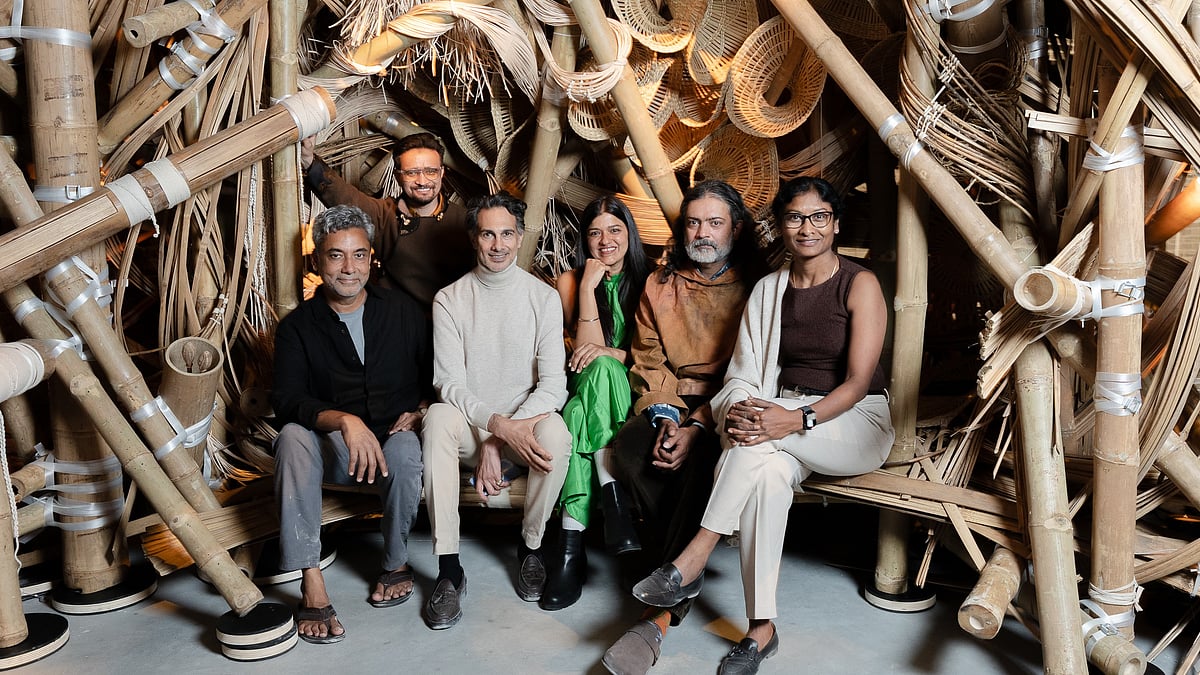
L - R Bala, Skarma Sonam Tashi, Dr Amin Jaffer (curator), Sumakshi Singh, Asim Waqif and Ranjani Shettar | Pics: Joe Habben
Since the nation’s debut in 1954 at the Venice Biennale, India has officially been represented only three times at the global art extravaganza. Year 2026 is our nation’s fourth foray and a return after seven years since 2019. The Pavilion of India, presented by the Ministry of Culture, Government of India, in partnership with the Nita Mukesh Ambani Cultural Centre (NMACC) and Serendipity Arts, was inaugurated amidst great fanfare by Gajendra Singh Shekhawat, Union Minister of Culture and Tourism of India, and Vivek Aggarwal, Secretary, Ministry of Culture. Dr. Amin Jaffer, Curator of the pavilion, honed in on the theme ‘Geographies of Distance: remembering home’, aligning it with the Biennale's overarching ‘In Minor Keys’ motif.
He brought together large-scale artworks by five artists: Alwar Balasubramaniam (Bala), Ranjani Shettar, Sumakshi Singh, Skarma Sonam Tashi, and Asim Waqif. The elaborate art pieces tie what home means to each of the artists and how its shapes the current understanding of the world around us.
Here are three reasons why the Pavilion of India is a must-visit for art lovers and travellers:
A story that resonates: In a dissonant world, the idea of home cuts across geographies, as the theme is meant to. The art installations express the emotional construct of home rather than physical materiality. Each of the five artists uses a very personal memory to craft an emotional thread that ties viewers in.
Tradition meets innovation: Waqif has used bamboo; Tashi, papier-mâché; Bala used clay and soil and Singh used embroidery thread. These are comparatively offbeat media for creating such large installations, but they draw inspiration from Indian mythology, folk art, temple architecture, textiles, crafts, spirituality, classical music, and regional storytelling traditions.
Artist diversity: The five artists represent different geographic origins, experience and practice, all are united in their use of organic materials traditional to India in the creation and presentation of their work.
The Pavilion of India can be visited at Isolotto, Arsenale from May to November 2026.
RECENT STORIES
-
-
-
-
-